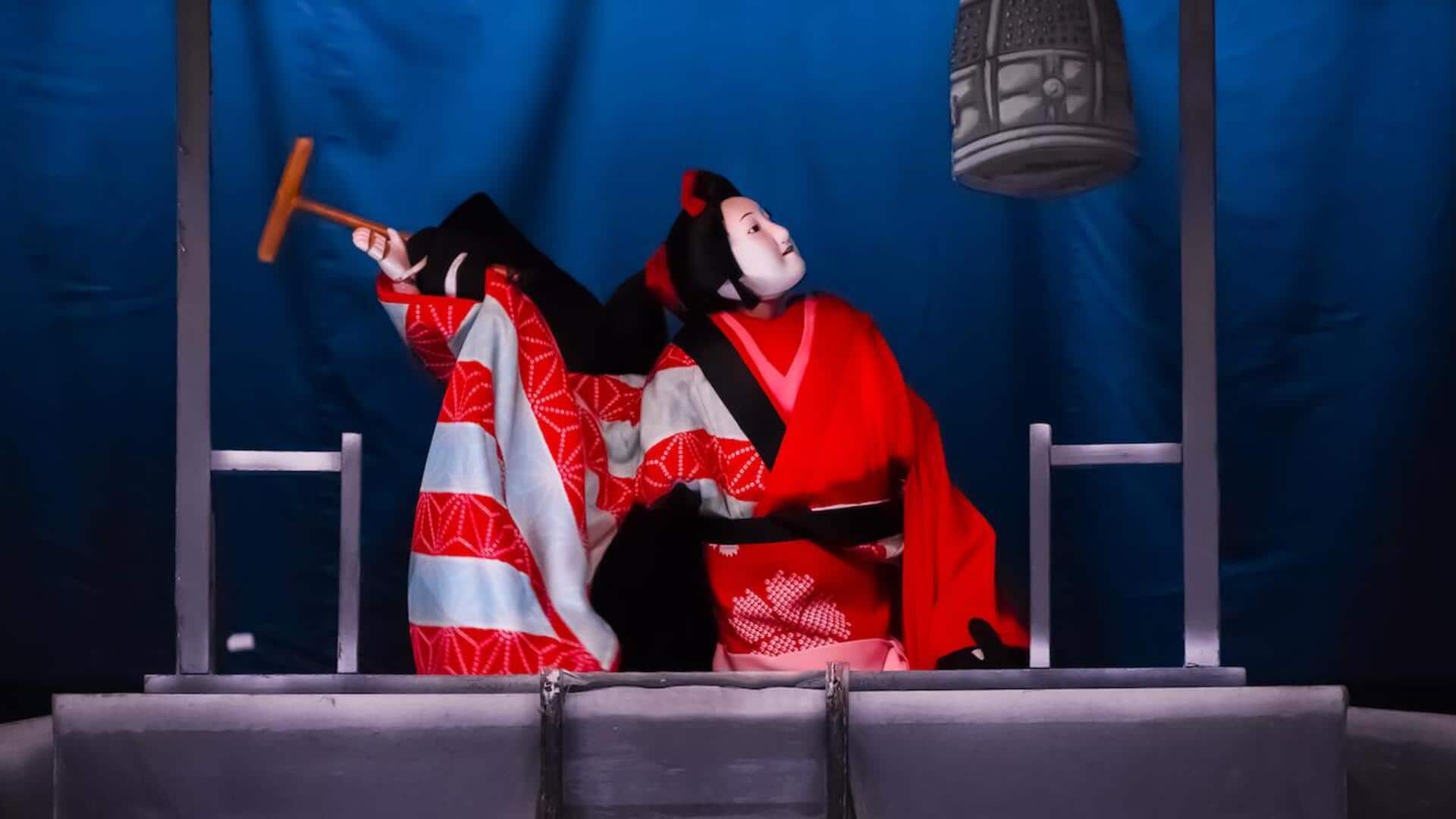
Bunraku: All about this traditional Japanese puppet theater
What's the story
Bunraku, the traditional Japanese puppet theater, is a unique art form that has influenced many modern performances across the globe. With its intricate puppetry, storytelling, and music, bunraku has left an indelible mark on theater and performance arts. The meticulous craftsmanship and emotional depth of bunraku have inspired contemporary artists to explore new dimensions in their work. Here's a look at how bunraku continues to influence modern-day performances.
Puppetry
Intricate puppetry techniques
Bunraku is famous for its complex puppetry techniques, where each puppet is controlled by three puppeteers.
This level of coordination and precision has inspired modern puppeteers to adopt similar methods in their own performances.
The focus on detail and realism in bunraku puppetry has pushed artists to explore the limits of what can be done with puppets, resulting in more nuanced and expressive characters.
Storytelling
Storytelling traditions
The storytelling traditions of bunraku are also influential in modern theater.
The art form emphasizes narrative depth and character development, which has inspired playwrights and directors to incorporate similar elements in their own works.
The way bunraku weaves together dialogue, music, and visual elements creates a rich tapestry that enhances the overall storytelling experience.
Music
Musical influences
Music plays an integral role in bunraku, setting the mood and enhancing the storytelling.
The traditional instruments used in bunraku performances have inspired musicians across genres to experiment with new sounds and compositions.
The rhythmic patterns and melodic structures found in bunraku music can be heard in various contemporary soundtracks and theatrical scores.
Cultural exchange
Cultural exchange opportunities
Bunraku also opens up avenues for cultural exchange through international collaborations.
As artists from different backgrounds come together to explore this art form, they create unique blends that celebrate diversity while paying homage to traditional roots.
These collaborations often lead to innovative performances that resonate with global audiences.
Education
Educational impact on performing arts
The educational impact of bunraku on performing arts cannot be overstated.
Workshops, seminars, and academic programs around this art form teach the next generation about its techniques, history, and cultural significance.
By introducing students to bunraku's complexities, educators inspire them to push their own creative boundaries in theater production, design, choreography, and beyond.