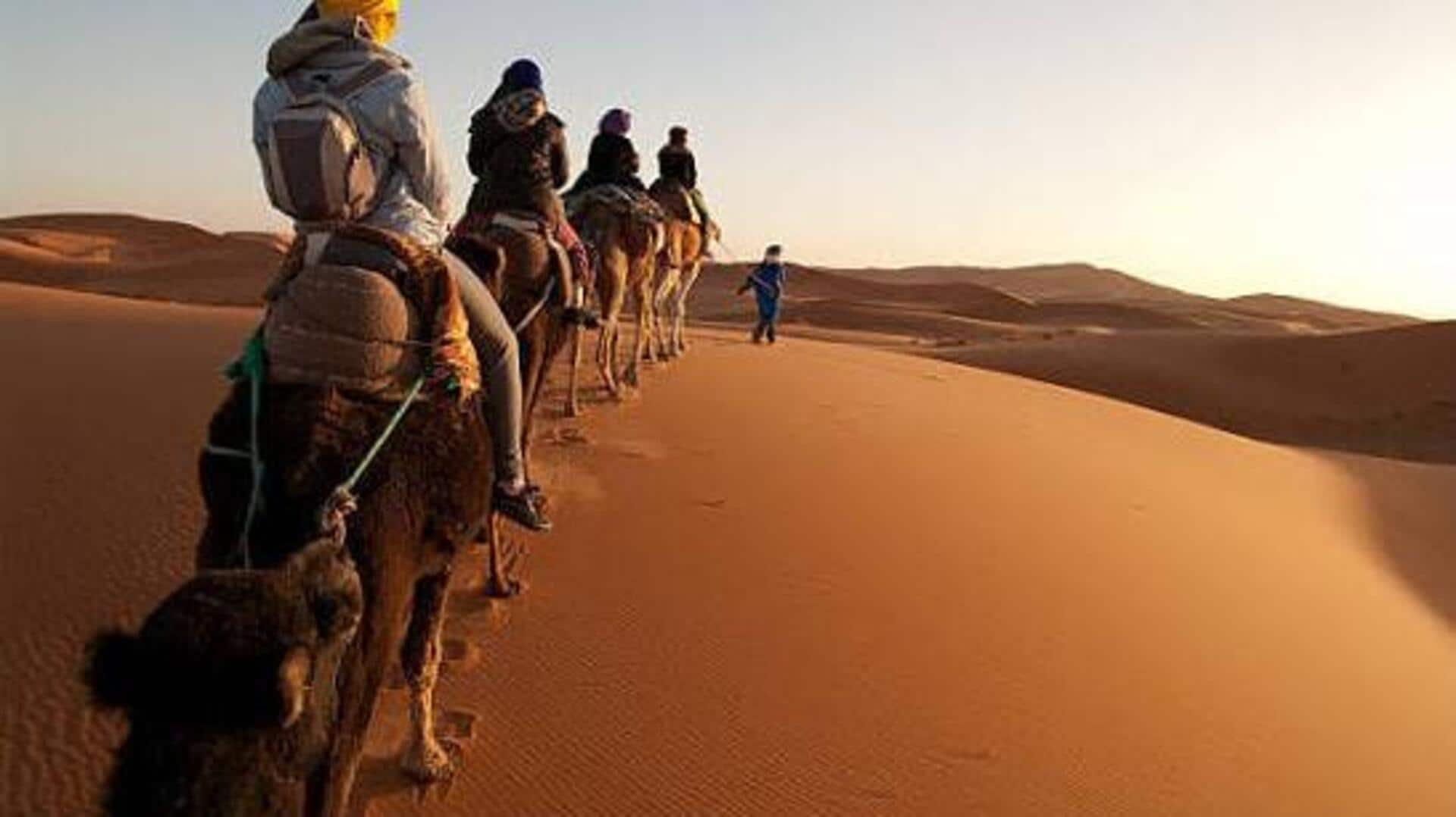
How to explore the Namib Desert on camelback
What's the story
Exploring the Namib Desert on camelback is a unique way to experience one of the world's oldest deserts. The vast, stunning landscapes of Namibia can be best explored on this traditional mode of transport. Not only does camelback trekking give you a chance to see the desert's beauty up close, but it also gives you an insight into the culture and history of the region. Here are some tips for an unforgettable journey.
Timing
Choosing the right time
Selecting the right time for your trek is important for comfort and safety.
The best time to visit is during the cooler months from May to September, when daytime temperatures are more manageable.
Early mornings or late afternoons are ideal, as they offer cooler temperatures and beautiful lighting for photography.
Avoiding peak midday hours can help prevent heat exhaustion.
Preparation
Preparing physically
Camelback trekking requires a certain level of physical fitness, given that you will be riding for hours on uneven terrain.
Start preparing in advance by engaging in activities that improve your stamina and strength.
Hydration is key; drink plenty of water before and during your trek to stay hydrated in the dry desert climate.
Care
Understanding camel care
Camels are specially adapted to thrive in arid environments, making them the perfect companions for desert treks.
Knowing how to take care of them is important. Make sure you know how to properly mount and dismount, and how to communicate with your camel.
These gentle animals need a lot of rest and water breaks during long rides, so plan your journey accordingly.
Essentials
Packing essentials
Packing wisely ensures a comfortable trek through the Namib Desert.
Essentials include sunscreen, wide-brimmed hats, sunglasses, lightweight clothing, sturdy footwear, and personal hygiene items like wet wipes or hand sanitizer, since water sources may be limited.
A small backpack can carry these essentials without burdening your camel unnecessarily.
Culture
Respecting local culture
Engaging respectfully with local communities enhances your trekking experience in Namibia's deserts.
Learn basic phrases in local languages such as Oshiwambo or Otjiherero to show appreciation towards indigenous cultures along your journey route.
This fosters mutual respect between travelers and locals alike, while enriching cultural understanding through shared experiences.