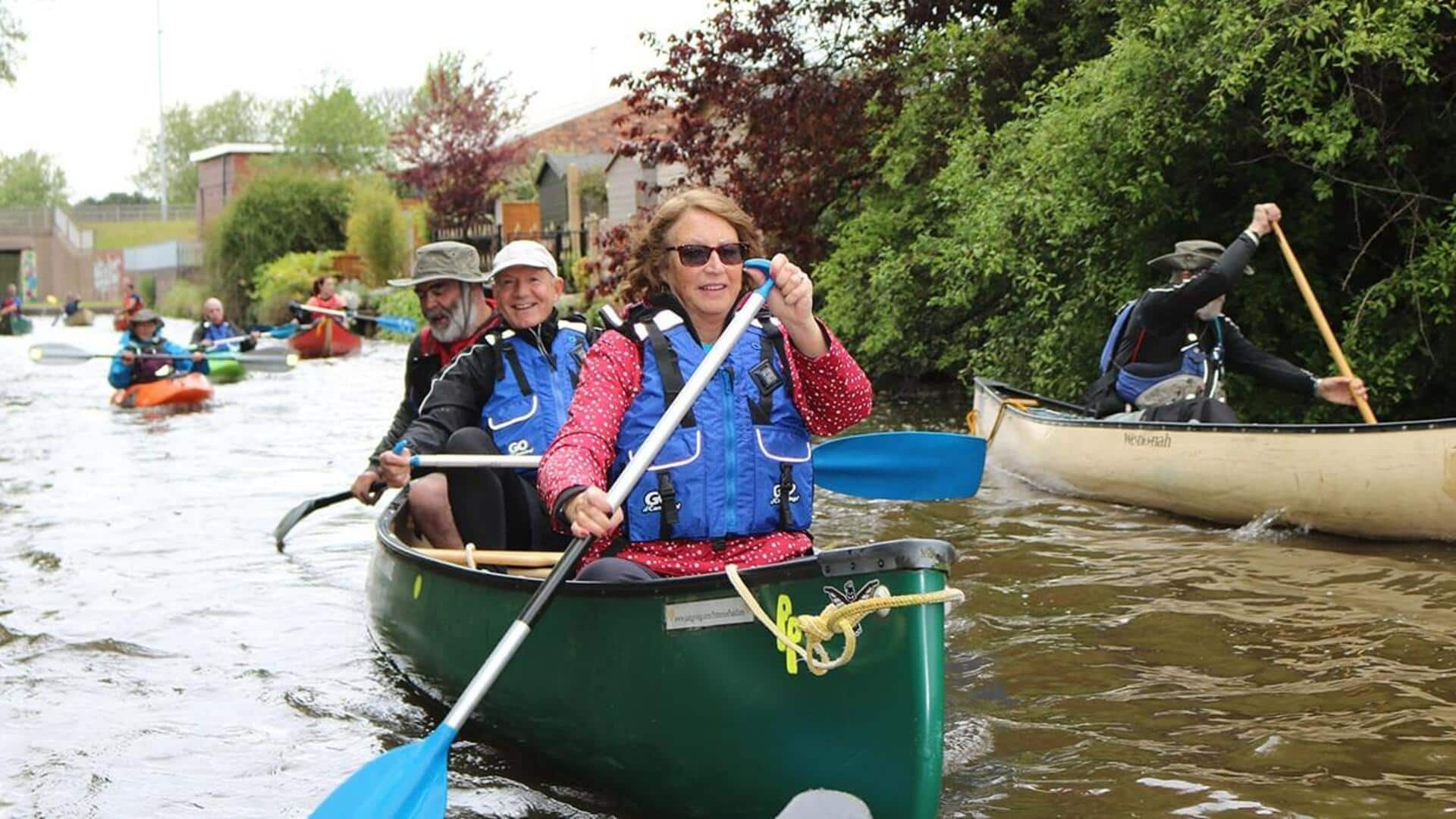
What is canoe paddling?
What's the story
Canoe paddling is not just a serene way to explore water bodies, it is also an amazing full-body workout. Engaging multiple muscle groups, this activity improves strength, endurance, and coordination. Canoeing can be an excellent addition to your fitness routine if you're looking to build muscle without hitting the gym. Here are five ways canoe paddling can help you build muscle effectively.
Core engagement
Strengthen your core muscles
Canoe paddling requires a strong core to maintain balance and stability in the boat.
As you paddle, your abdominal muscles work continuously to keep you upright and steady.
This constant engagement helps strengthen your core over time.
A strong core not only improves your posture but also enhances overall athletic performance by providing better support for other physical activities.
Upper body power
Enhance upper body strength
Paddling also works your upper body muscles, especially the arms, shoulders, and back.
The repetitive motion of pulling the paddle through water provides resistance training that strengthens these muscle groups.
Over time, this can lead to increased muscle tone and endurance in the upper body.
Regular canoeing sessions can replace or complement traditional weightlifting exercises aimed at building upper body strength.
Cardio boost
Improve cardiovascular endurance
Canoeing is an excellent cardiovascular workout that gets your heart pumping and blood circulating.
The continuous movement of paddling increases your heart rate, improving cardiovascular health over time.
Better cardiovascular endurance means you can engage in physical activities for longer without getting tired.
This benefit extends beyond canoeing itself, as improved heart health supports overall well-being.
Leg engagement
Develop leg muscles through balance
While canoeing primarily targets upper body muscles during paddling strokes, legs play a crucial role in maintaining balance within the boat.
Engaging leg muscles helps stabilize the canoe against water currents or winds, requiring constant adjustments from legs' muscles like quadriceps and calves.
Strengthening these areas contributes towards better agility and coordination, which are essential skills not only for canoeing but also for other sports.
Flexibility increase
Boost flexibility with dynamic movements
The dynamic nature of canoeing involves various movements that promote flexibility throughout different muscle groups.
Stretching before and after each session ensures that joints remain limber, reducing the risk of injury.
This practice, when incorporated regularly, enhances the range of motion and overall flexibility.
It benefits not only paddlers but also everyone looking to improve their physical health and fitness levels.