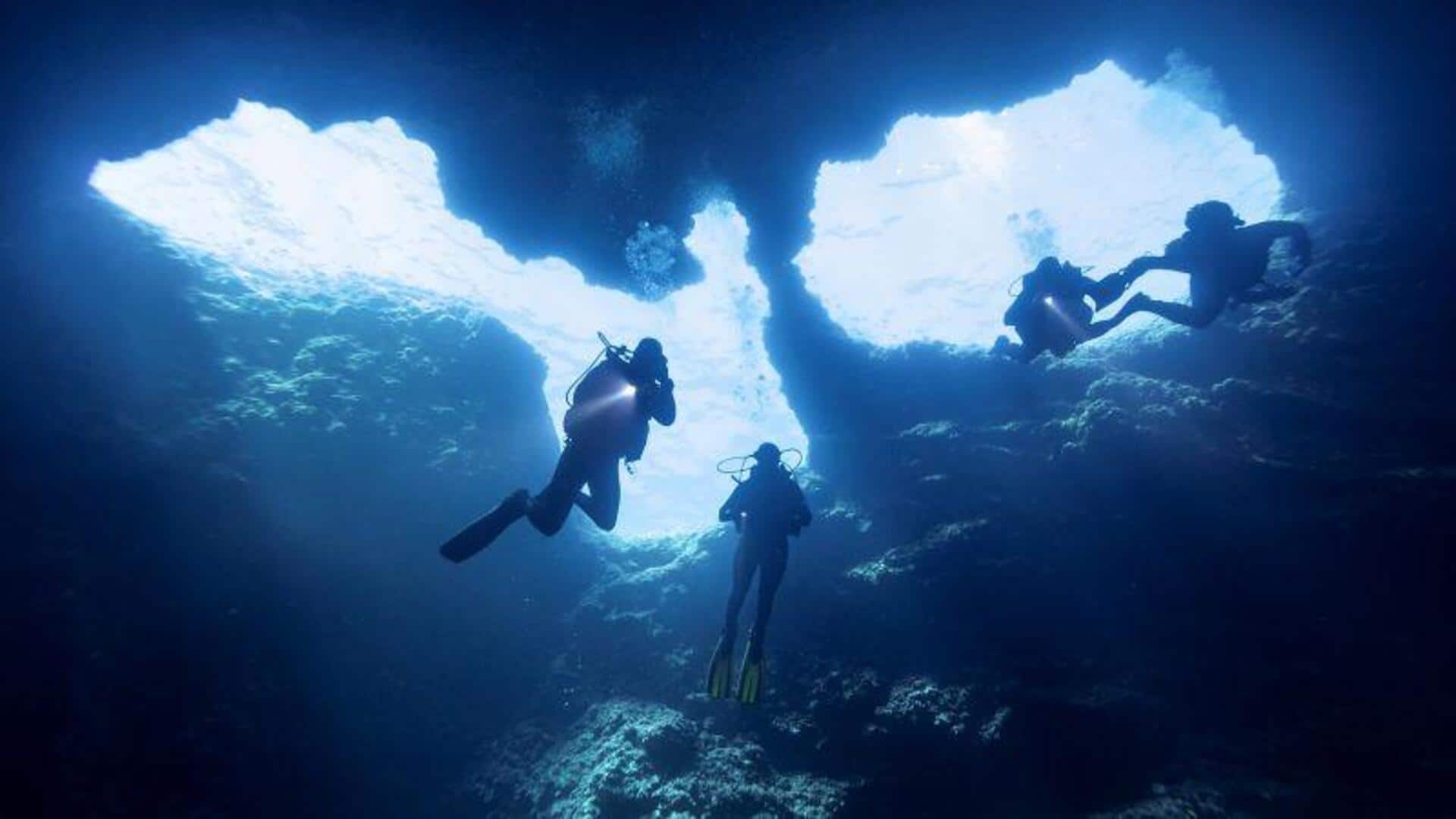
Where to try cave diving in Africa
What's the story
Africa is home to some of the most amazing cave diving experiences, giving divers a chance to explore the continent's hidden underwater worlds. These caves are not just beautiful, but also rich in geological and historical significance. From crystal-clear waters to intricate rock formations, African cave diving is an adventure of a lifetime for seasoned divers and novices alike. Here is what makes these underwater wonders so special.
#1
Exploring South Africa's Wonder Cave
Wonder Cave in South Africa is one of the oldest and most visited caves.
Situated near Krugersdorp, it features stunning stalactites and stalagmites formed over millions of years.
The cave's system is well-preserved, giving divers a chance to witness natural formations up close.
The temperature inside remains constant throughout the year, making it a comfortable diving experience.
#2
Discovering Namibia's Otjikoto Lake
Otjikoto Lake in Namibia is famous for its mysterious depths and historical significance.
Formed by a collapsed limestone cave, this lake offers divers an opportunity to explore submerged trees and unique geological features.
The water is crystal clear, providing excellent visibility for those wishing to capture underwater photography or simply enjoy the serene environment.
#3
Tanzania's Amboni Caves adventure
Amboni Caves in Tanzania are among East Africa's largest limestone cave systems.
Situated close to Tanga City, these caves offer thrilling exploration opportunities with their winding passages and expansive chambers.
Divers can witness ancient rock formations while learning about the cultural history associated with these caves from local guides.
Tip 1
Tips for safe cave diving in Africa
Safety should always be the priority when going for cave diving adventures across Africa's hidden gems.
Always ensure you have the right gear, like wetsuits, helmets with lights, and proper diving equipment, before heading out.
It's best to dive with experienced guides who know the local conditions well and can help navigate safely through complex underwater terrains.