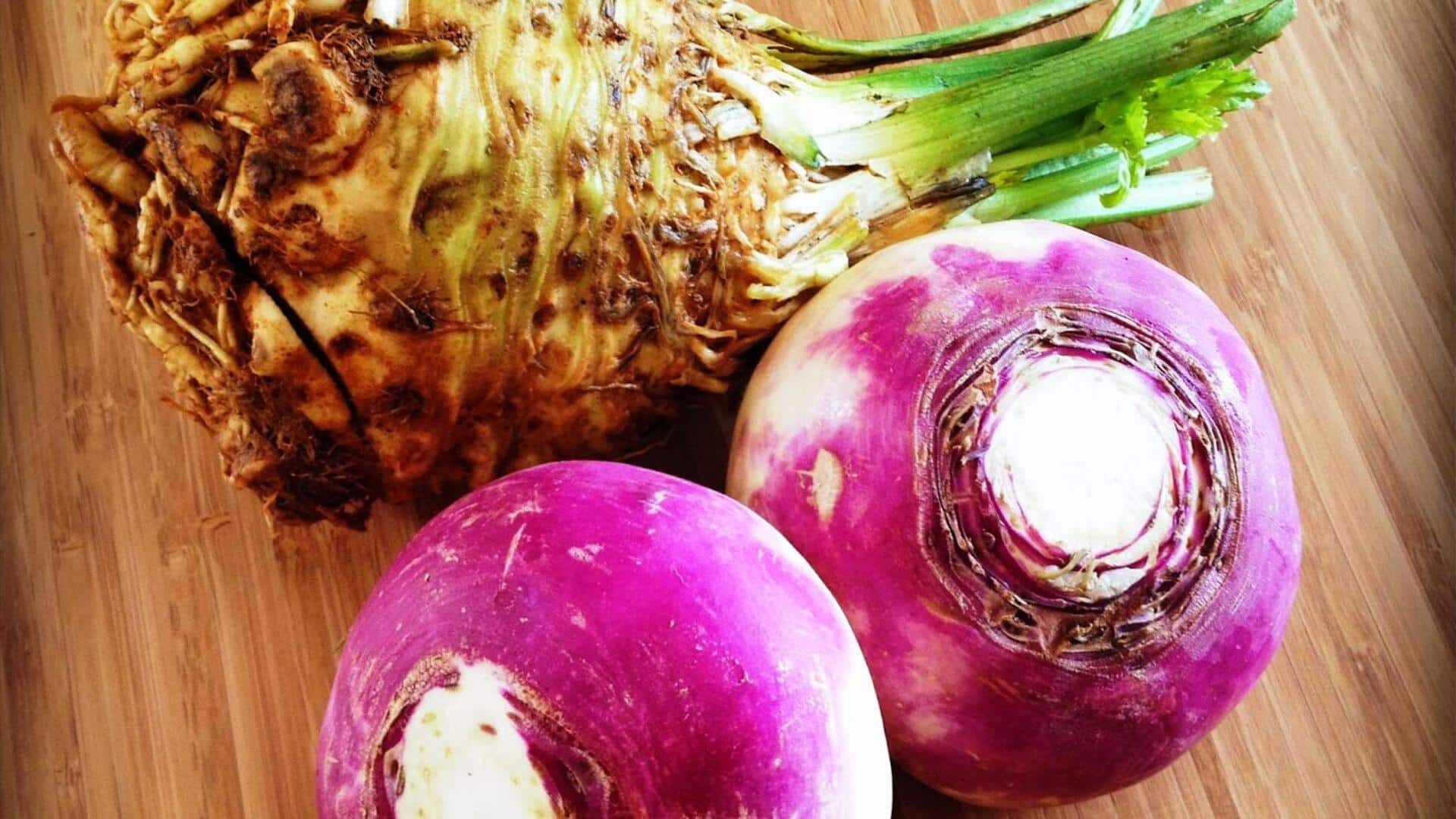
Celery v/s turnip: Which is more nutritious?
What's the story
Celery and turnip are two vegetables that are commonly consumed as part of a healthy diet. While both provide unique nutritional benefits, they are also packed with vitamins and minerals that promote overall well-being. Knowing the nutritional profiles of celery and turnip can help you make informed dietary choices. Here's a look at the nutrition of these two vegetables and what they bring to the table.
#1
Vitamin content comparison
Celery is famous for its vitamin K content, providing you about 30% of the daily recommended intake per 100 grams. It also has small amounts of vitamins A and C.
Turnips, on the other hand, provide more vitamin C than celery, giving you about 30% of the daily recommended intake per 100 grams.
Both vegetables are great additions to a balanced diet.
#2
Mineral richness analysis
When it comes to minerals, celery is a good source of potassium, providing about 260 mg per 100 grams. Potassium is important for heart health and maintaining fluid balance in the body.
Turnips also provide potassium but are especially rich in calcium, giving you about 40 mg per 100 grams. Calcium is important for bone health and muscle function.
#3
Caloric value insights
Celery is low on calories, with only about 16 calories per 100 grams, making it an ideal choice for those looking to manage their weight.
Its high water content makes it refreshing and filling without adding too many calories to your diet.
Turnips have a slightly higher caloric value at about 28 calories per 100 grams but still remain a low-calorie option compared to many other vegetables.
#4
Fiber content evaluation
Both celery and turnips provide dietary fiber, which is important for digestive health.
Celery has about 1.6 grams of fiber per 100 grams, while turnips provide slightly more at about two grams per 100 grams.
Including these fibrous vegetables in your meals can help you maintain regular bowel movements and prevent constipation.