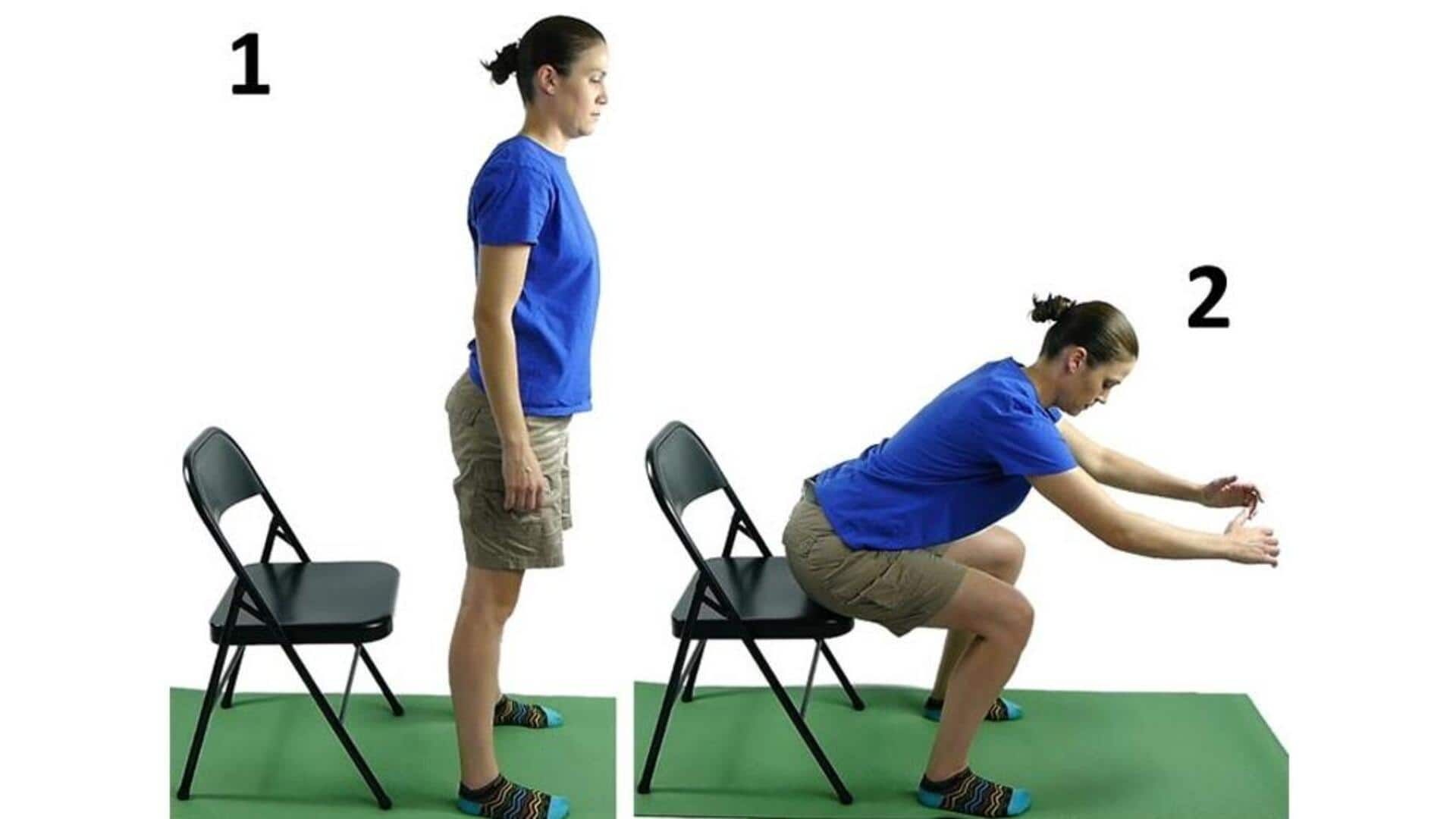
What are chair squats?
What's the story
Chair squats are a simple yet effective exercise that can be performed by anyone, irrespective of their fitness level. This movement mimics the action of sitting down and standing up from a chair, making it accessible for all. It is a great way to improve strength and balance without requiring any special equipment. Here are five surprising benefits of adding chair squats to your routine.
Tip 1
Enhances lower body strength
Chair squats mainly target muscles in the lower body, such as quadriceps, hamstrings, and glutes.
By regularly performing this exercise, you can improve muscle tone and strength in these areas.
Improved lower body strength is important for daily activities such as walking, climbing stairs, and even standing for long periods.
Tip 2
Improves balance and stability
Doing chair squats also improves your balance and stability.
As you lower yourself towards the chair and then rise back up, your core muscles engage to keep you steady.
This is especially useful as it helps reduce the risk of falls as you age.
Better balance also improves your performance in other physical activities.
Tip 3
Supports joint health
Chair squats are low-impact exercises that are easy on the joints, unlike high-impact workouts.
They help keep joints flexible and healthy by promoting blood flow without putting too much stress on them.
Regularly doing chair squats can help you maintain joint health as you age.
Tip 4
Boosts cardiovascular health
Although chair squats are primarily a strength-building exercise, they also have cardiovascular benefits when done in a controlled manner with proper breathing techniques.
The rhythmic movement increases heart rate slightly, which helps improve circulation over time.
This can contribute positively to overall cardiovascular health.
Tip 5
Increases flexibility
Chair squats promote flexibility by stretching the muscles around the hips, knees, and ankles as you move through the range of motion.
Increased flexibility reduces muscle tension and improves your posture.
It also minimizes the risk of injury during other physical activities or exercises.