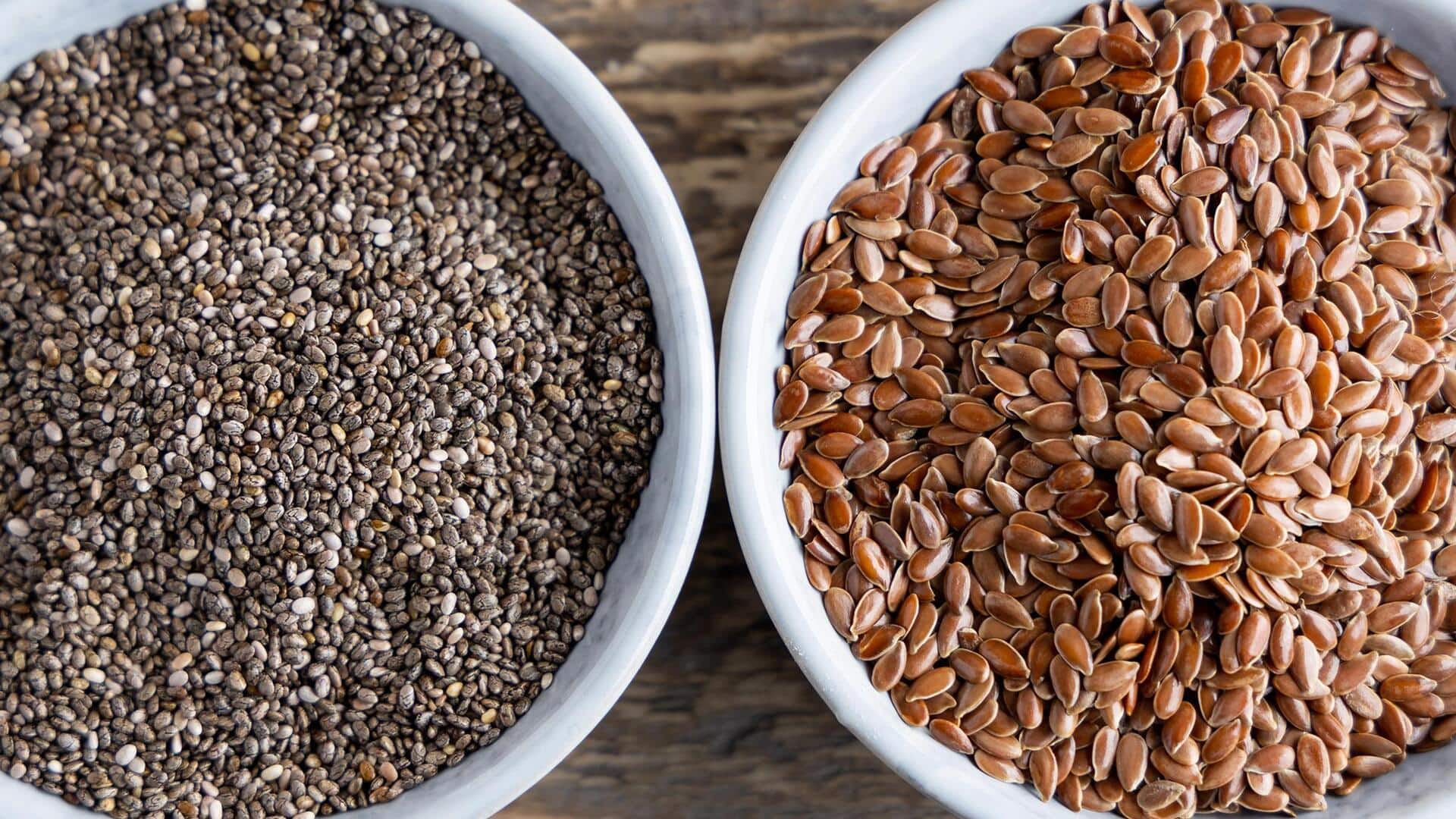
Chia v/s flax: Which superseed is more nutritious?
What's the story
Chia seeds and flaxseeds are two popular superfoods known for their health benefits. Both are rich in nutrients and can be easily added to your diet. They are known for their high fiber content and omega-3 fatty acids. Knowing the nutritional profiles of these seeds can help you make informed dietary choices. Here's a look at the nutritional differences between chia seeds and flaxseeds.
#1
Fiber content comparison
Chia seeds are also famous for their fiber content, providing around 11 grams of fiber per ounce. This helps with digestion and keeps you full.
Flaxseeds provide around eight grams of fiber per ounce but are also rich in lignans, which have antioxidant properties.
Both make excellent sources of dietary fiber but may serve different purposes depending on your nutritional needs.
#2
Omega-3 fatty acids in seeds
Both chia seeds and flaxseeds are loaded with alpha-linolenic acid (ALA), a type of omega-3 fatty acid.
Chia seeds have around five grams of ALA per ounce, while flaxseeds have around 6.3 grams per ounce.
Omega-3s are important for heart health and reducing inflammation.
Adding either seed to your diet can help you increase your intake of these essential fatty acids.
#3
Protein content analysis
Chia seeds provide around four grams of protein per ounce, which is more than flaxseeds, which provide around two grams per ounce.
Protein is important for repairing tissues and building muscles.
If you want to increase your protein intake with plant-based sources, chia seeds may be a better option than flaxseeds.
Tip 1
Caloric value considerations
When it comes to caloric value, both chia and flaxseeds are similar in terms of calories per serving size, with chia having roughly 138 calories per ounce and flax having around 150 calories per ounce.
This makes them calorie-efficient options for nutrient-dense foods without adding too many calories to your diet plan.