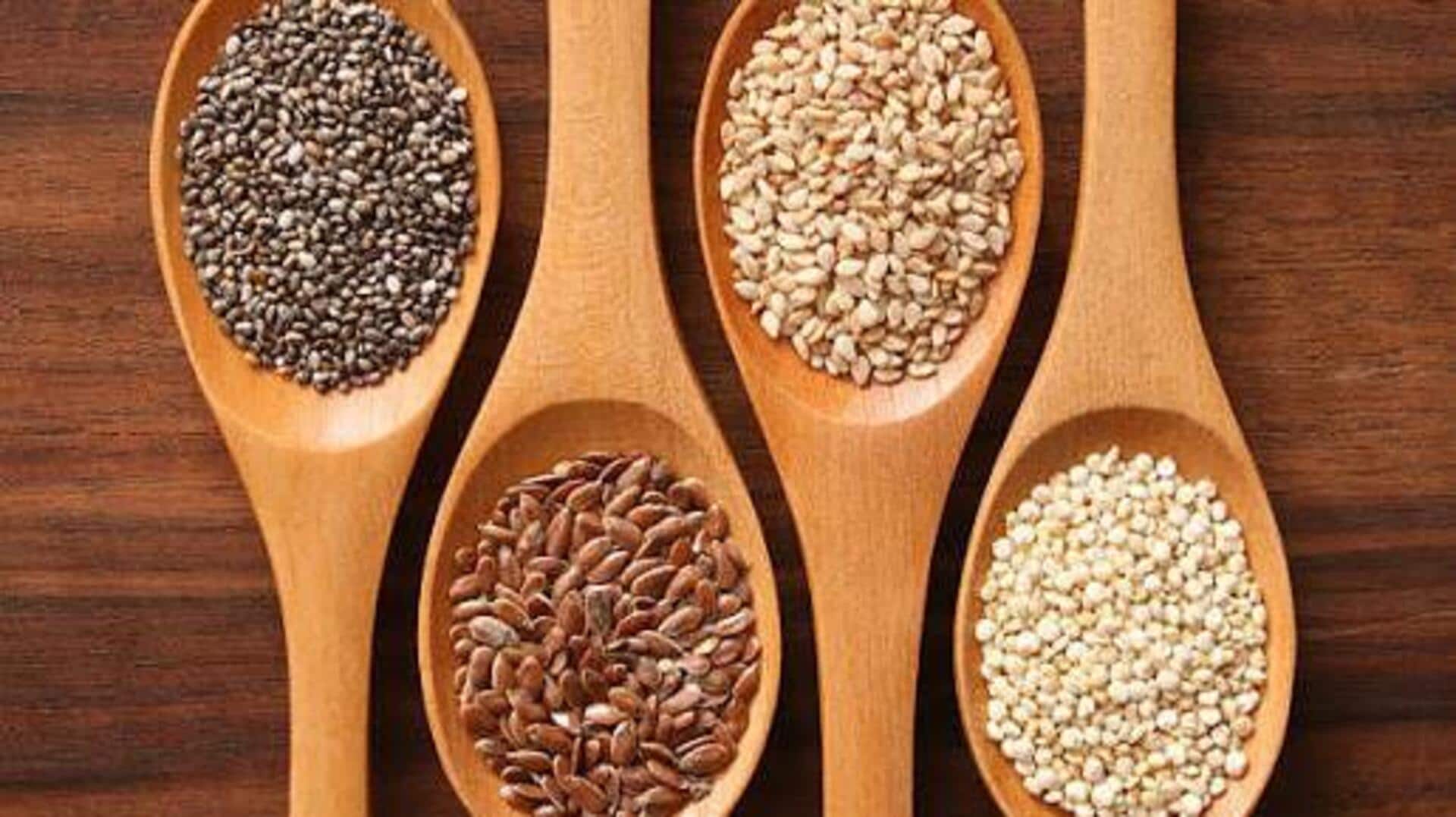
Chia seeds v/s flaxseeds: Which is healthier?
What's the story
Chia seeds and flaxseeds are two of the most popular superfoods, both of which are loaded with nutrients. They are both rich in omega-3 fatty acids, fiber, and protein, making them a perfect addition to a healthy diet. However, they differ in their nutrient profiles and health benefits. Knowing these differences can help you make informed dietary choices. Here's how chia seeds and flaxseeds compare.
#1
Omega-3 fatty acid content
Flaxseeds have more omega-3 fatty acids than chia seeds. They are rich in alpha-linolenic acid (ALA), which is essential for heart health.
While chia seeds also provide ALA, they have less than flaxseeds.
Adding either seed to your diet can help you get more omega-3s, but flaxseeds may be the better option if you are looking for higher ALA intake.
#2
Fiber content comparison
Both chia seeds and flaxseeds are excellent sources of dietary fiber, but they differ slightly in their fiber content.
Chia seeds provide about 10 grams of fiber per ounce, while flaxseeds offer around nine grams per ounce.
The high fiber content of both helps with digestion and promotes gut health.
Including either seed in your meals can help you meet your daily fiber requirements.
#3
Protein powerhouses
When it comes to protein content, both chia and flaxseeds offer a good amount for plant-based sources.
Chia seeds provide about four grams of protein per ounce, while flaxseeds provide slightly more at five grams per ounce.
Protein is important for muscle repair and growth, making both these superfoods an excellent addition to vegetarian or vegan diets, looking for protein sources.
Tip 1
Nutrient absorption tips
To maximize nutrient absorption from these seeds, consider grinding flaxseeds before consumption, as whole flaxseeds may pass through the digestive system undigested.
Chia seeds can be consumed whole since they expand when soaked in liquid, forming a gel-like consistency that aids digestion and nutrient absorption without the need for grinding.