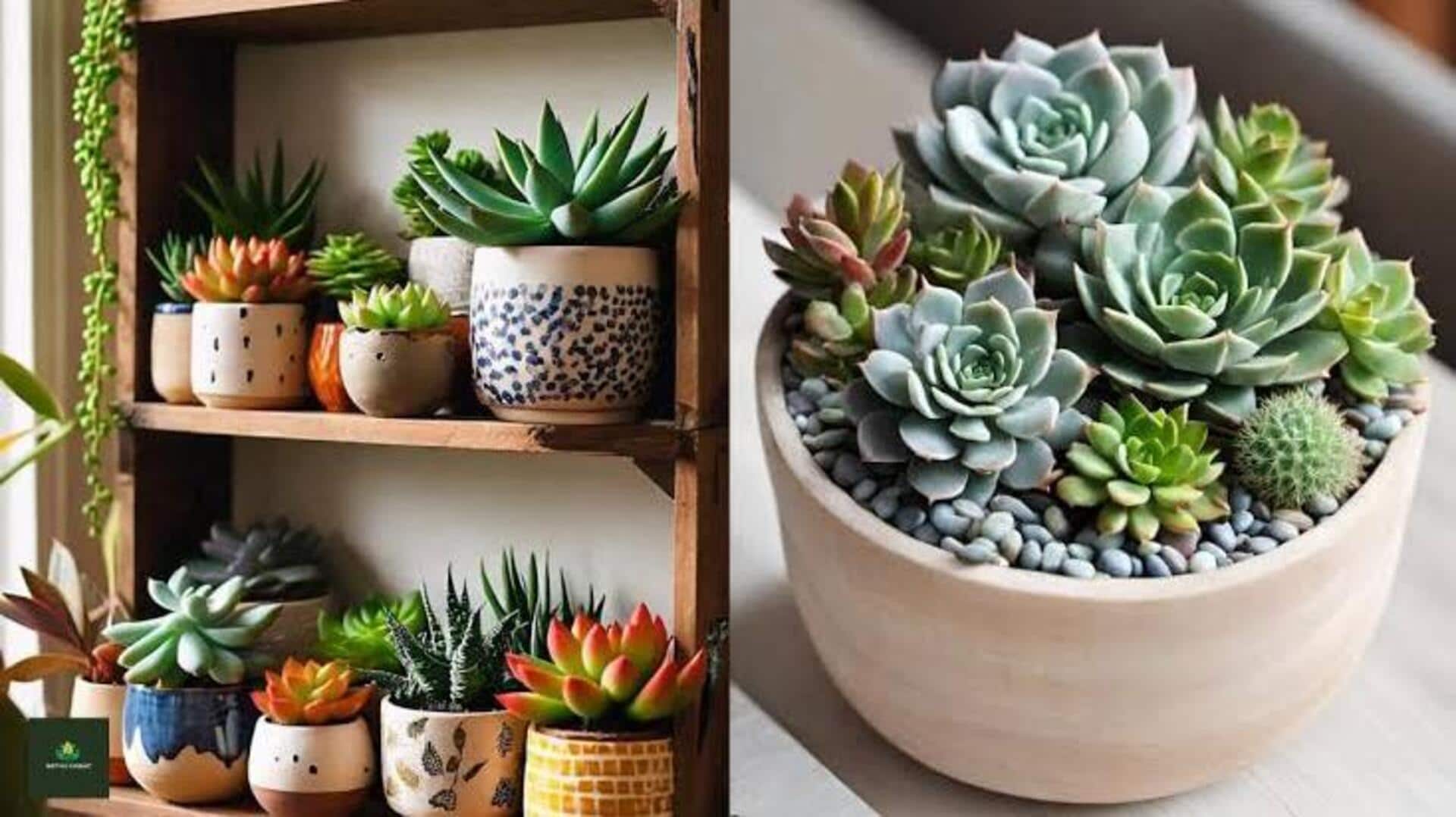
Choosing pots for succulents? Read this!
What's the story
Succulents are the most forgiving plants, but choosing the right pot is key to their health. The right pot can make a world of difference in how well your succulents grow. Here are five tips to help you pick the perfect pot for your succulent plants. These tips will help you make the right choice, ensuring your succulents stay healthy and vibrant.
Tip 1
Drainage is essential
One of the most important things to keep in mind while picking a pot for succulents is drainage.
Succulents do not like to sit in water, which is why it is important for the pot to have drainage holes at the bottom.
This way, excess water can escape easily, preventing root rot.
Make sure the pot you choose has adequate drainage to keep your succulent's roots healthy.
Tip 2
Material matters
The material of the pot also affects how well your succulent grows.
Terracotta pots are a popular choice, as they are porous and allow air exchange, which helps in preventing overwatering.
However, ceramic and plastic pots can also work well if they have proper drainage holes.
Choose a material that suits your environment and provides good airflow.
Tip 3
Size considerations
Choosing the right size pot is crucial for succulent health.
A pot that is too big can retain excess moisture, while a too-small one may restrict root growth.
Ideally, pick a pot that allows some room for growth but is not excessively large.
This will ensure your succulent gets the right moisture balance and space to grow.
Tip 4
Consider weight and stability
Weight and stability are important factors when picking a pot for succulents, particularly if you plan to keep them outdoors or on shelves.
Heavier pots are less likely to tip over in windy conditions or when bumped into accidentally.
If you want to keep lightweight containers indoors, think about adding small rocks at the bottom for added stability, without adding much weight.
Tip 5
Aesthetic appeal vs practicality
While aesthetics are important when selecting pots for succulents, practicality shouldn't be ignored either.
Pick designs that complement your decor but also serve functional purposes, such as good drainage and insulation from temperature extremes.
This way, you can have both style and substance in your plant care routine.