How to start collagraph printmaking at home
What's the story
Collagraph printmaking is a fun and affordable way to explore art at home. This technique involves creating prints from textured plates, which can be made from everyday materials. Not only does it encourage creativity, but it also provides an opportunity to experiment with different textures and patterns. With minimal equipment required, collagraph printmaking is accessible to beginners and seasoned artists alike.
Materials
Gather your materials
To start collagraph printmaking, you'll need some basic materials: cardboard or thick paper for the plate, glue or paste for textures, scissors or a craft knife for cutting shapes, and ink or paint for printing. You can also use fabric scraps, leaves, sandpaper, or any textured item you find around your home. These items are usually inexpensive or free, making this art form budget-friendly.
Inking
Inking your plate
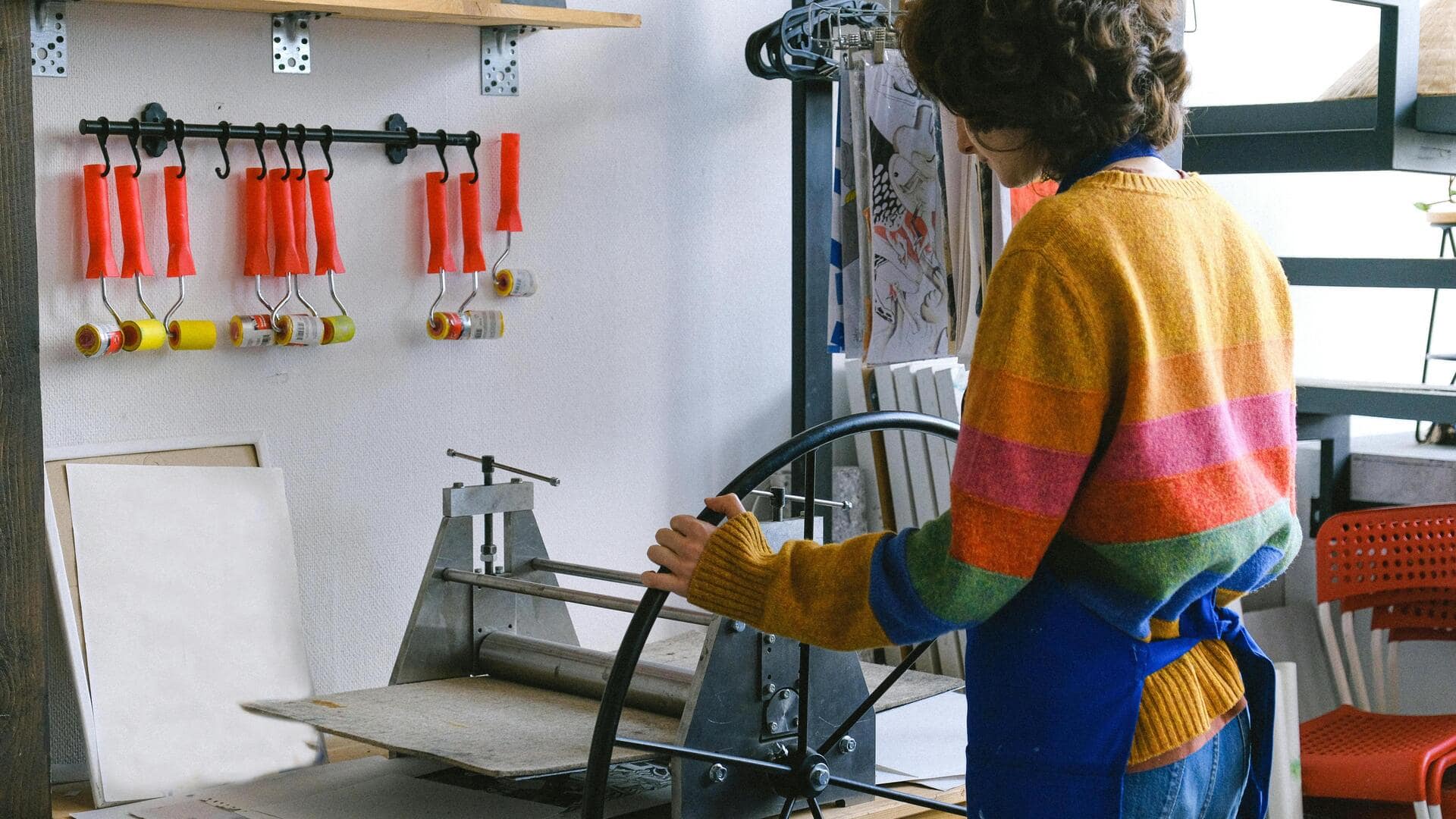
Once your textured plate is ready, it's time to apply ink. Use a brayer (roller) to spread ink evenly across the surface of your plate. Make sure every texture is covered, but not too much that it overflows into unwanted areas. Press paper onto the inked plate using your hands or a printing press if you have one available. This transfers the design onto paper.
Designing
Create your textured plate
Start by designing your plate on the cardboard/paper. Use glue to stick down your chosen textures in an interesting pattern. Once dry, seal the whole plate with varnish or clear acrylic medium so it's durable and can be inked multiple times without degrading. This step is important as it preserves the integrity of your design through several prints.
Different techniques
Experiment with different techniques
Collagraph printmaking also offers a world of possibilities to experiment with. Try varying pressure while printing for different effects, or layering multiple textures on one plate for complexity. You can also explore color variations by using different inks or paints each time you print from the same plate. This way, you can create unique pieces every time you engage in this artistic process.