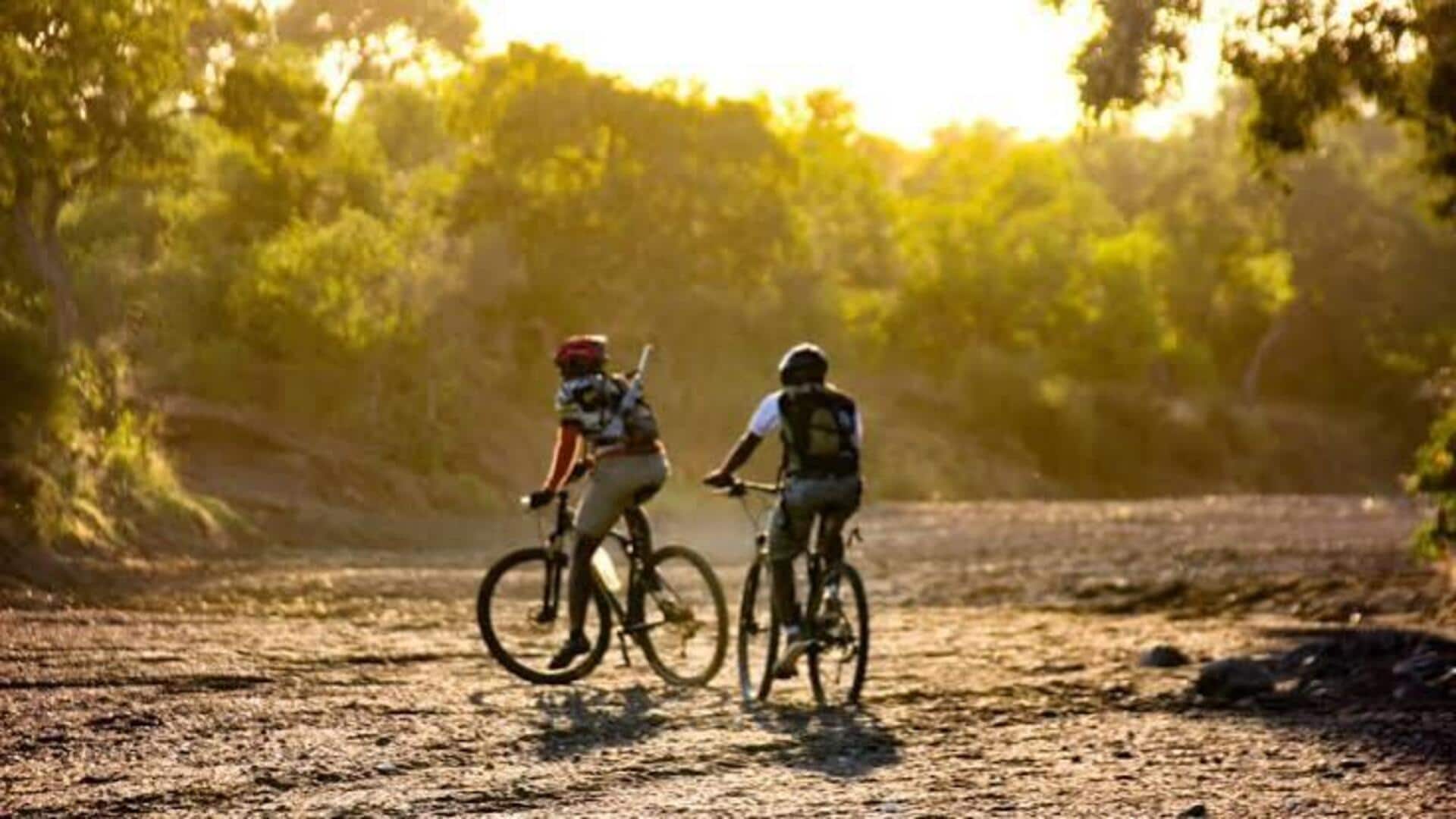
Cycling through Zambia's wilderness: A guide
What's the story
Exploring Zambia's remote wilderness by bicycle is an exhilarating way to experience the country's natural beauty and wildlife. The journey takes you through diverse landscapes, from lush forests to vast savannas, giving you a chance to witness the rich biodiversity of the region. Cycling allows for an intimate connection with nature, as you navigate trails less traveled by tourists. Here are some insights into this unique adventure.
Trail selection
Choosing the right trail
Selecting an appropriate trail is key to a successful cycling adventure in Zambia's wilderness.
Trails range from easy paths suitable for beginners to tough routes for seasoned cyclists.
Consider your fitness level and experience when choosing a trail.
Popular routes include those near national parks, where wildlife sightings are frequent.
Researching trail conditions and obtaining maps can help ensure a safe journey.
Gear essentials
Essential gear for cycling
Proper gear is essential for navigating Zambia's wilderness on a bike.
A sturdy mountain bike with good suspension is recommended to handle rough terrain.
Helmets, gloves, and padded shorts enhance safety and comfort during long rides.
Carrying enough water and snacks is crucial, as access to supplies may be limited in remote areas.
A first aid kit and basic repair tools can prove invaluable in case of emergencies.
Wildlife sightings
Wildlife encounters on trails
Cycling through Zambia's wilderness offers plenty of opportunities for wildlife encounters.
Cyclists may spot elephants, giraffes, zebras, and various bird species along the way.
However, it's important to maintain a safe distance from animals and respect their natural habitat.
Early morning or late afternoon rides often provide the best chances for sightings when animals are most active.
Safety tips
Tips for safe cycling in wilderness
Safety should always be your top priority while cycling through Zambia's remote areas.
Always ride with a partner or group whenever possible, as help may be far away in case of an emergency.
Inform someone about your planned route before heading out each day, so they know where you are in case of an emergency.
Be mindful of weather conditions, as they can change rapidly in these regions, affecting trail conditions significantly.