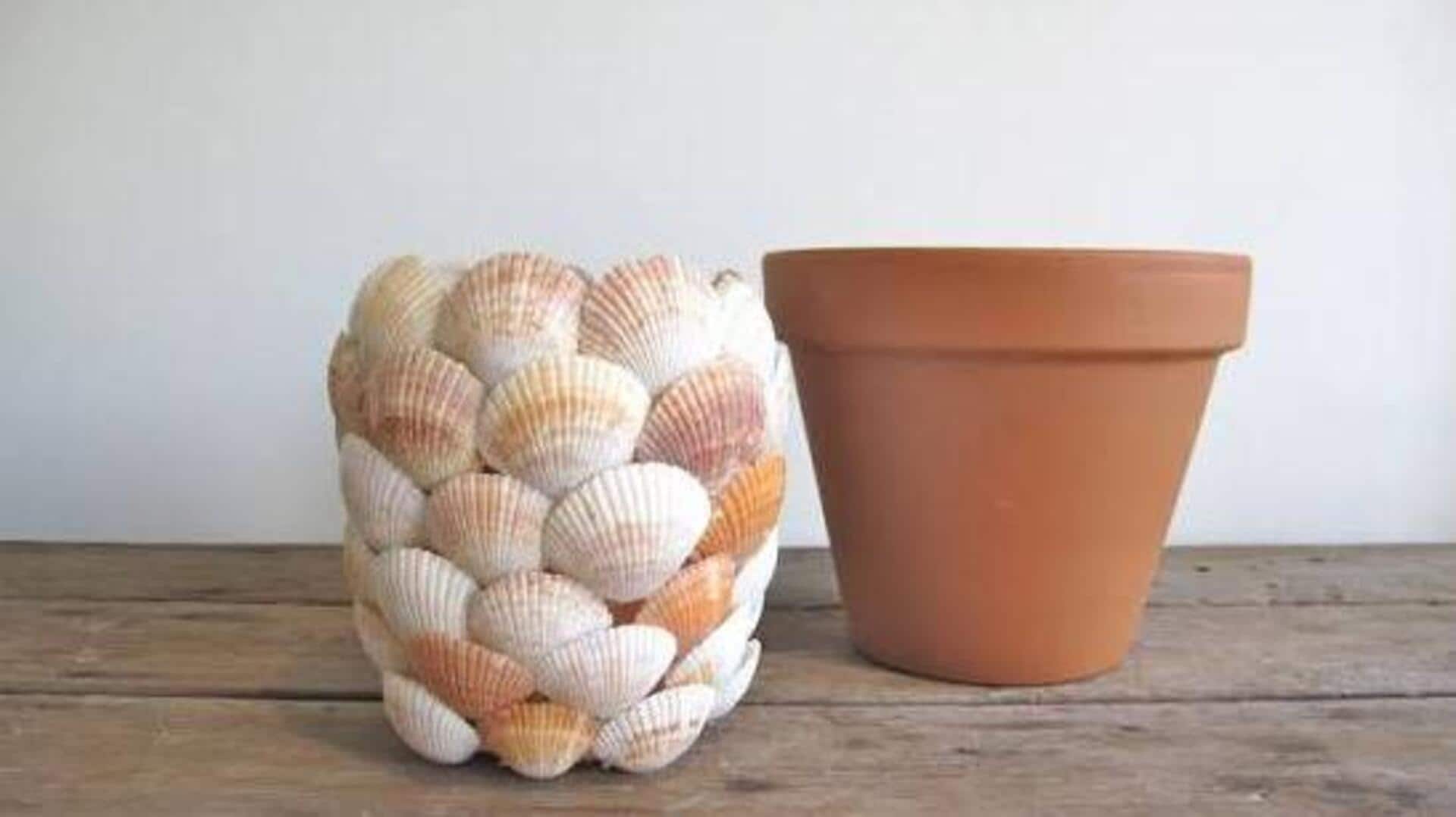
How to decorate handmade pots with shells
What's the story
African pottery is famous for its unique designs and cultural significance. One of the most popular ways to embellish these pots is by using cowrie shells. These shells not only add beauty but also carry historical and cultural importance in many African communities. Using cowrie shells in pottery making is a traditional art that has been passed down through generations. Here's how you can use cowrie shells to enhance your African pottery creations.
Shell selection
Selecting the right cowrie shells
Choosing the right cowrie shells is important for your pottery project.
Look for shells that are clean, intact, and have a smooth surface.
The size of the shell should match the design you have in mind. Smaller shells can be used for intricate patterns, while larger ones can serve as focal points on your pot.
Make sure each shell complements the overall aesthetic of your piece.
Base preparation
Preparing your pottery base
Before adding cowrie shells, prepare your pottery base properly.
Ensure that your pot is well-shaped and dried to prevent cracking during firing. A smooth surface will help in better adhesion of the shells.
If you are using clay, make sure it is pliable enough to allow easy manipulation without losing its shape.
Shell arrangement
Arranging cowrie shells on pottery
Arranging cowrie shells on pottery is an art in itself. Start by planning out where each shell will go before sticking them on.
You can create symmetrical patterns or random designs, depending on your preference.
Use a strong adhesive, or natural clay slip, to attach the shells securely to the surface of the pot.
Final steps
Firing and finishing touches
Once all cowrie shells are attached, let your pottery dry completely before firing it in a kiln if required.
The firing process will solidify any clay components, but be careful not to damage delicate shell arrangements with high temperatures or direct flames.
After firing, add any additional finishes like glazes or paints if desired, while preserving the integrity of both clay and shell elements.