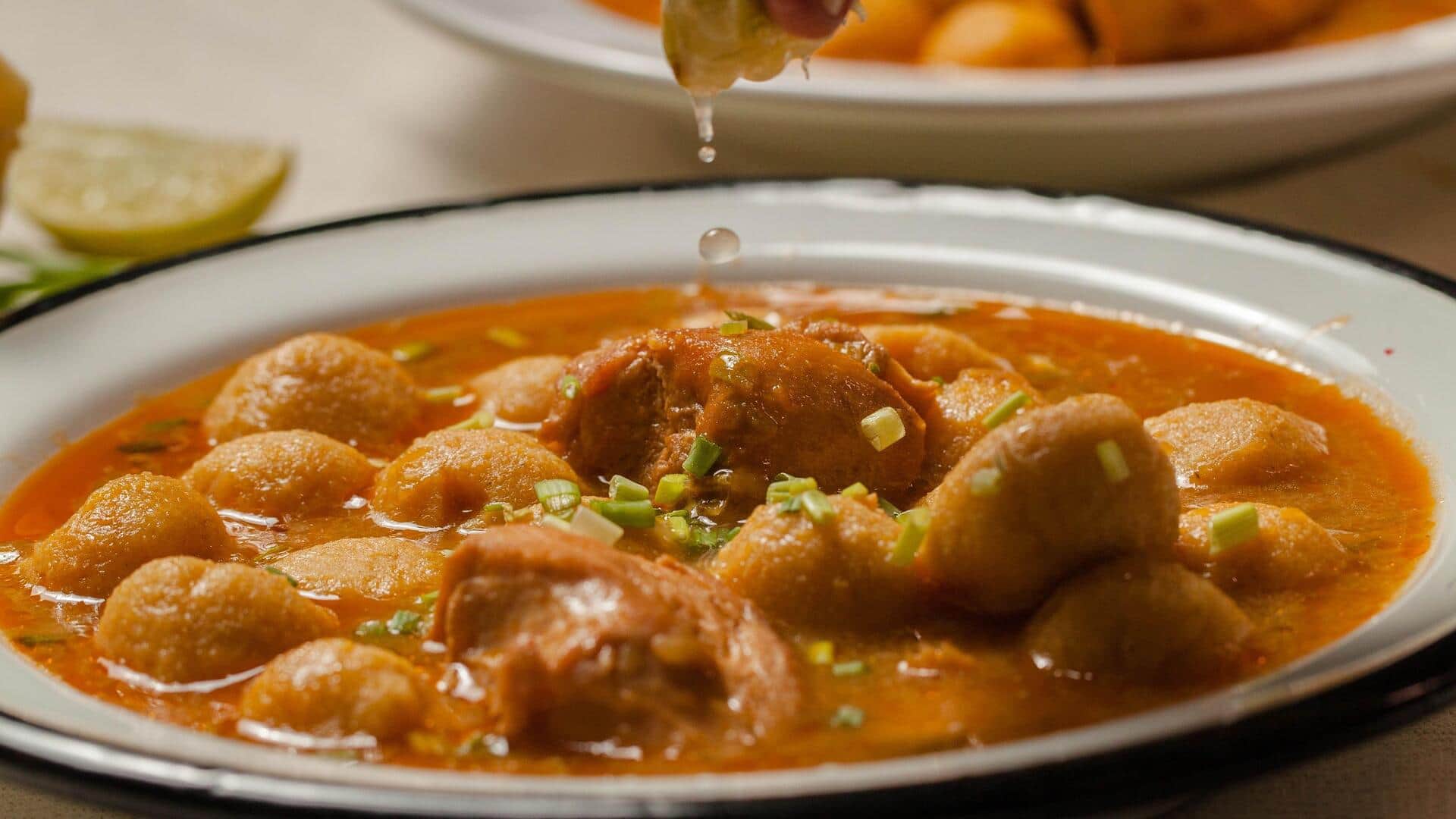
Dhokli: A staple dish with a rich history
What's the story
Dhokli, a traditional Indian dish, has a rich history that dates back centuries. Originating from the western parts of India, it is a staple in many households. Made with wheat flour and spices, dhokli is known for its unique texture and flavor. The dish has evolved but continues to be a favorite among those who appreciate its simplicity and taste.
#1
Origins of dhokli
Dhokli traces its roots to Gujarat and Maharashtra, where it was first prepared as a humble meal with locally available ingredients.
The dish was mainly prepared during festivals or special occasions.
With time, it became a household staple because of its ease of preparation and nutritional value.
The original recipe has been passed down through generations, with slight variations according to regional tastes.
#2
Evolution through time
Over the years, dhokli has evolved with the addition of different spices and ingredients.
In some regions, vegetables like potatoes or peas are added to enhance the flavor.
The cooking method has also changed from traditional boiling to steaming or frying in some cases.
This evolution reflects the changing culinary landscape of India while keeping the essence of the dish intact.
#3
Nutritional value of dhokli
Dhokli is not just delicious but also nutritious.
Wheat flour is the main ingredient, which is rich in fiber and provides essential nutrients like iron and magnesium.
The spices used in dhokli also add to its health benefits by improving digestion and boosting metabolism.
This makes it an ideal choice for health-conscious people who want to eat traditional food.
#4
Cultural significance today
Today, dhokli holds cultural importance in many Indian communities as it is commonly served during family gatherings or festivals.
It acts as a link between generations as families pass on their own recipes with stories from the past.
Its popularity also highlights how traditional foods can remain relevant in modern times while still being loved by all age groups.