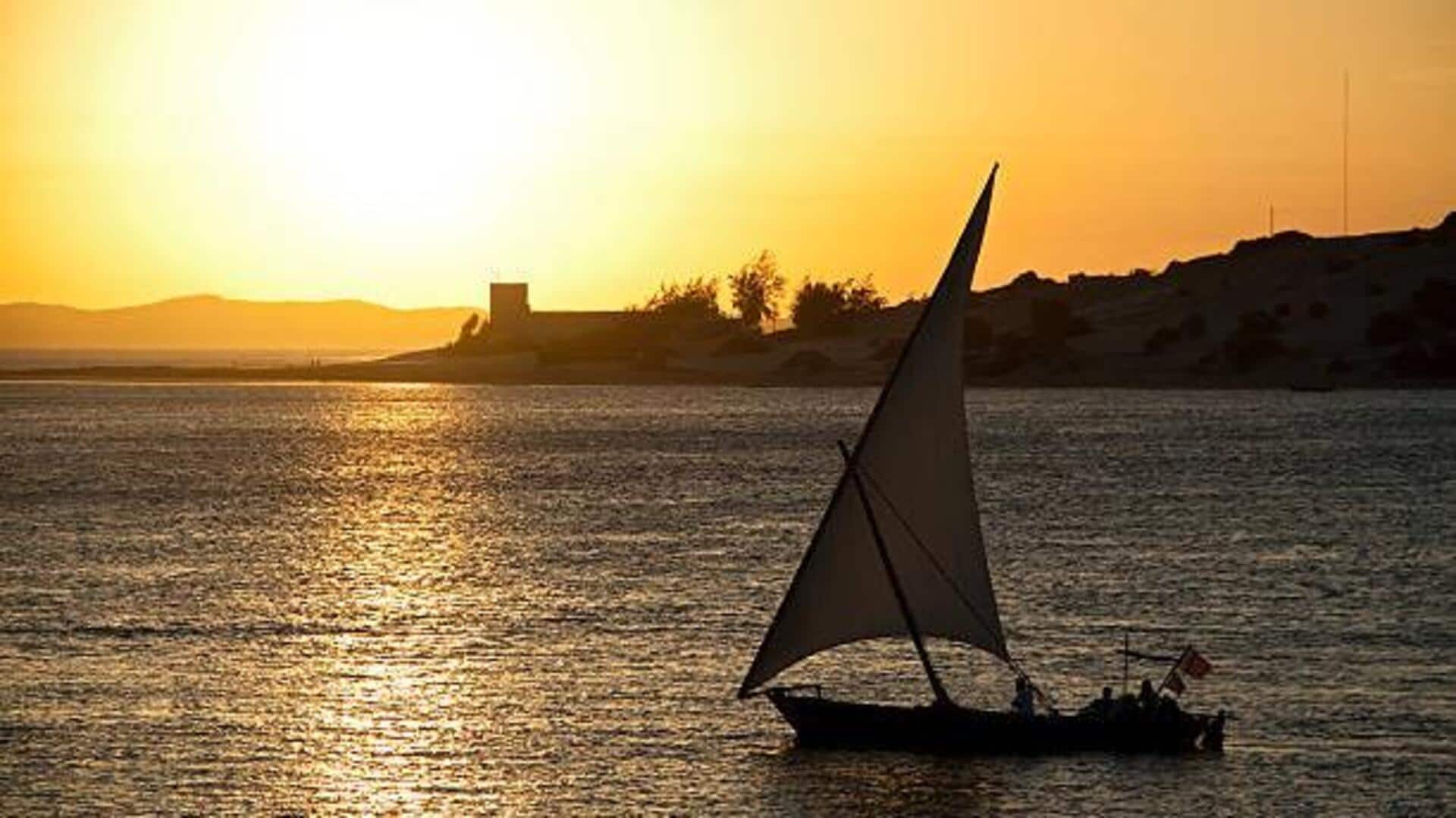
A guide to dhow sailing in Mozambique
What's the story
Exploring Mozambique's Quirimbas Archipelago on a traditional dhow is an experience like no other. These wooden boats, which have been used for centuries, provide a unique way to discover the islands' pristine waters and rich marine life. The sail offers a glimpse of the vibrant culture and stunning natural beauty of the region. Here are some insights into this unforgettable adventure.
#1
Discovering the archipelago's beauty
The Quirimbas Archipelago is a collection of over 30 islands, each with its own unique charm. The turquoise waters and white sandy beaches make for an idyllic setting for sailing.
As you sail from one island to another, you will be greeted with lush vegetation and diverse wildlife.
The clear waters also make for great snorkeling opportunities, letting you explore colorful coral reefs and marine species.
#2
Traditional dhow sailing experience
Sailing on a traditional dhow is an authentic experience that connects you to the region's maritime heritage.
These wooden boats are handcrafted by local artisans, using techniques passed down through generations.
The gentle pace of a dhow allows you to appreciate the surrounding beauty while enjoying the fresh sea breeze.
It is also an eco-friendly mode of transport that minimizes environmental impact.
#3
Engaging with local culture
The Quirimbas Archipelago is home to vibrant communities that reflect Mozambique's rich cultural tapestry.
While you are on your sailing adventure, you can visit local villages and interact with residents, who are more than happy to share their traditions and way of life.
You can also indulge in local cuisine prepared from fresh ingredients sourced from nearby waters.
Tip 1
Tips for planning your sail
When planning your dhow sailing trip in Mozambique, it is advisable to consider the best time of year for weather conditions.
The dry season between May and October usually offers calmer seas, ideal for sailing.
Further, hiring an experienced guide can enhance your experience by providing insights into both navigation and local culture along the way.