All about Djerma calabash carving
What's the story
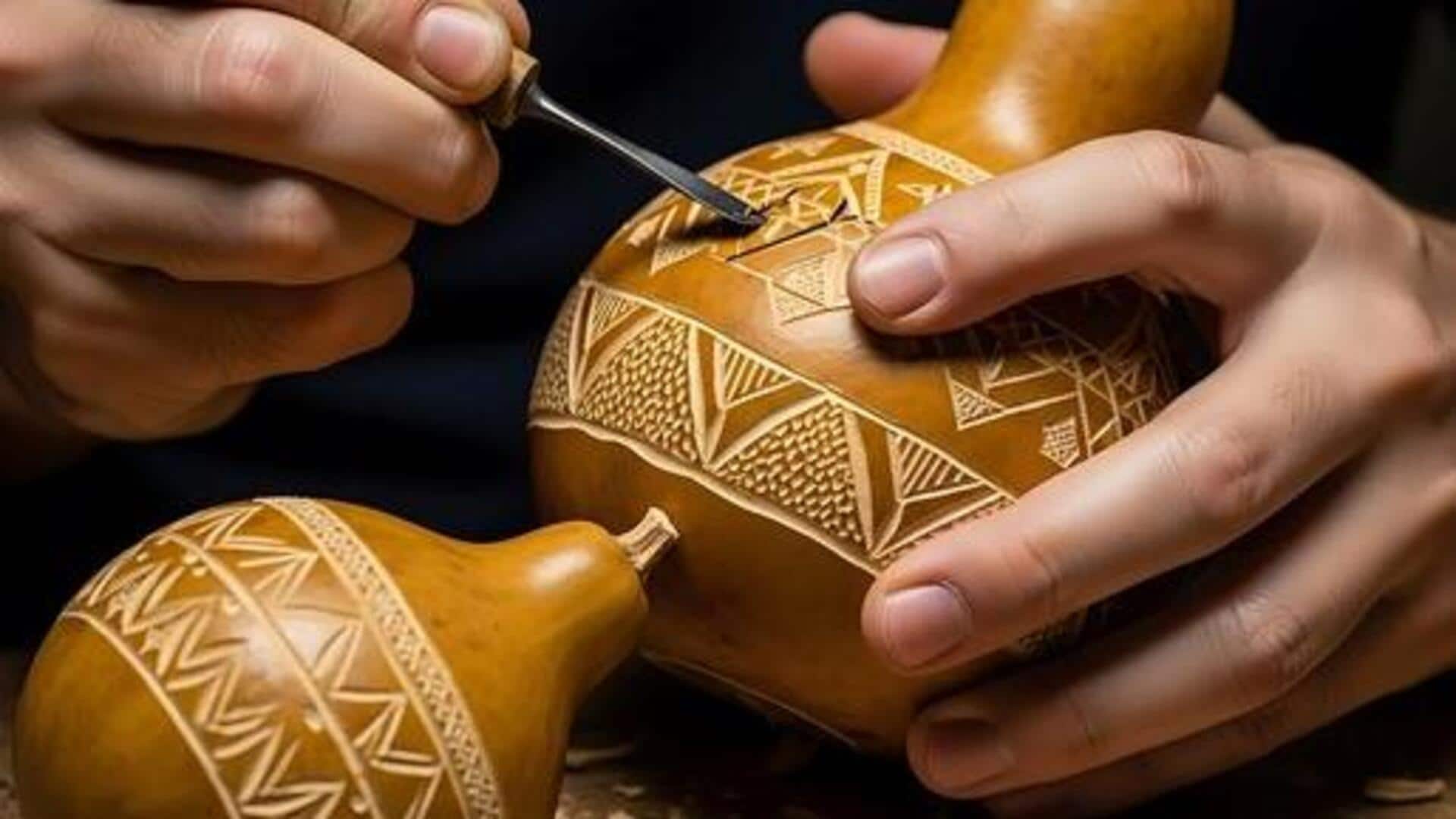
Djerma calabash etching is a unique art form from West Africa, particularly Niger. The technique involves carving intricate designs on calabashes, which are then used as storage containers. These containers are not just functional but also serve as decorative pieces that reflect the rich cultural heritage of the Djerma people. The art form has been passed down through generations, showcasing the craftsmanship and creativity of its artisans.
#1
Historical significance of calabash etching
The history of calabash etching goes back centuries, with roots in traditional African practices.
Historically, these etched calabashes were used for storing grains, seeds, and other household items. The designs carved on them often had cultural significance or told stories of the community's history.
Today, this art form is recognized for its cultural value and is preserved by artisans who continue to practice this age-old craft.
#2
Techniques used in calabash etching
Calabash etching involves several techniques that require precision and skill.
Artisans start by selecting a suitable calabash and then drying it until it's hard enough to carve.
They use sharp tools to create detailed patterns on the surface of the gourd.
The designs can range from geometric shapes to intricate motifs that reflect nature or daily life in their communities.
#3
Modern applications of etched calabashes
While traditionally used for storage, modern applications of etched calabashes have expanded beyond their original purpose.
Today, these pieces are often used as decorative items in homes or galleries around the world.
Some artisans have even begun incorporating them into fashion accessories or other functional items such as lampshades or bowls, showcasing their versatility.
Tip 1
Preserving cultural heritage through art
Preserving cultural heritage through art is essential for keeping traditions alive for future generations.
By supporting artisans who practice Djerma calabash etching, we help keep this unique craft alive.
It also promotes cultural exchange by introducing people globally to African art forms with rich histories behind them.