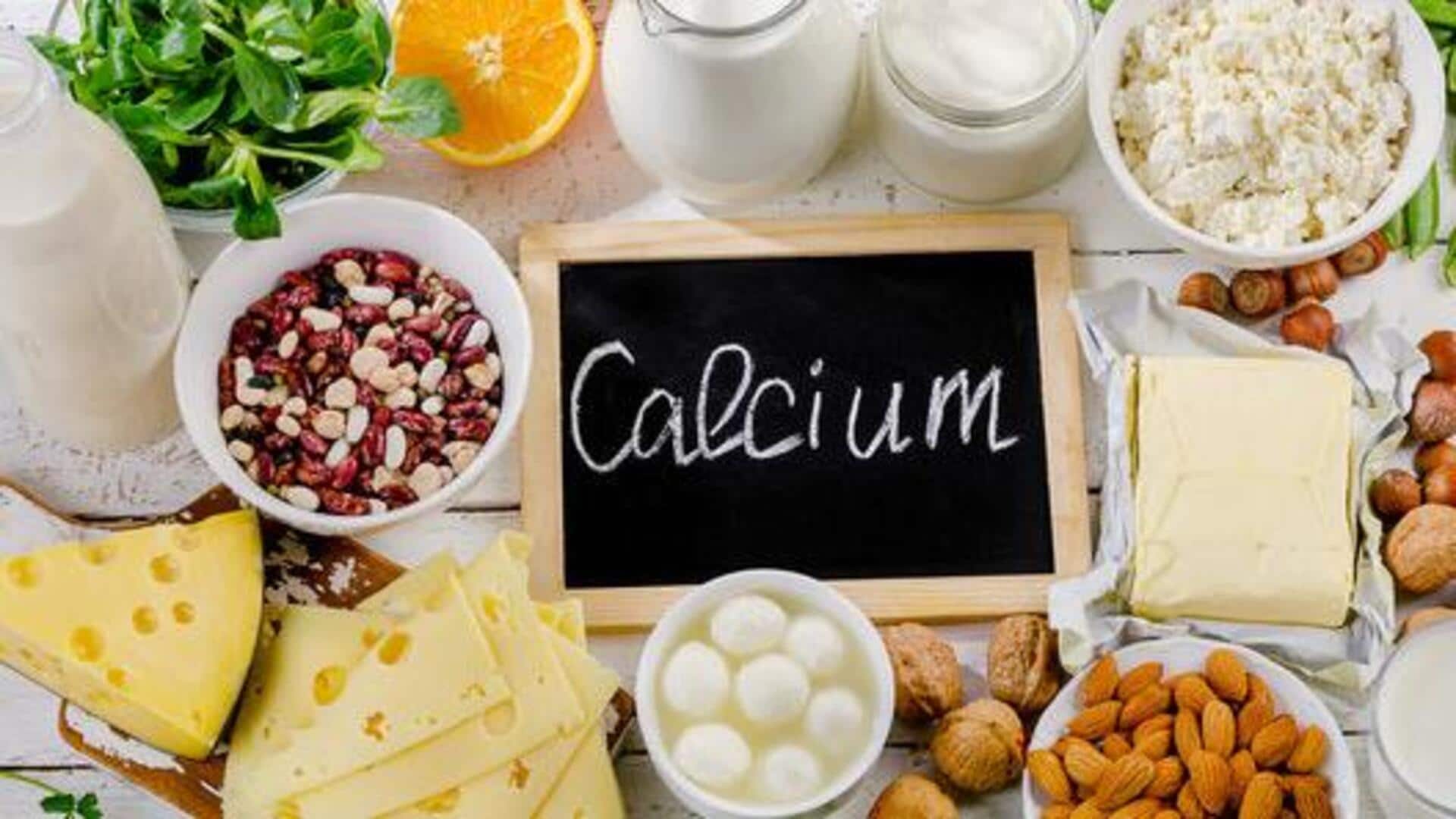
Do calcium-rich foods increase kidney stone risk?
What's the story
Milk is often blamed for kidney stones, but the myth does not hold water. Many believe that calcium-rich foods such as milk can cause stones, but that is not how it works. In fact, calcium from food can even protect you from stones. Knowing how milk and calcium affect kidney stones can help make better dietary choices. Here is debunking the myth with some insights.
#1
Calcium's role in kidney stone formation
Calcium is often wrongly blamed for kidney stones.
However, dietary calcium binds with oxalate in the intestines, preventing it from entering the bloodstream and forming stones in the kidneys.
Notably, studies show that people who consume adequate amounts of dietary calcium have a lower risk of stone formation than those who consume low amounts.
#2
Oxalate-rich foods v/s milk
Oxalate-rich foods such as spinach, nuts, and chocolate are often implicated in stone formation.
While these foods are healthy, pairing them with calcium-rich foods can minimize their oxalate absorption.
Milk, being a good source of dietary calcium, helps neutralize oxalates from these foods when consumed together or around the same time.
#3
Hydration is key
Staying hydrated is the most important thing to keep kidney stones at bay.
Water dilutes urine and helps flush out substances that could form stones.
Milk also contributes to hydration and provides essential nutrients, without increasing the risk of stone formation when consumed as part of a balanced diet.
Tip 1
Balanced diet for stone prevention
A balanced diet with adequate calcium, low sodium, and moderate protein can help prevent kidney stones.
Reducing salt intake prevents calcium loss through urine, while moderate protein consumption avoids excess acid production that could lead to stone formation.
Including milk in such a diet ensures you get enough calcium without the risk of developing kidney stones.