Exploring the spiritual roots of Bangladesh's Baul music
What's the story
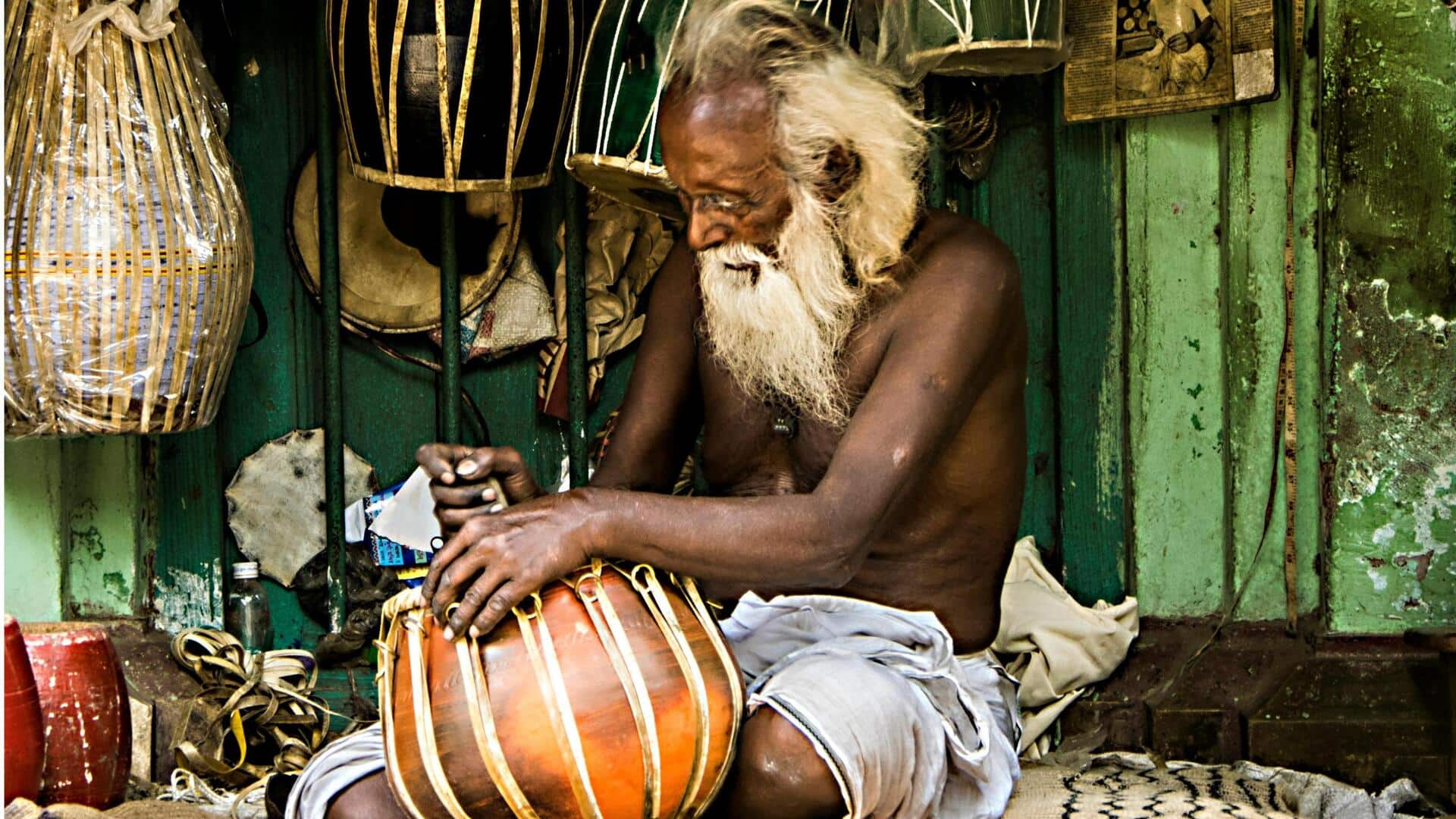
The Baul music of Bangladesh is a unique spiritual tradition passed down through generations. The eclectic musical form, a blend of folk songs, poetry, and philosophy, is deeply rooted in the spiritual beliefs of the Bauls. These wandering minstrels use music as a means to express their spiritual experiences and connect with the divine. The tradition is not just an art form but a way of life for many.
#1
Origins and history of Baul music
Baul music has its roots in rural Bengal and dates back to the 15th century.
It was developed as a reaction to rigid religious practices and societal norms.
The Bauls traveled from village to village, singing songs that challenged conventional beliefs and promoted inner freedom.
Over the years, this tradition has evolved but continues to retain its core message of seeking truth through personal experience.
#2
Instruments used in Baul music
The Bauls use a variety of traditional instruments to create their distinctive sound.
The ektara, a one-stringed instrument, is commonly used for its simplicity and ability to produce haunting melodies.
Other instruments include the dotara and khamak, which add depth and rhythm to their performances.
These instruments are not just musical tools but also symbolic representations of the Bauls's spiritual journey.
#3
Themes explored in Baul songs
Baul songs usually explore themes of love, freedom, and self-discovery.
The lyrics often talk about the search for inner peace and connection with the divine.
The Bauls use metaphors from nature and everyday life to convey complex spiritual ideas simply.
This makes their music accessible yet profound, resonating with audiences across cultures.
#4
Influence on modern music
The influence of Baul music has extended beyond traditional boundaries into contemporary genres like folk fusion and world music.
Artists globally have drawn inspiration from its unique blend of melody and philosophy. They incorporate elements into their own works while paying homage to this rich cultural heritage.
This continues to inspire new generations around the world today.