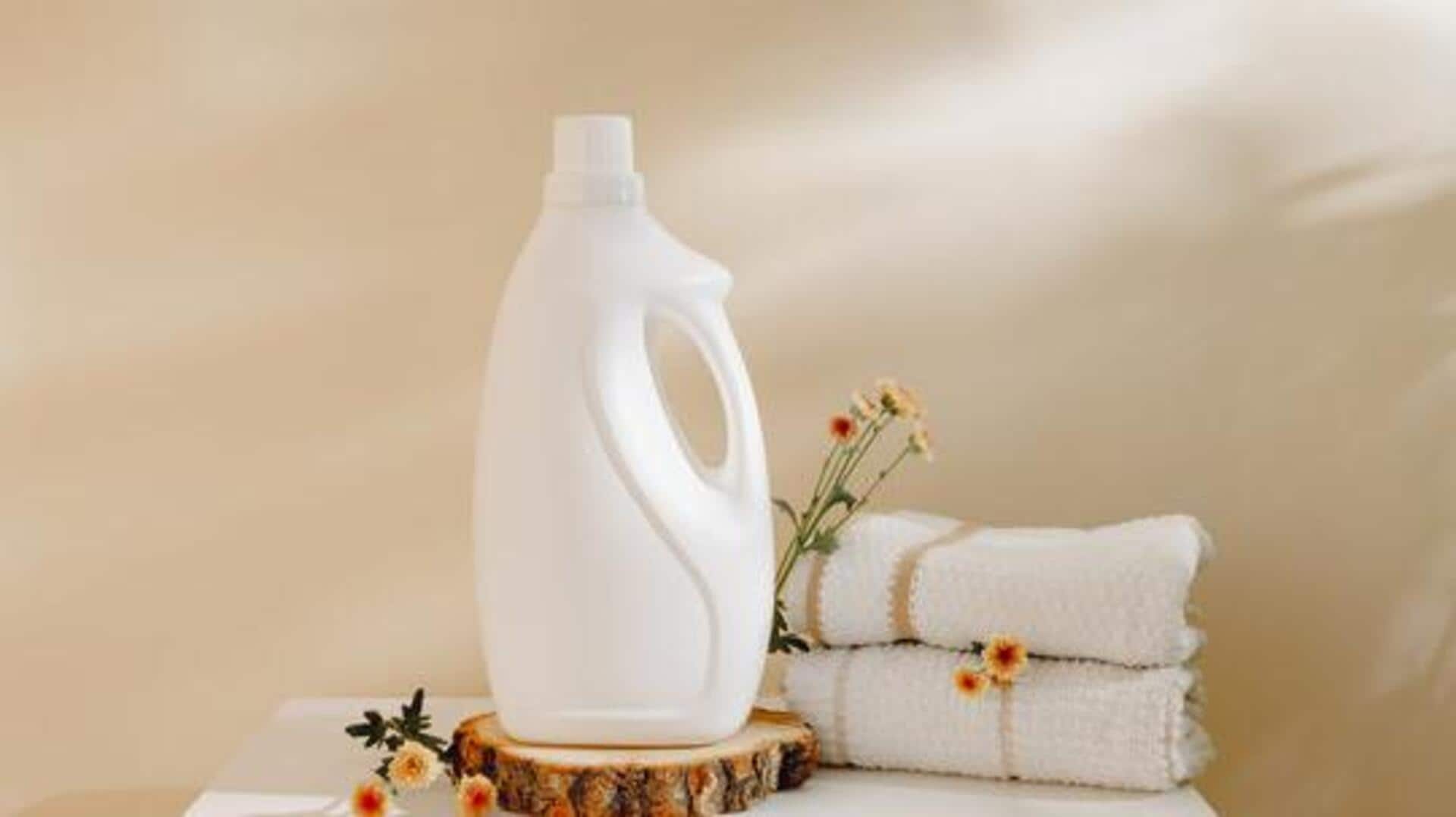
What you didn't know about fabric softeners
What's the story
Fabric softeners are a common laundry room staple, but they come with a lot of misconceptions. Most people think they know how these products work and what they do, but not all of it is true. In this article, we debunk some common myths about fabric softeners, and help you understand their real benefits and limitations. Knowing the truth can help you make better laundry choices.
#1
Myth: Fabric softeners prevent static cling
One common myth is that fabric softeners completely eliminate static cling in clothes.
While they do reduce static by coating fibers with a thin layer of chemicals, they don't eliminate it entirely.
Static cling can still occur due to environmental factors like humidity levels and the type of fabric being washed.
So, relying solely on fabric softeners for static-free clothes may not always work.
#2
Myth: Fabric softeners are safe for all fabrics
Another misconception is that fabric softeners are safe for all types of fabrics.
However, some materials like activewear or towels may lose absorbency or elasticity when treated with fabric softeners.
The chemicals in these products can interfere with moisture-wicking properties and reduce the lifespan of certain garments.
Always check care labels before using fabric softener on delicate or specialized fabrics.
#3
Myth: Fabric softeners clean clothes
Many people think fabric softeners clean clothes, but that's not true.
Fabric softeners are not detergents and don't remove dirt or stains from clothing.
Their main job is to make clothes feel softer and smell fresher after washing.
For cleaning purposes, you should always use a proper laundry detergent as per your garment's needs.
Tip 1
Myth: More is better with fabric softeners
Some people think that using more fabric softener than recommended will make clothes softer or smell better.
However, overuse can lead to residue buildup on clothing and washing machines, which may cause odors over time.
It's best to follow the manufacturer's instructions regarding the amount to use for optimal results without adverse effects on garments or appliances.