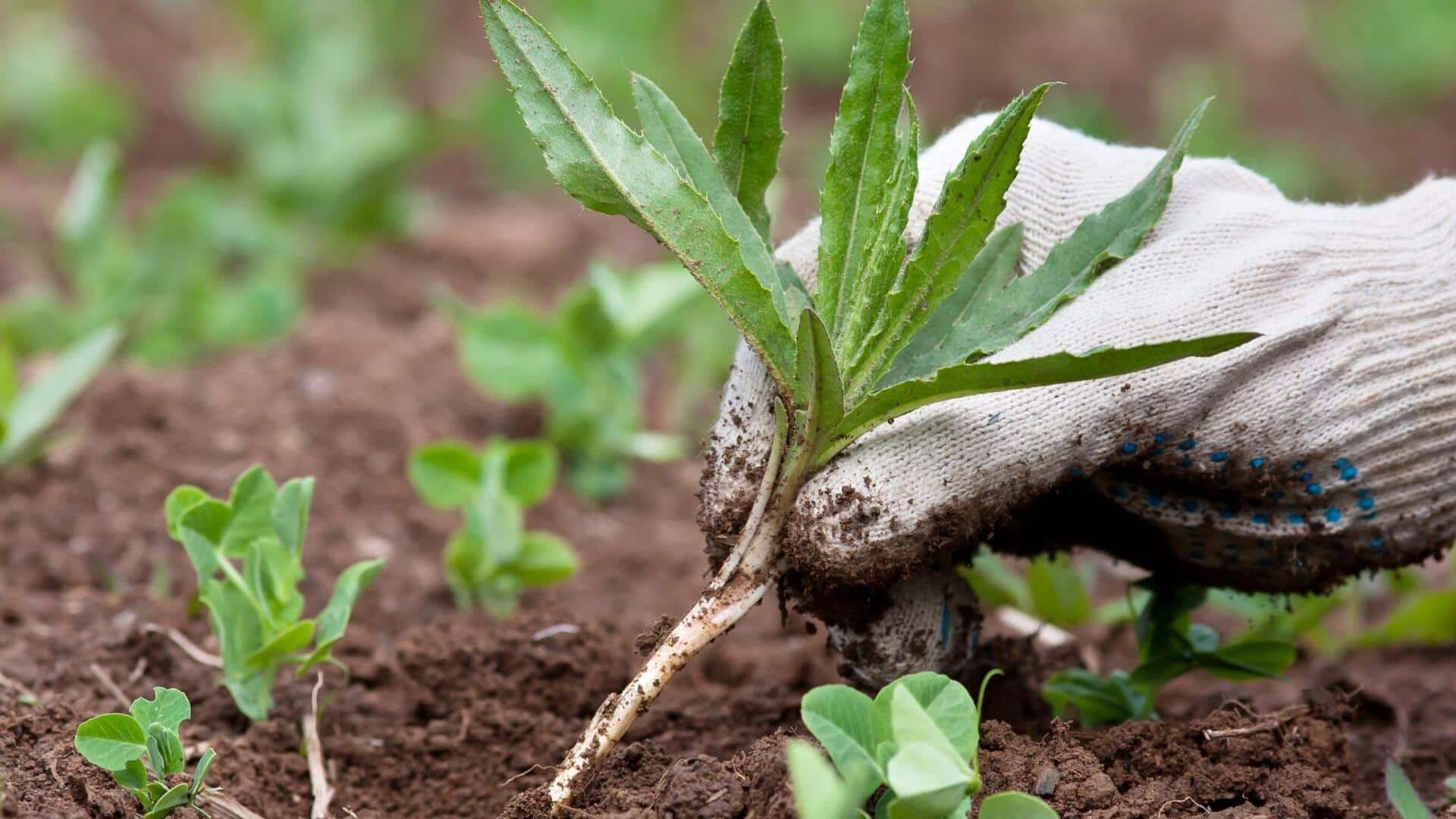
New to gardening? Follow these tips
What's the story
Gardening is not just a hobby, but also a powerful tool to improve your health. It gives you a chance to stay active, eat fresh, and connect with nature. For beginners, starting a garden can be an exciting journey toward better health. Here are five beginner-friendly gardening hacks that can help you reap the benefits of this rewarding activity without any hassle.
Tip 1
Start with easy-to-grow plants
Choosing easy-to-grow plants is the key to a successful start in gardening.
Herbs like basil and mint, or vegetables like lettuce and radishes, are perfect for beginners. They grow quickly and do not require much maintenance, giving you a sense of accomplishment early on.
These plants also encourage you to eat more home-grown produce, which is healthier than store-bought ones.
Tip 2
Use container gardening for space efficiency
If space is limited, container gardening is the way to go.
You can grow plants in pots or containers on balconies, patios, or even window sills.
This method saves space and allows you to control soil quality better.
Plus, it makes it easier to manage watering and sunlight exposure, ensuring optimal conditions for plant growth.
Tip 3
Implement companion planting techniques
Companion planting is when you plant certain plants together to benefit each other.
For instance, tomatoes and basil grow well together, as basil wards off pests that attack tomatoes, while enhancing their flavor profile.
This technique minimizes the need for chemical pesticides and promotes a balanced ecosystem in your garden.
Tip 4
Practice crop rotation annually
Crop rotation is the practice of changing the type of crops grown in a particular area each year.
This prevents soil depletion by ensuring that different nutrients are utilized by various plants over time.
It also reduces pest buildup associated with specific crops, leading to healthier plants without the use of harmful chemicals.
Tip 5
Utilize composting for nutrient-rich soil
Composting is a sustainable way to enrich your garden soil with nutrients from kitchen scraps and yard waste.
By creating compost at home, you recycle organic materials into valuable fertilizer that boosts plant growth naturally, without synthetic additives or chemicals.
This not only improves soil health but also contributes positively towards reducing household waste levels.