A guide to Greek wedding dances
What's the story
Greek weddings are a beautiful blend of tradition, culture, and celebration. One of the most lively aspects of these weddings is the dance rituals that bring families and friends together in joyous unity. Each dance has its own significance and history, making them an important part of the ceremony. From the energetic steps to the rhythmic movements, these dances are a way to honor heritage and celebrate love.
#1
The circle dance tradition
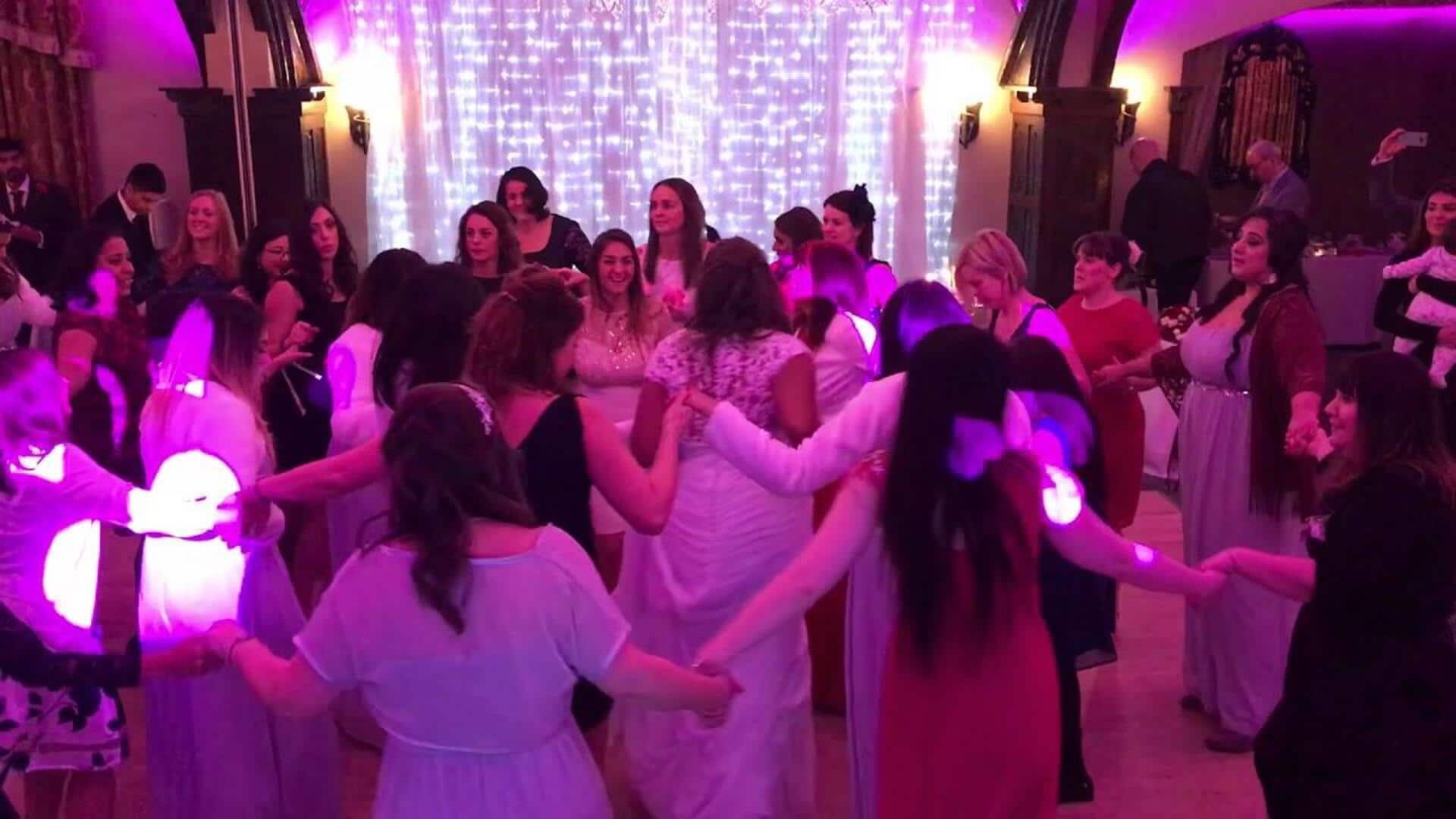
The circle dance, or the "syrtos," is a staple at Greek weddings.
Dancers hold hands in a circle, symbolizing unity and togetherness.
The dance is usually led by the bride or groom's family members, gradually involving all guests.
The syrtos is characterized by smooth steps and a steady rhythm, allowing everyone to join in regardless of age or skill level.
#2
Kalamatiano: A popular choice
Another popular wedding dance is Kalamatiano. It is characterized by its lively pace and intricate footwork.
Usually performed in a line or semi-circle formation, dancers take turns stepping forward to show off their moves.
The Kalamatiano is often accompanied by traditional instruments like the lyre or clarinet, adding to its festive spirit.
#3
Tsamiko: A symbol of strength
Tsamiko is a powerful dance that displays strength and pride.
It is usually performed by men who take turns stepping forward with bold movements before returning to the group.
This dance is characterized by high kicks and quick footwork, all set to fast-paced music.
Tsamiko also signifies bravery and honor in Greek culture.
#4
Zeibekiko: A solo expression
Unlike other group dances at weddings, zeibekiko is a solo dance that allows individuals to express themselves through movement.
It is characterized by slow steps followed by sudden bursts of energy as dancers move freely within an open space.
This style of dance emphasizes personal expression over conformity, while still being rooted in tradition.
#5
Hasapiko: A dance of history
Hasapiko has historical significance, originating from the Byzantine era as a military march.
Over time, it evolved into a social dance, popular at weddings.
It is characterized by smooth, flowing movements, making it accessible to all ages and skill levels.
This dance is a testament to the enduring legacy of Greek culture, bridging the past with the present.