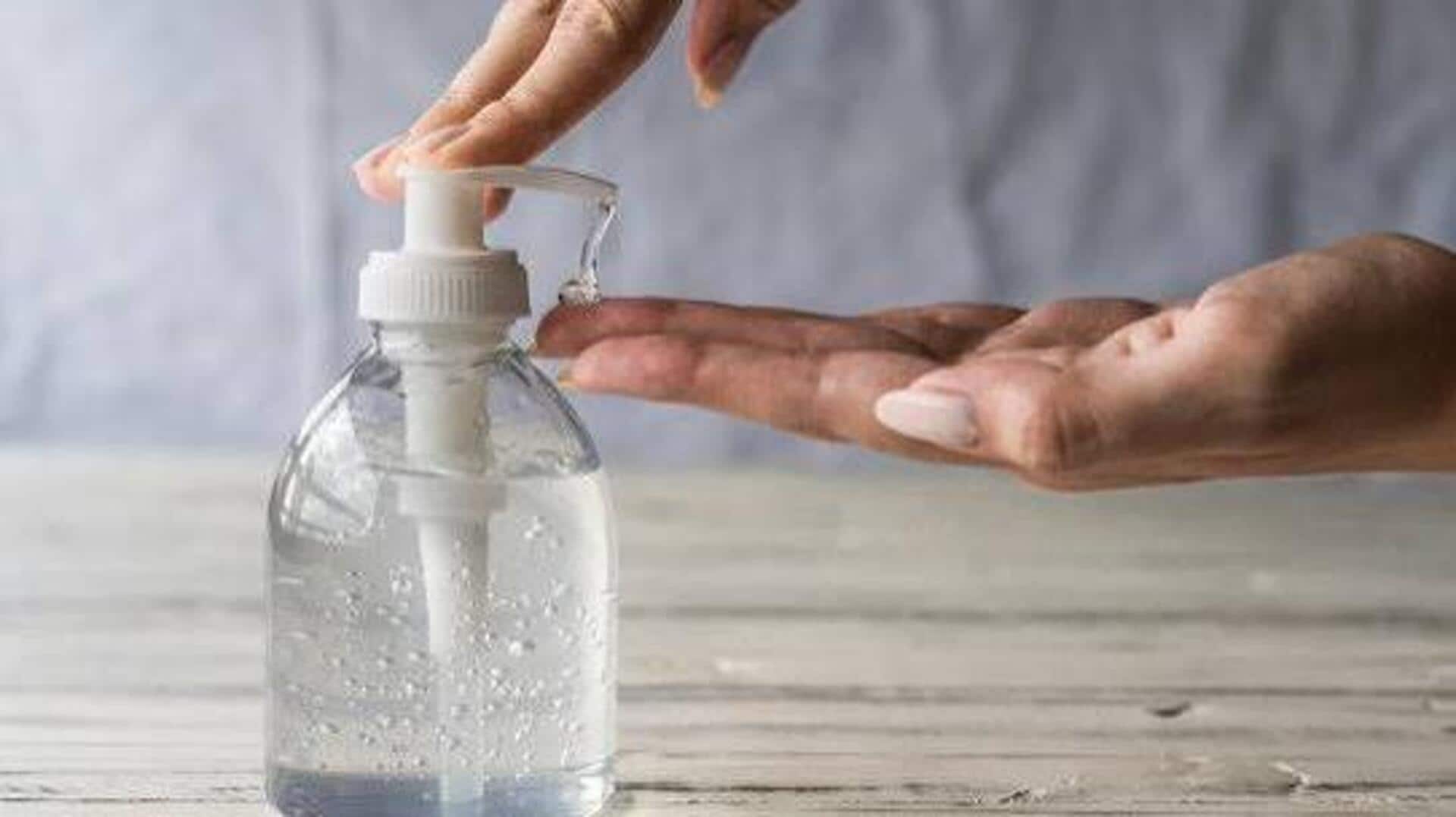
Debunking all myths about hand sanitizers
What's the story
Hand sanitizers have become an integral part of our daily lives, especially in the wake of the pandemic. However, there are a number of myths surrounding their use and effectiveness. Knowing the truth behind these myths is important to ensure proper hand hygiene practices. In this article, we will debunk some common misconceptions about hand sanitizers, and give you insights into their actual capabilities.
Effectiveness
Myth: All sanitizers are equally effective
Not all hand sanitizers are created equal.
The Centers for Disease Control and Prevention (CDC) recommends using products that contain at least 60% alcohol to effectively kill germs.
Some lower-alcohol or non-alcohol-based sanitizers may not be as effective against certain types of germs and viruses.
It is important to check the label and choose an appropriate product for maximum efficacy.
Replacement
Myth: Hand sanitizer replaces soap
While hand sanitizer is a convenient alternative when soap and water are unavailable, it does not completely replace them.
Washing hands with soap and water removes dirt, grease, and certain types of germs more effectively than sanitizer alone.
For visibly soiled hands, or certain types of germs like norovirus or Clostridium difficile, washing with soap and water is preferred.
Overuse
Myth: More sanitizer means better protection
Using more hand sanitizer than recommended does not give you better protection.
Applying too much can make it difficult for the product to dry properly on your hands, which may reduce its effectiveness in killing germs.
A dime-sized amount is usually enough for one application; rub it over all surfaces of your hands until dry.
Safety concerns
Myth: Homemade sanitizers are safe
While homemade hand sanitizers may seem like a cost-effective option, they can be dangerous if not prepared properly.
Without proper measurements and ingredients, homemade solutions can either be ineffective or even harmful, like skin irritation or chemical burns.
It's best to stick with commercially available products that meet safety standards set by health authorities.
Limitations
Myth: Hand sanitizer kills all germs instantly
Hand sanitizers kill most germs quickly, but not instantly or completely.
They take time to work (about 20 seconds) and may not kill all pathogens, like some viruses or spores.
For best results, apply enough product, rub it all over your hands until dry, and repeat frequently as needed throughout the day.