Hopscotch: A time-tested and versatile exercise
What's the story
Hopscotch is not just a childhood game but a versatile exercise that can be adapted for all ages. This simple activity improves balance, coordination, and cardiovascular health. By adding some variations, you can make hopscotch a fun and challenging workout for everyone. Here are some practical ways to incorporate hopscotch into your fitness routine, making it enjoyable and beneficial for all age groups.
#1
Basic hopscotch for beginners
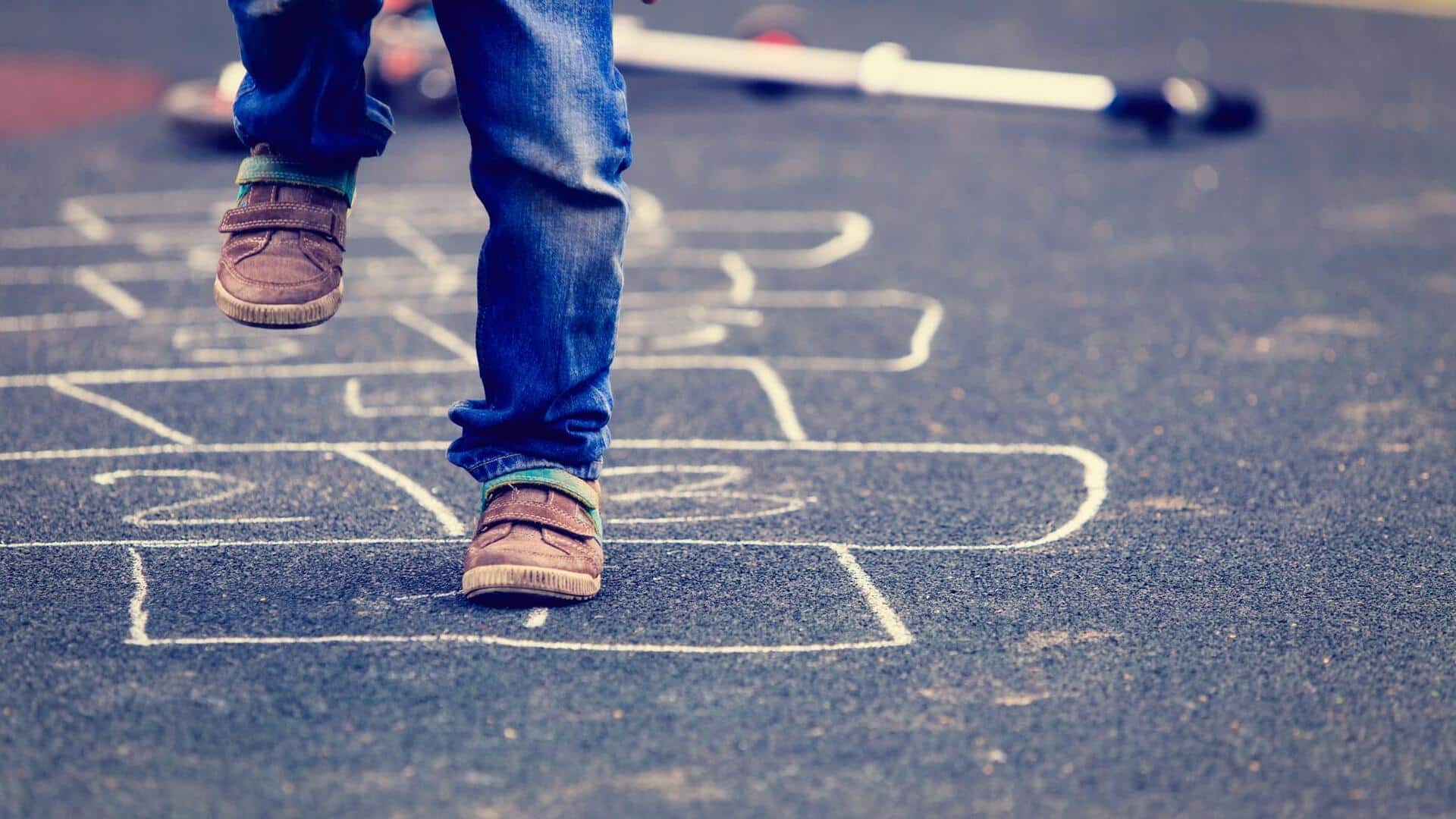
Start with a basic hopscotch grid drawn on the ground with chalk or tape. Players toss a small object onto the first square and hop through the squares on one foot or both feet, depending on the square's number. This simple version helps beginners focus on balance and coordination without overwhelming complexity.
#2
Adding challenges with patterns
To make hopscotch more challenging, introduce patterns into the grid. Instead of a simple linear arrangement, use shapes like circles or triangles. Players must then adapt their movements accordingly, which enhances cognitive skills along with physical agility. This variation is great for older kids and adults looking for a mental as well as physical workout.
#3
Incorporating fitness elements
Combine traditional hopscotch with fitness elements like jumping jacks or squats at certain squares of the grid. Players perform these exercises before continuing their path through the grid. This variation adds an element of strength training to the game while keeping it fun and engaging.
#4
Using technology for interactive play
Leverage technology by using apps that simulate hopscotch games on screens or create interactive grids with sensors that respond to movement. These tech-savvy versions can track progress over time, providing feedback on improvements in speed, accuracy, and coordination skills. They appeal to younger generations who are more inclined toward digital interactions.
#5
Organizing community events
Organize community events centered around hopscotch activities by setting up large grids in parks or community centers where people of all ages can participate together. These events promote social interaction while encouraging physical activity through friendly competition or cooperative play among participants from different age groups.