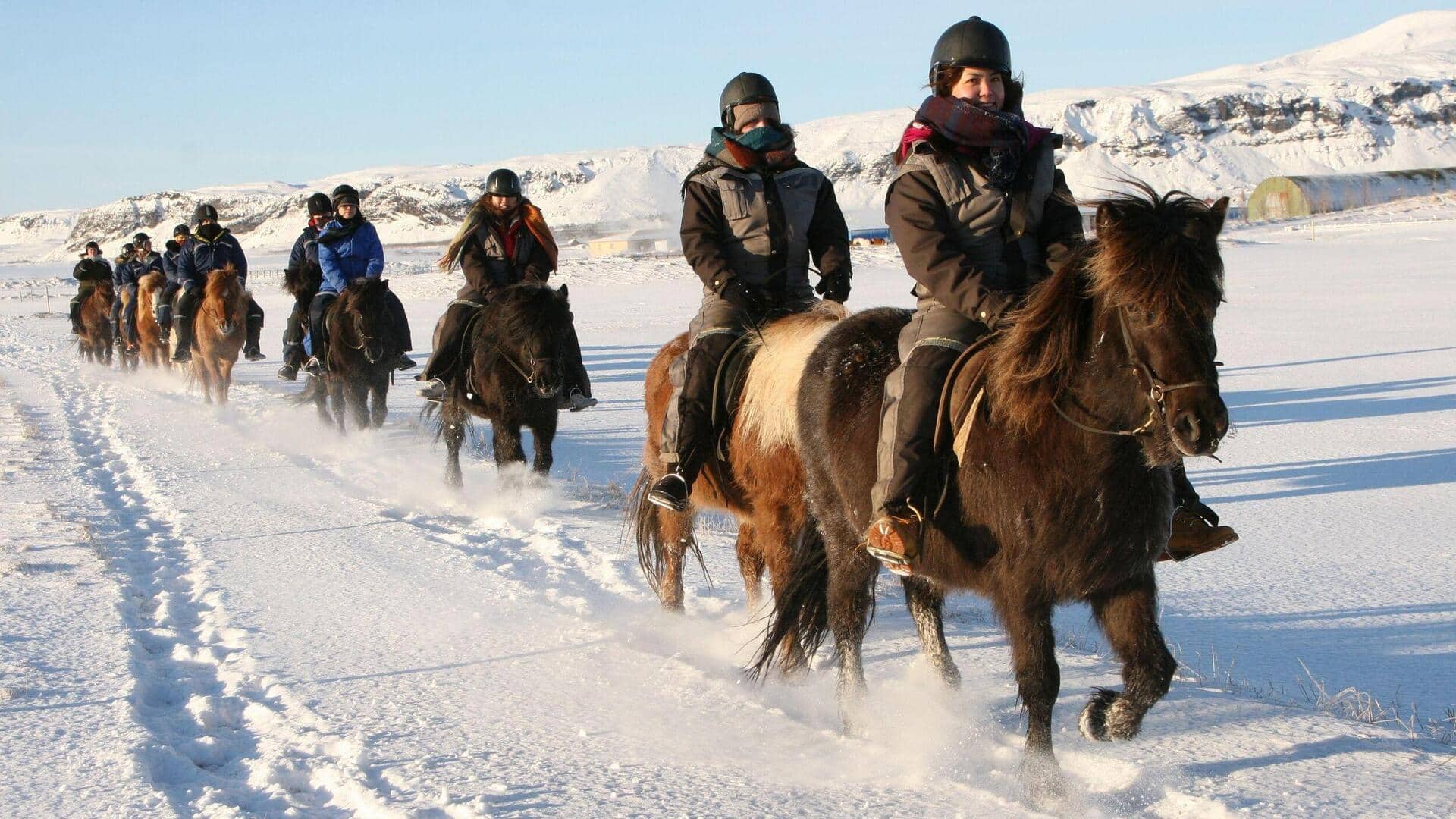
Once in Iceland, you must go horseback riding
What's the story
Exploring Iceland's unique landscapes on horseback is an unforgettable experience. The country's diverse terrain, from volcanic fields to lush valleys, offers a perfect backdrop for adventurous souls. Icelandic horses, known for their small stature and strong build, are well-suited for this journey. They provide a smooth ride across various terrains. Whether you're an experienced rider or a novice, horseback riding in Iceland lets you connect with nature in a thrilling way.
Tip 1
Choosing the right tour
Selecting the right tour is crucial for an enjoyable experience.
Many tours vary in length and difficulty levels. Some focus on specific areas like the Golden Circle or South Coast, while others offer multi-day adventures through remote regions.
Consider your riding skills and interests when choosing a tour.
It's also important to check group sizes, as smaller groups often provide more personalized attention.
Tip 2
Understanding Icelandic horses
Icelandic horses are unique in their temperament and capabilities.
Known for their friendly nature, they are also incredibly sure-footed, making them perfect companions for traversing rugged landscapes.
These horses can also perform a special gait called the tolt, which allows for a smooth ride even over long distances.
Learning about these horses beforehand can enhance your appreciation of them during your ride.
Tip 3
Preparing for weather conditions
Iceland's weather can be unpredictable, so it is essential to prepare for varying conditions.
Layered clothing is recommended as temperatures can change rapidly throughout the day.
Waterproof gear may also come in handy if rain occurs unexpectedly during your ride.
Being prepared ensures comfort and enjoyment while exploring Iceland's diverse environments.
Tip 4
Safety tips while riding
Safety should always be a priority when horseback riding in Iceland.
Always wear appropriate gear, such as helmets provided by tour operators or personal ones if allowed by the operator's policies.
Follow instructions given by guides regarding handling horses safely, especially when encountering wildlife or other obstacles along trails.