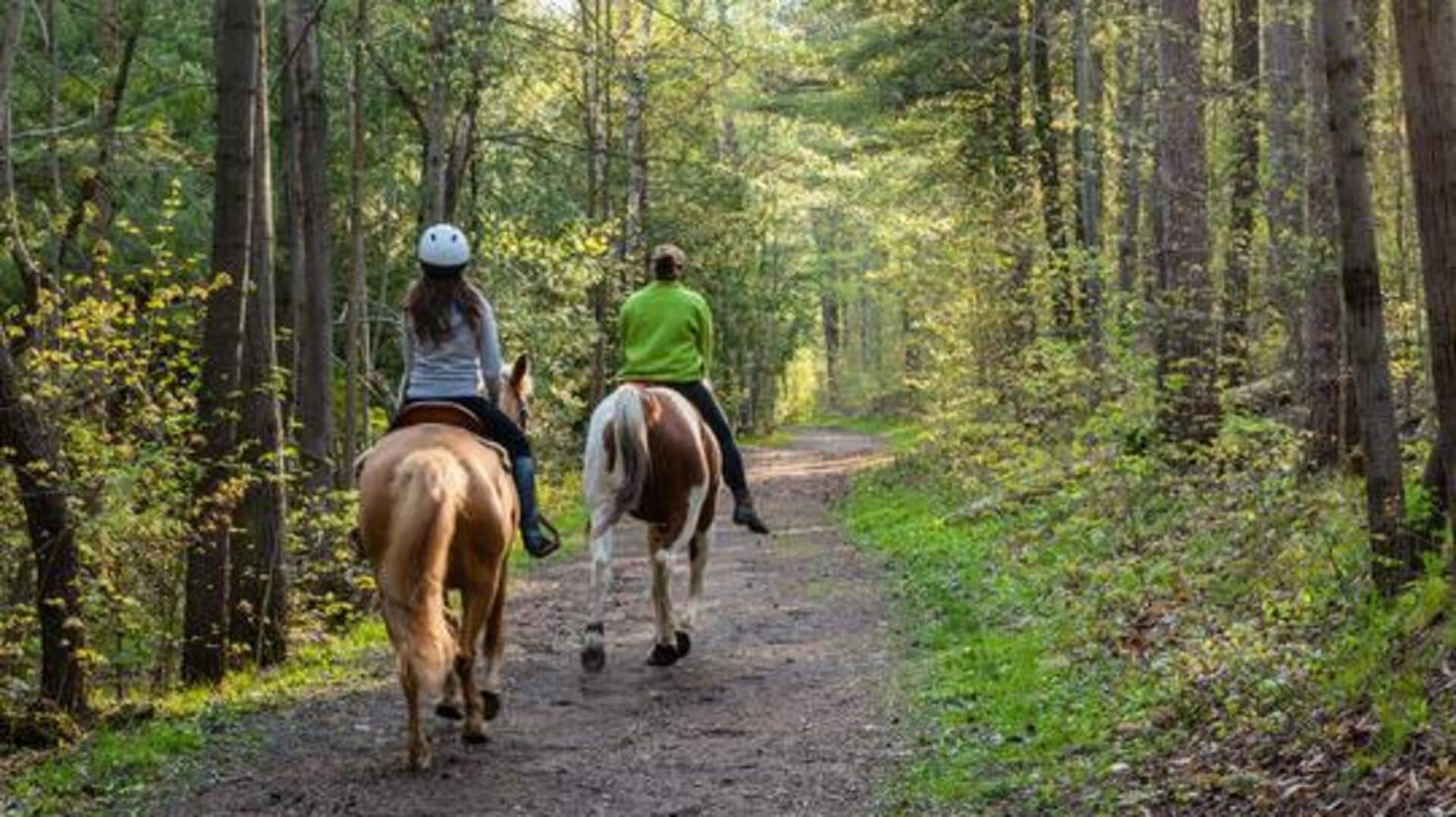
Planning a horseback safari? This epic destination awaits
What's the story
Botswana's Okavango Delta is a unique African wilderness that can be explored on horseback. This way, you can get up close and personal with the wildlife and nature, without disturbing the environment. Horseback safaris give you a unique perspective of the delta's diverse ecosystems, from lush wetlands to dry savannas. Here are some tips to make the most of your adventure in this pristine wilderness.
Tip 1
Choosing the right safari operator
Selecting a reputable safari operator is key to having a safe and enjoyable experience.
Look for operators with experienced guides who know the area well.
Check reviews and ask for recommendations to ensure you choose an operator that prioritizes safety and environmental conservation.
A good operator will provide well-trained horses suited for different skill levels, ensuring both beginners and experienced riders have a great time.
Tip 2
Understanding wildlife interactions
Interacting with wildlife on horseback requires understanding animal behavior and maintaining a respectful distance.
Horses are prey animals, which means they can easily startle if approached too closely by predators or other wildlife.
Stay calm and composed when encountering animals like elephants or giraffes, keeping your horse steady to avoid unnecessary stress for both you and the animals.
Tip 3
Preparing for varying weather conditions
The weather in Botswana's Okavango Delta can be unpredictable, so it's important to pack accordingly for your safari.
Lightweight clothing that protects against sun exposure during the day is a must, while layers can help you stay warm during cooler evenings.
Waterproof gear may come in handy if you encounter unexpected rain showers while exploring this diverse landscape on horseback.
Tip 4
Embracing cultural experiences along the way
Along with the natural beauty of the Okavango Delta, you can also immerse yourself in local culture by visiting nearby communities during your safari.
Engage with local tribespeople who may share insights about their traditional ways of life, as well as how they coexist with nature in this region.
Respect cultural differences by being open-minded during these interactions without imposing foreign values or practices on others.