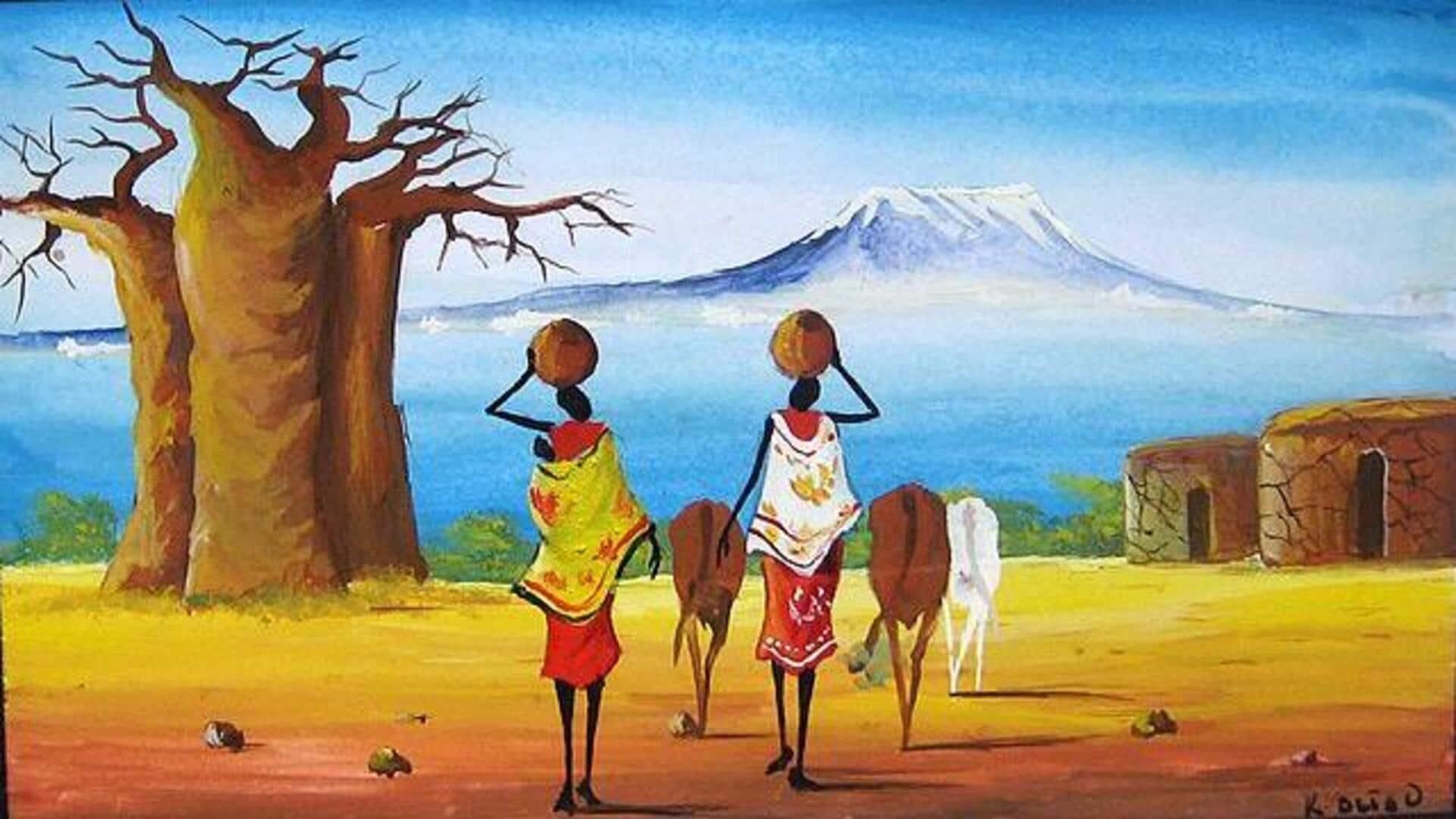
How African artists are redefining landscape art
What's the story
African diaspora artists are redefining landscape art by weaving in their cultural heritage, personal experiences, and contemporary perspectives. These artists are not just changing the way we see landscapes but also emphasizing the importance of identity, history, and community. Their work often challenges traditional notions of landscape art by adding layers of meaning that speak to both African and global contexts.
#1
Cultural heritage in landscapes
Many African diaspora artists infuse their work with elements of their cultural heritage.
This could be through the use of traditional patterns, colors, or symbols that resonate with their roots.
By doing so, they create a dialogue between past and present, allowing viewers to appreciate the richness of African cultures.
This approach not only preserves cultural narratives but also introduces them to a wider audience.
#2
Personal experiences as inspiration
Personal experiences also play a key role in shaping the work of these artists. Many draw inspiration from their own journeys, struggles, and triumphs.
This lends authenticity to their work and allows viewers to connect on a deeper level.
The landscapes they create often reflect personal landscapes—emotional or psychological spaces shaped by life experiences.
#3
Community engagement through art
Community engagement is another important aspect of many African diaspora artists' work.
Some collaborate with local communities or involve them in the creative process.
This not only empowers communities but also fosters a sense of belonging and shared identity.
Through workshops or public art projects, these artists create spaces for dialogue and reflection within communities.
#4
Redefining boundaries in art
These artists are also redefining boundaries in art by questioning conventional definitions of landscape painting.
They blend different mediums, like photography, sculpture, or digital art, to create multidimensional works that challenge viewers' perceptions.
This innovative approach expands the possibilities for artistic expression while inviting new conversations about what constitutes a landscape in today's world.