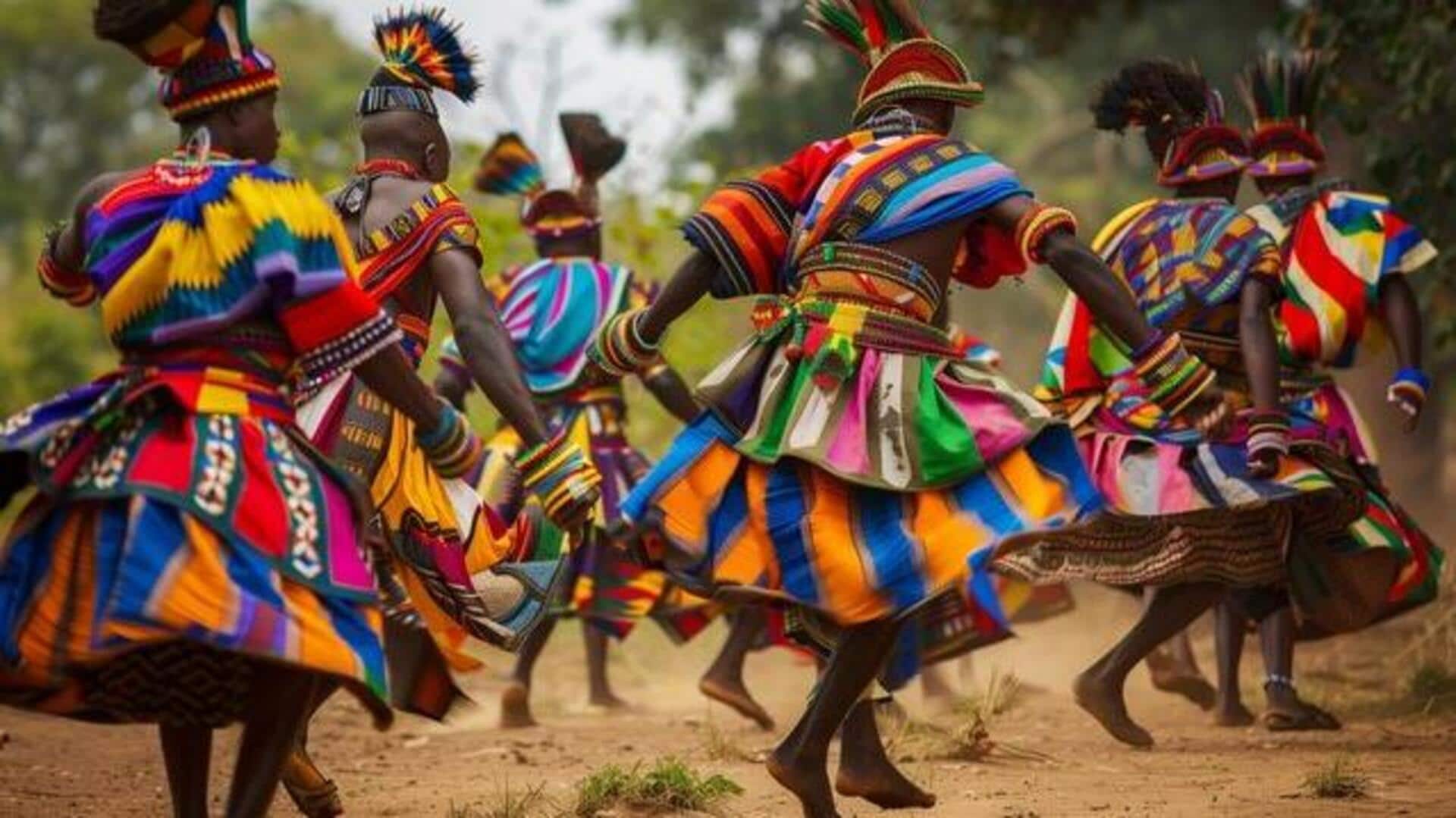
How African artists are redefining contemporary dance
What's the story
African diaspora artists have played a pivotal role in shaping contemporary dance, bringing unique cultural perspectives and innovative movements to the forefront. Their contributions have not only enriched the art form but also challenged traditional norms, creating a dynamic fusion of styles that resonate globally. This article delves into the impact of these artists on contemporary dance, highlighting key figures and their distinctive influences.
Early influences
Pioneers of contemporary dance
In the mid-20th century, African diaspora artists like Alvin Ailey and Katherine Dunham began redefining dance with their groundbreaking work.
Ailey's Revelations showcased African American experiences through movement, while Dunham integrated Caribbean rhythms into ballet.
These pioneers laid the groundwork for future generations by demonstrating that dance could be both an artistic expression and a vehicle for social commentary.
Cultural integration
Fusion of styles
Today's contemporary dance is a beautiful blend of diverse influences, thanks to African diaspora artists.
They seamlessly blend traditional African dances with modern techniques, resulting in a unique style that's both culturally rich and innovative.
This fusion not only pays homage to their roots but also pushes the boundaries of contemporary dance.
It has become a global phenomenon that resonates with audiences everywhere.
Dance as activism
Social commentary through movement
Many African diaspora dancers use their art as a form of activism, addressing social issues through performance.
Artists like Bill T. Jones and Jawole Willa Jo Zollar have created works that confront themes of race, identity, and inequality.
By weaving these narratives into their choreography, they invite audiences to engage with pressing societal concerns in a profound way.
Shaping future generations
Education and mentorship roles
African diaspora artists are also committed to education and mentorship, ensuring that future generations have the opportunity to explore dance.
They conduct workshops, establish dance companies, and develop programs aimed at nurturing young talent from diverse backgrounds.
This commitment not only preserves the legacy of African diasporic dance but also inspires new voices in the art form.