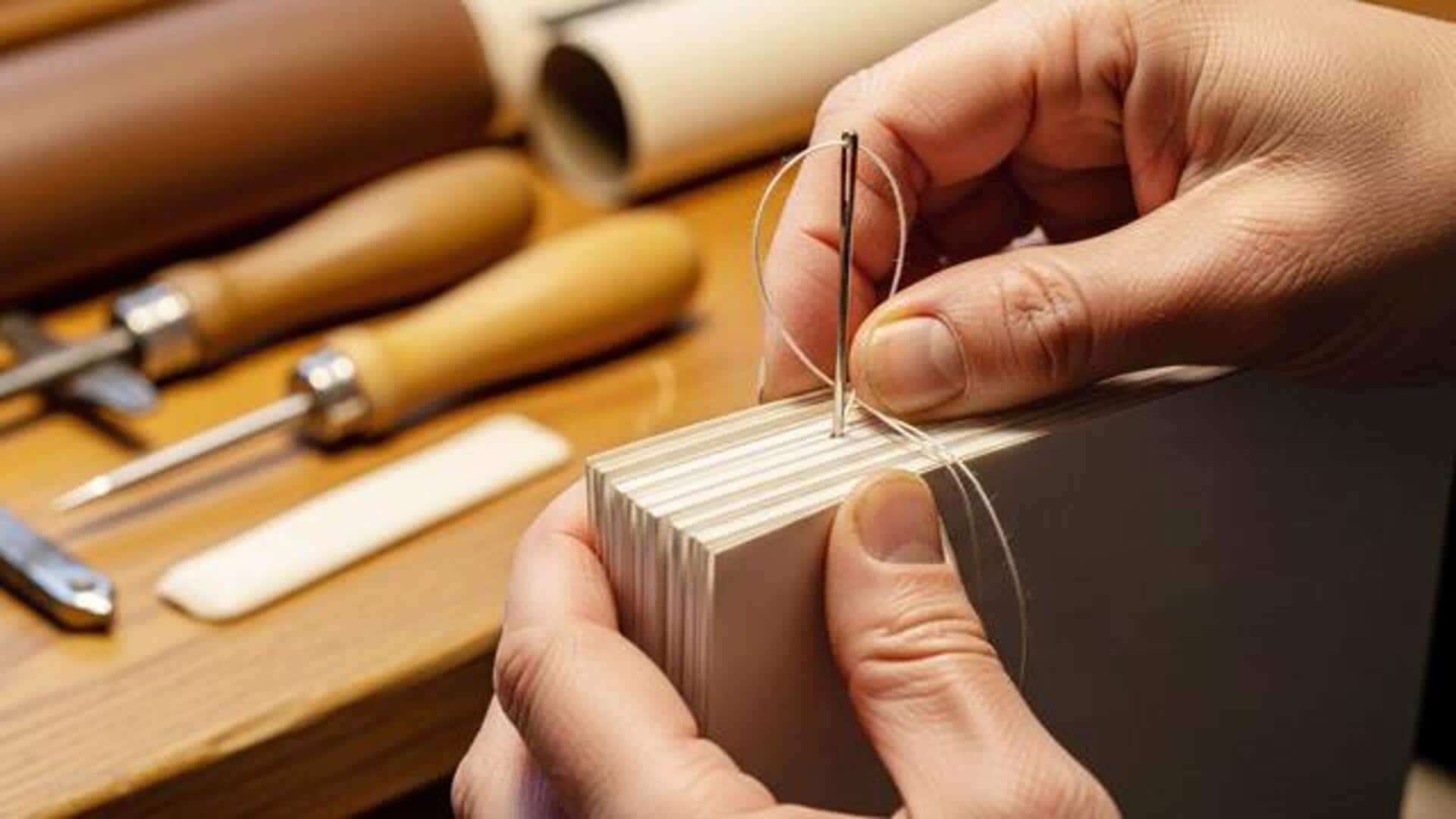
How to use bark thread in bookbinding
What's the story
African bark thread is a traditional material used for binding journals, giving them a unique and authentic touch. The technique is rooted in African culture, where it has been used for centuries to create durable and aesthetically pleasing books. Using this method, one can bind journals with natural materials, giving them a personal and cultural significance. Here are some insights into binding journals with African bark thread.
Tip 1
Selecting the right bark thread
Choosing the right bark thread is crucial for journal binding. The thread should be strong enough to hold the pages together but flexible enough to allow for easy manipulation during binding.
Traditionally, strips of inner bark from trees like fig or acacia are used due to their durability and availability in many African regions.
Ensure the strips are clean and free from any impurities before use.
Tip 2
Preparing your journal pages
Before you start binding, make sure your journal pages are cut to the same size and stacked in the desired order.
You can use recycled paper or handmade paper to give your journal an eco-friendly touch.
Make sure each page is aligned properly so that they open easily once bound.
A consistent size will make the binding process easier and give your journal a professional look.
Tip 3
Binding techniques with bark thread
There are a few techniques to bind journals with African bark thread.
The simplest is to punch holes along the spine of stacked pages and use the bark strips as stitches through these holes.
Another way is to wrap the bark strip around each signature separately before combining them into one book block.
Each technique gives a different look and feel to the finished product.
Tip 4
Finishing touches for your journal
Once you have bound your journal using African bark thread, you can add finishing touches like decorative covers or personalized labels inside covers or on spines for identification purposes later on if needed.
These details can enhance both functionality and aesthetics without compromising structural integrity achieved through careful craftsmanship earlier on during initial stages involved therein too.