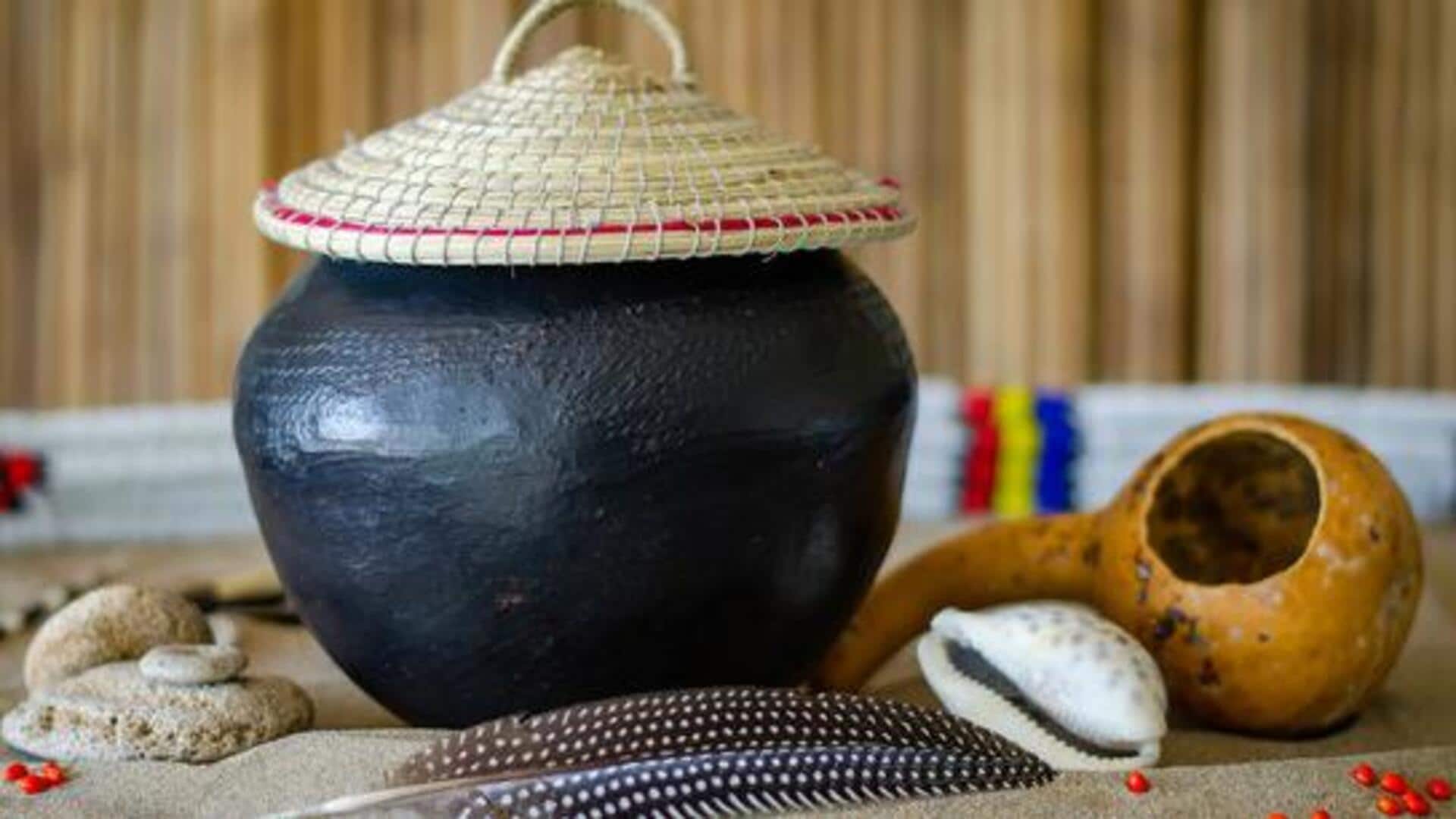
All about Ukhamba vessels
What's the story
Carving African clay Ukhamba vessels is an age-old craft that reflects the continent's rich cultural heritage. These traditional vessels, commonly used for storing water or grain, are known for their unique designs and sturdy construction. The art of carving them requires skill and patience, as artisans meticulously create intricate patterns and shapes. This article delves into the process of crafting these iconic vessels, highlighting the techniques and materials involved.
#1
Selecting quality clay
Choosing the right clay is essential for making durable Ukhamba vessels.
The clay should be fine-grained and free from impurities to ensure a smooth texture.
Artisans usually source local clay that is easily accessible and affordable.
Once collected, the clay is cleaned by removing stones or debris before being mixed with water to achieve the desired consistency.
#2
Shaping the vessel
Shaping is the most important step in carving Ukhamba vessels.
The process starts with kneading the clay to remove air bubbles.
Once kneaded, artisans mold the clay into a cylindrical shape using their hands or simple tools.
The vessel's base is flattened while its walls are gradually built up by adding coils of clay and smoothing them out.
#3
Designing intricate patterns
Designing patterns on Ukhamba vessels is where artistry comes into play.
Traditional designs often feature geometric shapes or motifs that hold cultural significance.
Artisans use wooden sticks or metal tools to carve these patterns onto the surface of the vessel before it dries completely.
This step requires precision as each line contributes to the overall aesthetic appeal.
#4
Drying and firing techniques
Proper drying and firing techniques are essential for making sure that Ukhamba vessels are strong and durable.
After carving, the vessel is left in the open air for a few days until it dries out completely but is not yet fired in a kiln at high temperatures, usually over 800 degrees Celsius (1,472 degrees Fahrenheit).
This way, they become watertight without cracking.