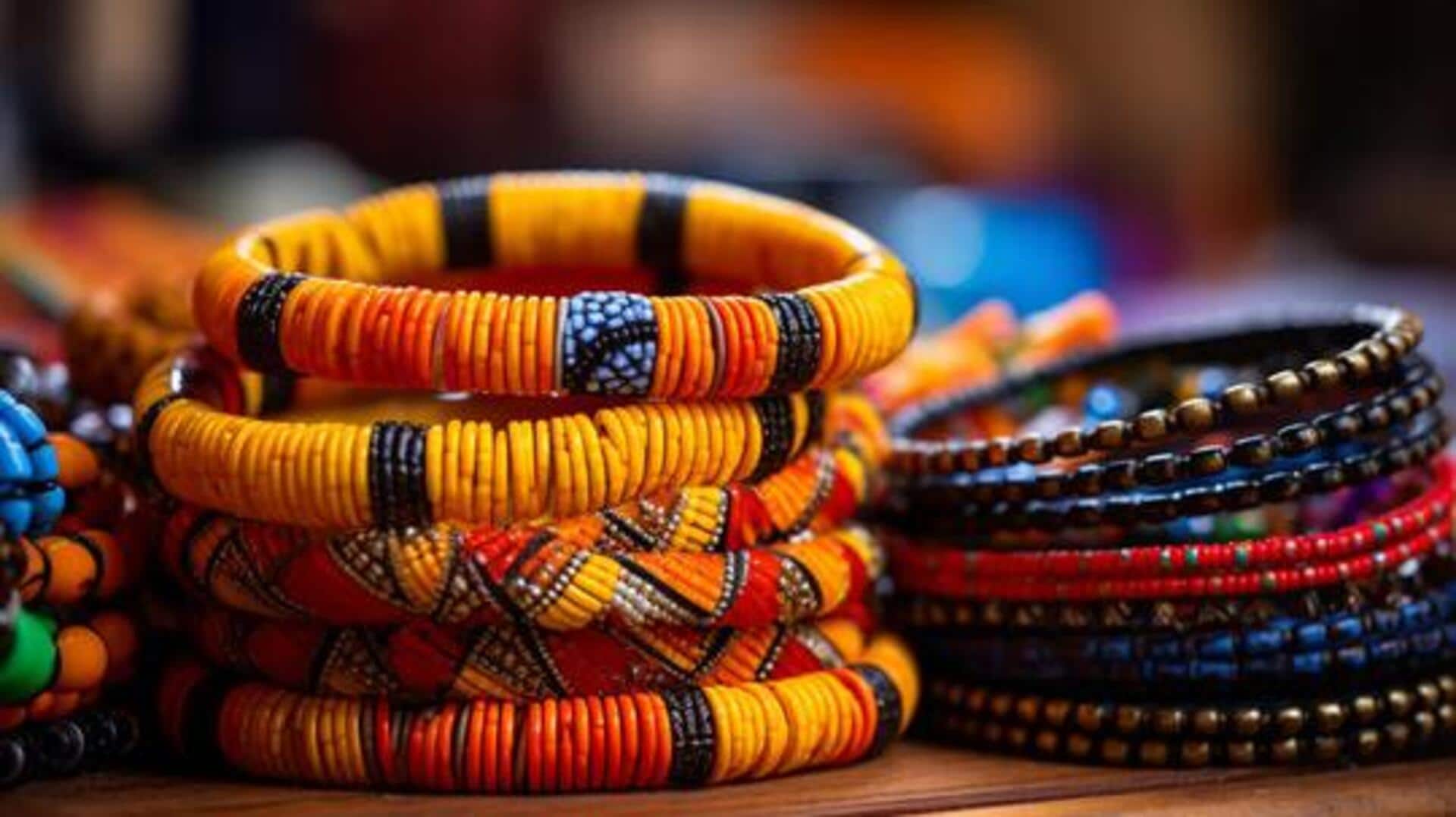
How to create stunning fabric bangles
What's the story
African mudcloth, a traditional textile from Mali, is famous for its intricate patterns and cultural significance. The unique designs of mudcloth can be a great source of inspiration for creating unique bangles. By combining traditional techniques with modern design sensibilities, artisans can create beautiful pieces that pay homage to this rich cultural heritage. Here are some insights into crafting bangles inspired by African mudcloth patterns.
#1
Understanding mudcloth patterns
Mudcloth patterns are characterized by geometric shapes and symbols that have been passed down through generations.
Each pattern has its own meaning, often representing different aspects of life or history.
To create bangles inspired by these designs, artisans need to study these patterns closely and understand their significance.
This knowledge helps in creating pieces that are not only visually appealing but also culturally meaningful.
#2
Choosing the right materials
Selecting appropriate materials is key to crafting durable and attractive bangles.
Traditional mudcloth is made from woven cotton dyed with natural pigments, which gives it strength and flexibility.
For modern interpretations, artisans might opt for lightweight metals or sustainable materials like bamboo or recycled plastics.
The choice of material should complement the design while ensuring comfort for the wearer.
#3
Incorporating traditional techniques
Incorporating traditional techniques into bangle-making adds authenticity and depth to each piece.
Techniques like hand-dyeing or block printing can be used to replicate the distinctive look of mudcloth on bangle surfaces.
Artisans may also use embossing or engraving methods to etch intricate patterns onto metal bangles, preserving the essence of mudcloth artistry.
#4
Marketing your creations effectively
Effectively marketing your mudcloth-inspired bangles requires an understanding of your target audience and the platforms they engage with most frequently.
Social media platforms like Instagram provide a visual medium to showcase your designs, while online marketplaces cater to a wider audience.
Highlighting the cultural significance behind each piece can attract customers who appreciate both aesthetics and storytelling in jewelry design.