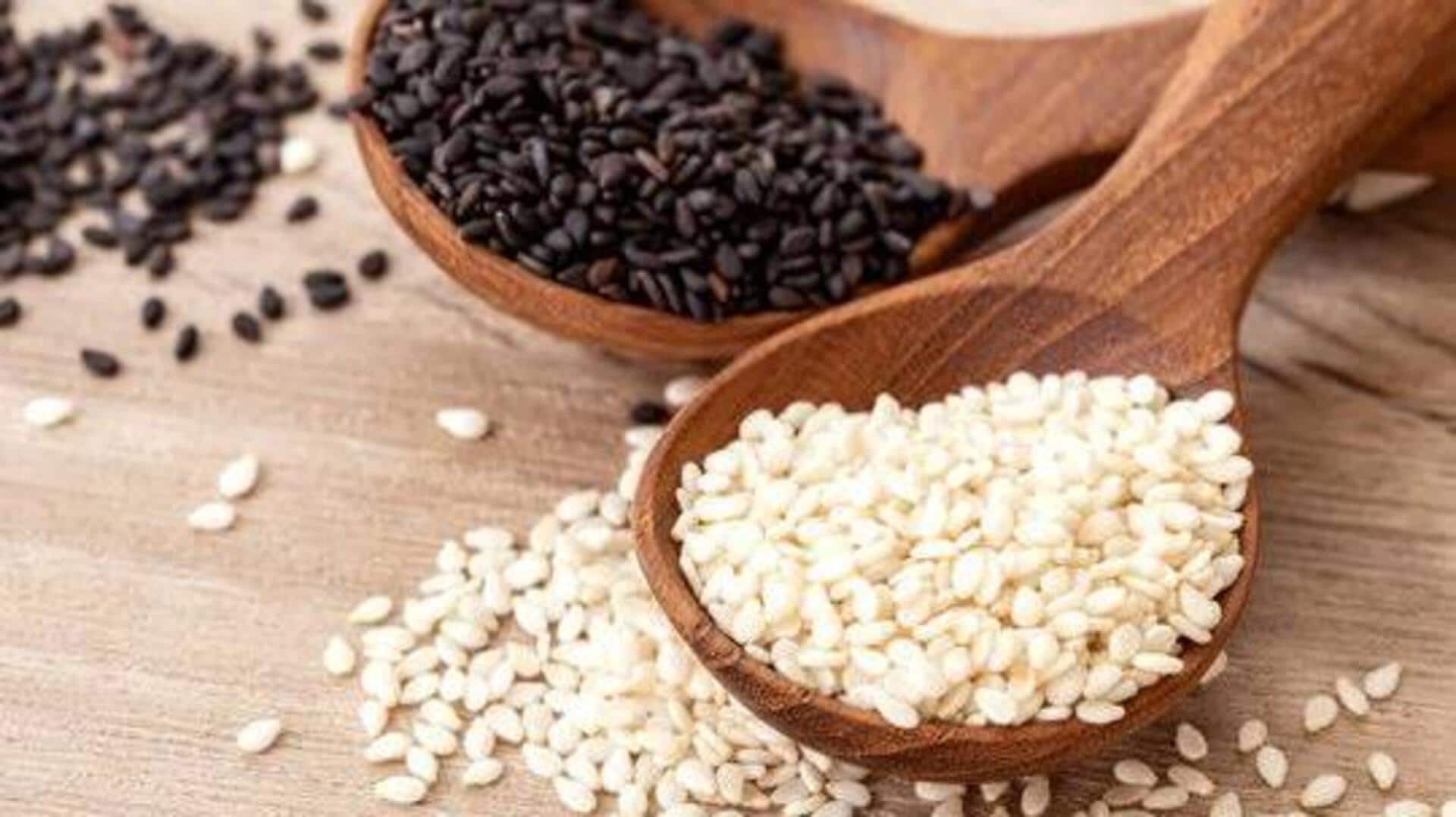
How to grow sesame indoors
What's the story
Growing sesame indoors can be a rewarding experience, giving you fresh seeds for culinary use. Sesame plants are relatively easy to grow and require minimal space, making them ideal for indoor gardening. With the right conditions and care, you can successfully cultivate these plants at home. Here are some practical tips to help you grow sesame indoors effectively.
Tip 1
Choosing the right container
Selecting an appropriate container is key to growing sesame indoors.
Opt for pots that are at least six inches deep, with drainage holes, to avoid waterlogging.
A larger container gives the roots enough space to grow, which is important for healthy plants.
Make sure the potting mix is well-draining by mixing regular potting soil with sand or perlite.
Tip 2
Providing adequate light
Sesame plants need plenty of light to grow well.
Ideally, keep your containers near a south-facing window, where they can soak up six to eight hours of direct sunlight every day.
If natural light is insufficient, you can also use grow lights to make up for it. Place the lights about 12 inches above the plants, and keep them on for 14 hours a day.
Tip 3
Maintaining optimal soil conditions
The soil pH for sesame plants should be between six and eight.
Use a pH test kit to check your soil's acidity or alkalinity levels.
Amend the soil with lime if it's too acidic, or sulfur if it's too alkaline.
Keep the soil consistently moist, but not waterlogged, by watering when the top inch feels dry.
Tip 4
Monitoring temperature and humidity
Sesame plants flourish in warm temperatures between 70 degrees Fahrenheit and 85 degrees Fahrenheit (21 degrees Celsius and 29 degrees Celsius).
Keep indoor temperatures within this range by adjusting heating or cooling systems as needed.
Sesame plants also thrive in low humidity levels, around 40%, which is usually the case indoors.
If the air is too dry, you can use a humidifier or place a tray of water nearby to increase humidity levels slightly.
Tip 5
Fertilizing for healthy growth
To ensure your sesame plants grow healthy, fertilize them every four weeks with a balanced liquid fertilizer diluted to half strength.
Apply it during the growing season, which is usually from spring through early fall.
This practice ensures that your plants receive the necessary nutrients without overwhelming them, promoting optimal growth and seed production.