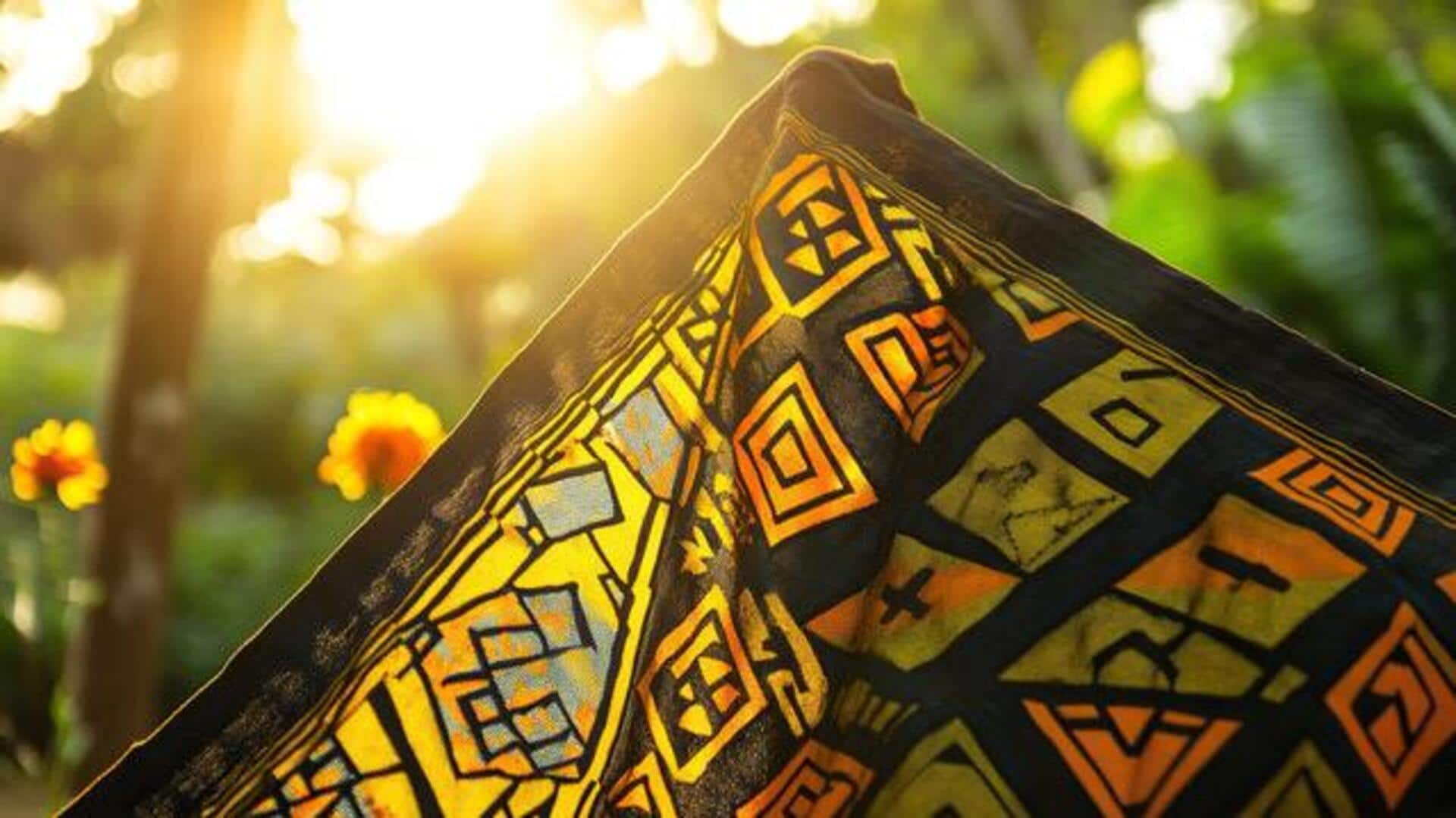
All about kuba cloth patterns
What's the story
Kuba cloth, a traditional textile from the Democratic Republic of Congo, is known for its intricate patterns and rich cultural significance. Traditionally made from the leaves of the raffia palm, these textiles are handwoven and dyed to create unique designs. The art of designing kuba cloth patterns involves understanding the cultural meanings behind each motif and mastering specific techniques. Here are some insights into creating authentic kuba cloth designs.
#1
Understanding traditional motifs
Traditional kuba cloth patterns are steeped in symbolism and cultural significance.
Each motif tells a story or signifies a particular aspect of life in Congolese culture.
Common motifs include geometric shapes, animal figures, and abstract forms.
Knowing what these symbols mean is crucial for anyone looking to design authentic kuba cloth.
This knowledge helps in creating pieces that respect tradition, while allowing for personal expression.
#2
Techniques of weaving and dyeing
The techniques used in weaving and dyeing kuba cloth are what make it unique.
Weavers use raffia fibers to create intricate patterns on looms, while natural dyes give the cloth its vibrant colors.
The process is labor-intensive but results in durable textiles with rich textures.
Learning these techniques requires patience and practice but is essential for anyone wanting to replicate traditional kuba cloth.
#3
Incorporating modern elements
While traditional kuba cloth is steeped in cultural heritage, modern designers often incorporate contemporary elements into their work.
This fusion allows for innovation while still paying homage to traditional practices.
By adding modern colors or abstract shapes, designers can appeal to a wider audience without losing the essence of kuba cloth's cultural significance.
#4
Preserving cultural heritage through design
Designing kuba cloth patterns also serves as a means to preserve Congolese cultural heritage.
By continuing to create these textiles, artisans keep traditions alive for future generations.
This practice not only keeps cultural identity alive but also educates others about the rich history behind each piece of fabric.