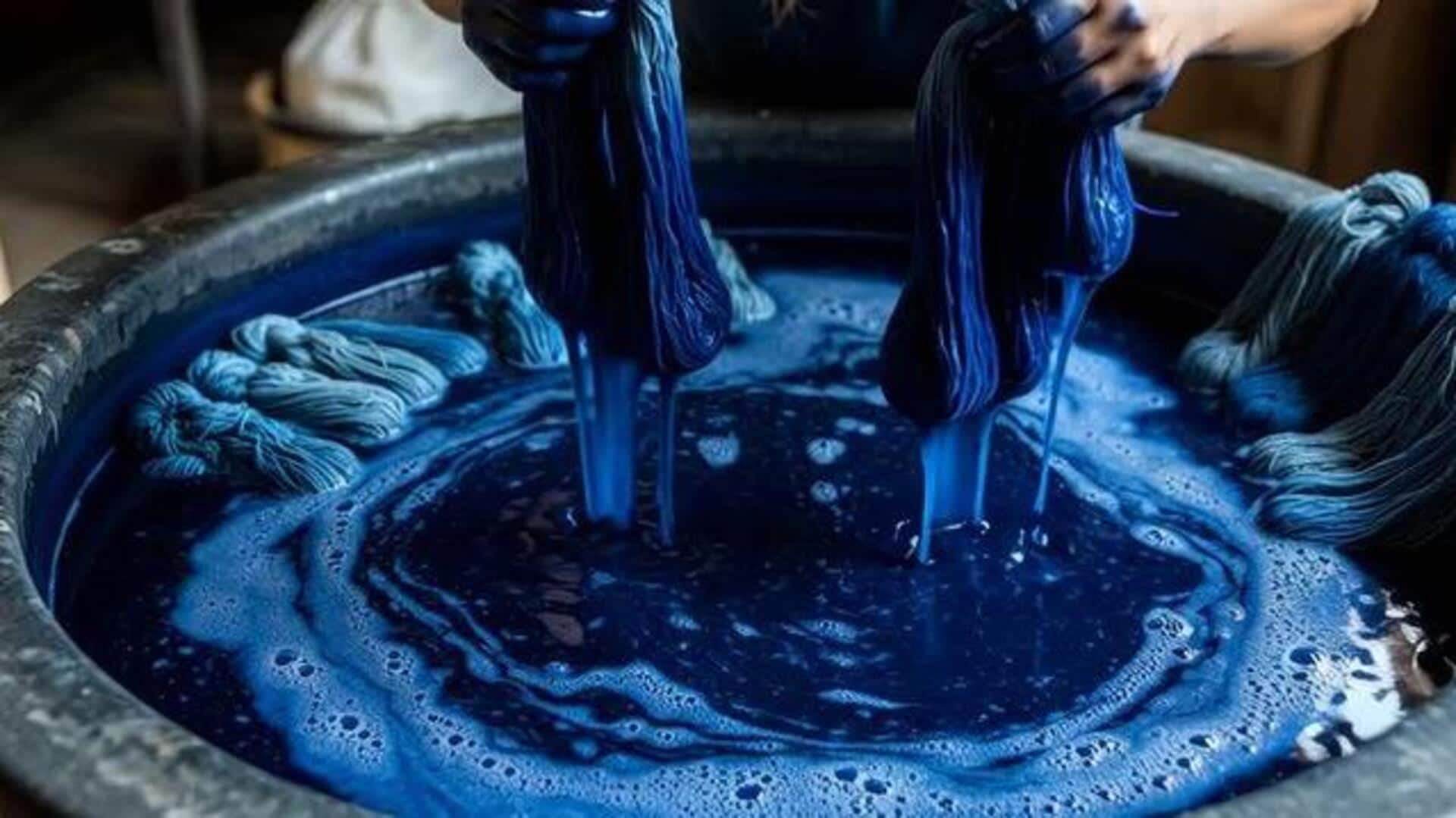
How to master indigo dyeing
What's the story
African indigo dyeing is a centuries-old art, originating from West Africa. The technique is famous for its deep blue color, obtained from the indigo plant. This natural dyeing process has been practiced for generations, and continues to be an important part of cultural heritage. By learning this craft, you can connect with a rich history and create beautiful textiles using traditional methods.
#1
Understanding indigo dyeing process
The indigo dyeing process begins with fermenting the leaves of the indigo plant.
The leaves are soaked in water and left to ferment for several days. This process releases indican, which is converted into indigo dye.
The dye is then extracted and used to color fabrics by dipping them multiple times in the dye vat.
#2
Preparing your materials
To start your indigo dyeing journey, you need cotton or other natural fiber fabrics, as they absorb dyes better than synthetic ones.
Make sure your fabric is clean and free of any finishes that might resist dye absorption.
You also need a dye vat made from fermented indigo leaves or synthetic alternatives available in craft stores.
#3
Techniques for applying indigo dye
There are various techniques to apply indigo dye on fabric.
Shibori involves folding or binding fabric before dipping it into the vat, creating intricate patterns when unfolded.
Batik uses wax resist methods to create designs on fabric before dyeing it with indigo.
Experimenting with these techniques can yield unique results.
Tip 1
Caring for your dyed textiles
After dyeing your textiles, it's important to care for them properly so that the colors stay vibrant over time.
Wash dyed items separately in cold water with mild soap or detergent designed for delicate fabrics.
Avoid bleach or harsh chemicals that may fade the colors over time.