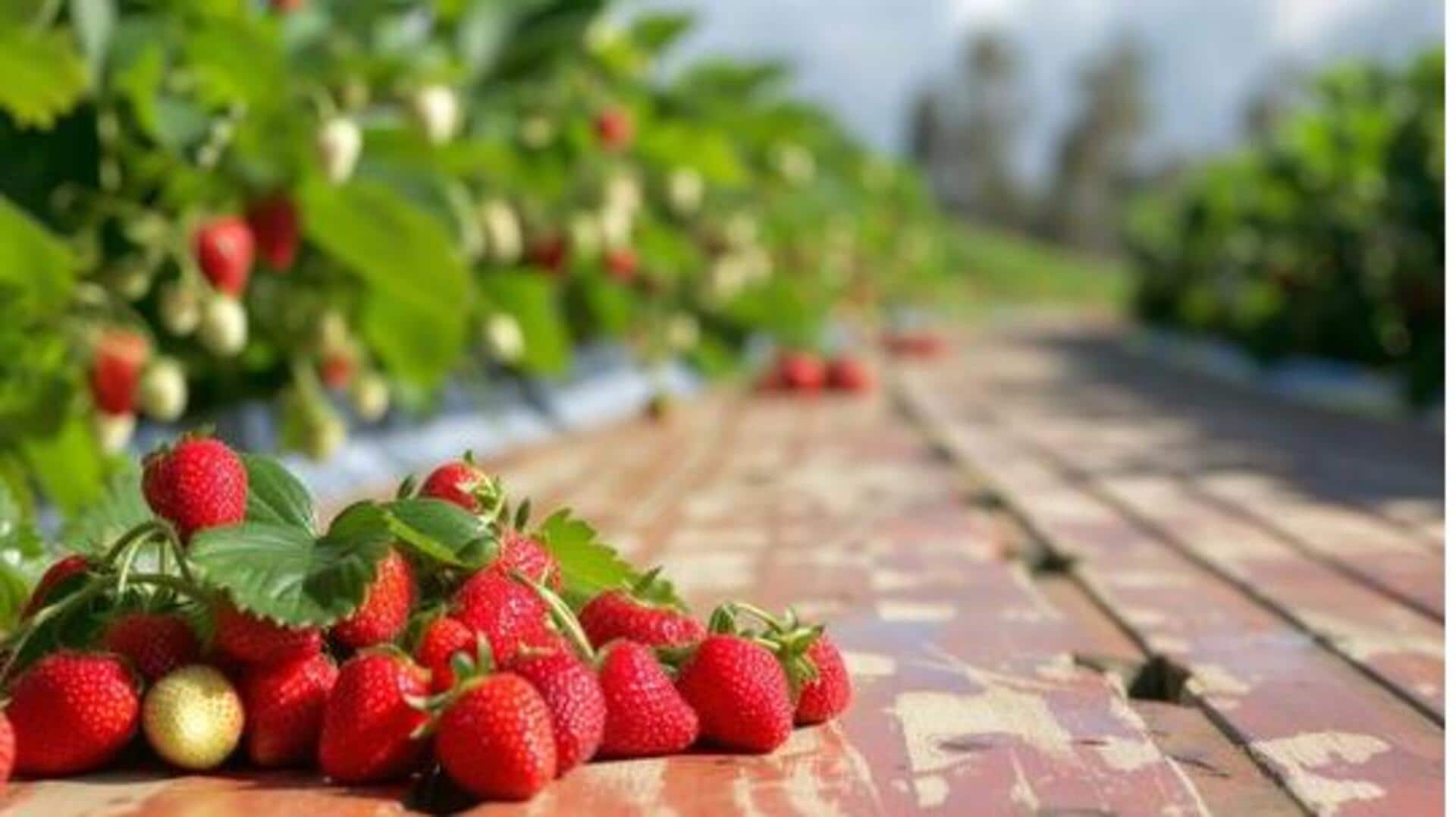
How to grow strawberries in your balcony
What's the story
Growing alpine strawberries on a balcony can be a rewarding experience, providing fresh fruit and greenery in limited spaces. These hardy plants are well-suited for container gardening, making them ideal for urban settings. With the right conditions and care, you can enjoy a bountiful harvest of sweet berries. This article provides practical insights into cultivating alpine strawberries on your balcony, ensuring optimal growth and yield.
Tip 1
Choosing the right containers
Selecting appropriate containers is crucial for growing alpine strawberries.
Choose pots that are at least 12 inches in diameter to allow enough room for root development.
Ensure that the containers have drainage holes to prevent waterlogging, which can damage the roots.
Using lightweight materials like plastic or resin can make it easier to move them around as needed.
Tip 2
Soil and planting essentials
Alpine strawberries thrive in well-draining soil enriched with organic matter.
Use a mix of potting soil and compost to ensure nutrients are available.
Plant the seeds or seedlings about six inches apart to give them enough space to grow.
Water them adequately after planting, but avoid overwatering.
Tip 3
Optimal sunlight exposure
These strawberries require plenty of sunlight to flourish, ideally around six to eight hours of direct sunlight every day.
Place your containers in an area of your balcony that receives ample sunlight during the day.
If natural light is insufficient, you can use grow lights as an alternative.
Tip 4
Regular maintenance practices
Regular maintenance is key to healthy plants and a good harvest.
Water your plants regularly, but make sure the top inch of soil dries out between waterings.
Fertilize every four weeks with a balanced fertilizer to provide essential nutrients.
Prune dead leaves, and monitor for pests like aphids or slugs, taking necessary action promptly.
Tip 5
Harvesting tips for best results
Harvesting should be done when berries are fully ripe for the best flavor and sweetness.
Gently twist or cut them off from the plant without damaging surrounding foliage.
Regular harvesting encourages more fruit production throughout the growing season, ensuring a continuous supply until fall arrives.