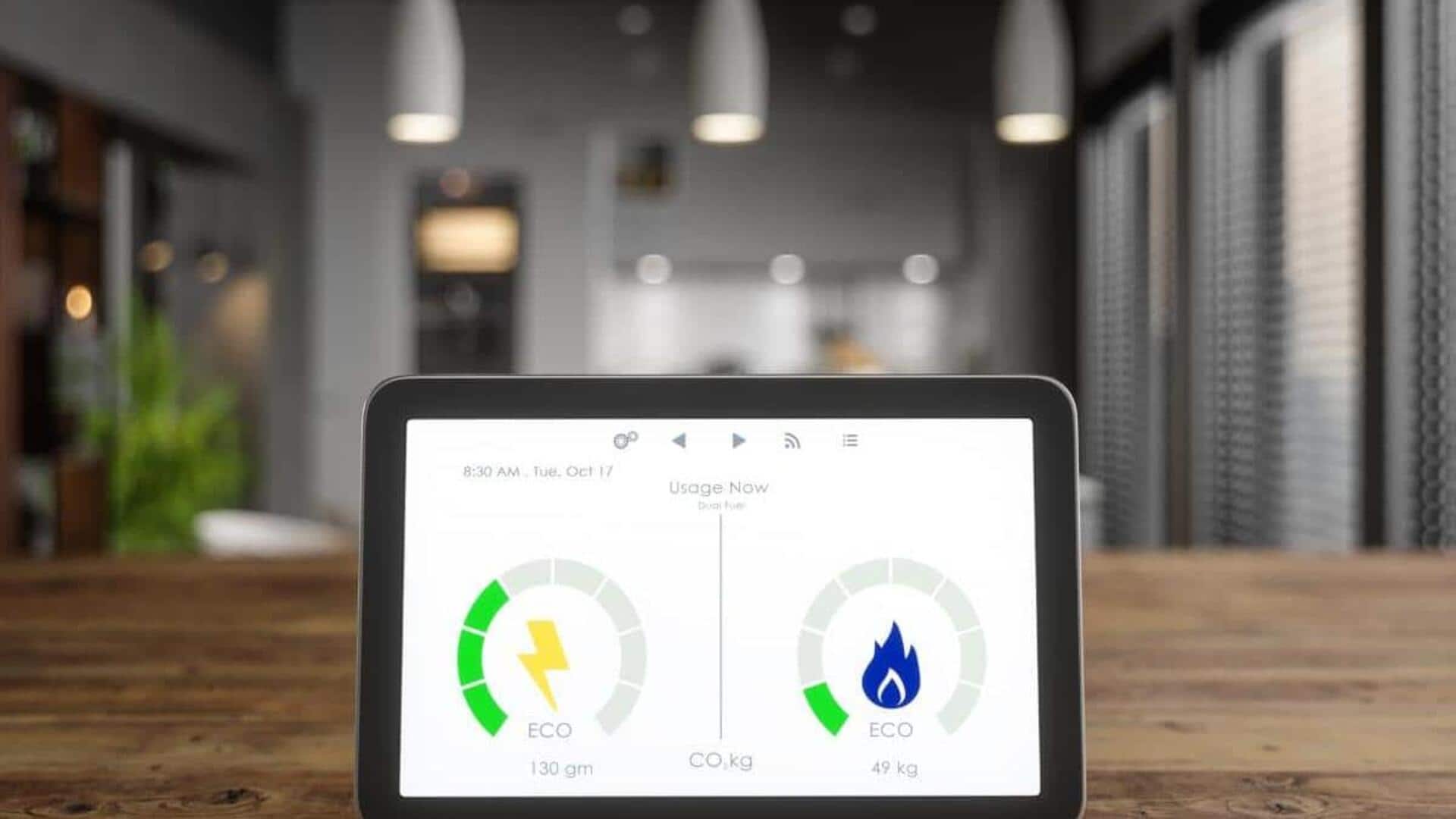
How to cut down on your home's energy consumption
What's the story
Improving your home's energy efficiency doesn't have to be expensive. With a few simple hacks, you can cut down on energy consumption and save money on utility bills. These budget-friendly tips are easy to implement and require minimal investment, making them accessible to most homeowners. From optimizing lighting to enhancing insulation, these strategies can help create a more sustainable living environment without breaking the bank.
Lighting tips
Optimize your lighting
Switching to LED bulbs is one of the most cost-effective ways to cut down on electricity usage. They consume up to 75% less energy than traditional incandescent bulbs and last much longer.
Also, make use of natural light during the day by opening curtains or blinds, which reduces reliance on artificial lighting.
Installing dimmer switches can also help adjust brightness according to need, further saving energy.
Insulation tips
Seal windows and doors
Drafty windows and doors let out a lot of heat in winters and cool air in summers, making your HVAC system work harder.
Use weatherstripping or caulk to seal gaps around windows and doors. You could also use door sweeps to keep drafts at bay.
These simple fixes can improve insulation by a lot, keeping your home comfortable all year long.
Power management
Use smart power strips
Electronics continue to draw power even when not in use, a phenomenon known as phantom load or vampire power loss.
Smart power strips automatically cut off power from devices that go into standby mode or are not in use, reducing unnecessary energy consumption by up to 20%.
This way, you can save money on your electricity bill without having to change your daily routine.
Climate control tips
Adjust thermostat settings wisely
Adjusting thermostat settings by just a few degrees can lead to significant savings on heating and cooling costs.
In winter, set your thermostat one or two degrees lower than usual; in summer, raise it one or two degrees higher.
Consider investing in programmable thermostats that automatically adjust temperatures based on your schedule, ensuring optimal climate control while minimizing energy use.
Water heating tips
Reduce water heater temperature
Most water heaters are set at 60 degrees Celsius (140 degrees Fahrenheit) by default, which is hotter than necessary for most household needs.
Lowering this setting to around 50 degrees Celsius (120 degrees Fahrenheit) can save up to 10% on water heating costs annually without compromising comfort levels during showers or dishwashing activities.