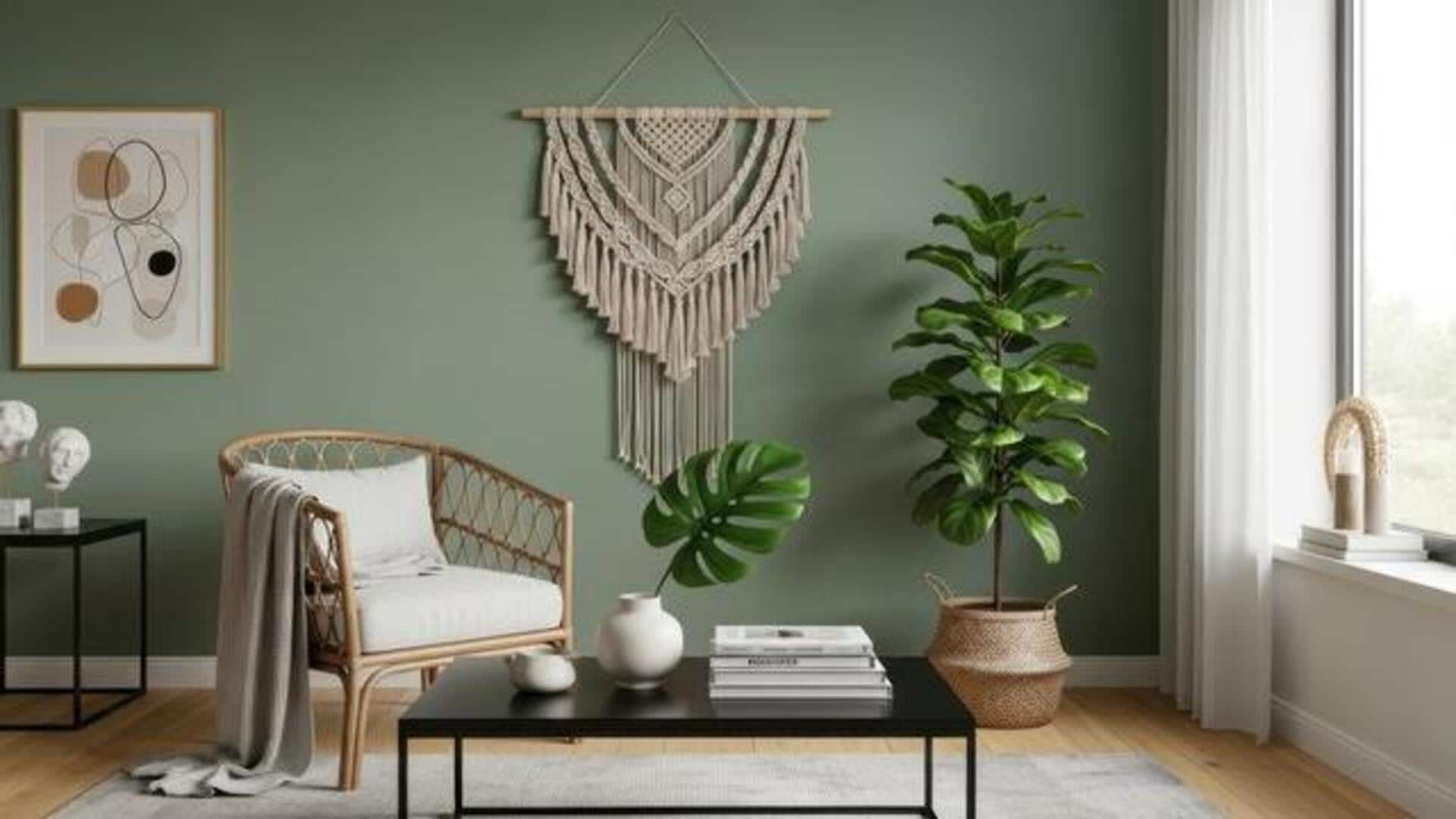
How to give your walls a makeover
What's the story
African-style raffia wall mats are an attractive and sustainable way to add some character to your home. Made from natural fibers, these mats are not just eco-friendly but also rich in cultural significance. They can be used as decorative pieces or functional items in your home. Making them at home can be a rewarding experience, allowing you to connect with traditional crafting techniques while creating something unique for your space.
Materials
Gather necessary materials
To make a raffia wall mat, you will need raffia fibers, scissors, a weaving loom (optional), and some dye if you want to add color.
Raffia is usually available in craft stores or online. Make sure the fibers are long enough for weaving.
If you want to dye the raffia, choose natural dyes that are safe and easy to use.
Weaving techniques
Learn basic weaving techniques
Understanding basic weaving techniques is essential for creating a sturdy and attractive mat.
Start with simple patterns like over-under or twill weave before moving on to more complex designs.
Practice on smaller pieces first until you get comfortable with the process.
Watching tutorial videos or reading guides can help you grasp these techniques better.
Patterns
Incorporate traditional patterns
Mats in the style of Africa often feature traditional patterns that hold cultural significance.
Research different designs from various regions of Africa and choose one that resonates with you.
Incorporate these patterns into your mat by carefully planning your weave before starting the project.
Using graph paper can help visualize the pattern layout.
Finishing touches
Finishing touches and care tips
Once your mat is woven, trim any excess fibers and secure loose ends to prevent unraveling.
If dyed, allow the mat to dry completely before displaying it in your home.
To maintain its appearance over time, regularly dust the mat with a soft cloth and avoid exposing it directly to sunlight, which may cause fading.