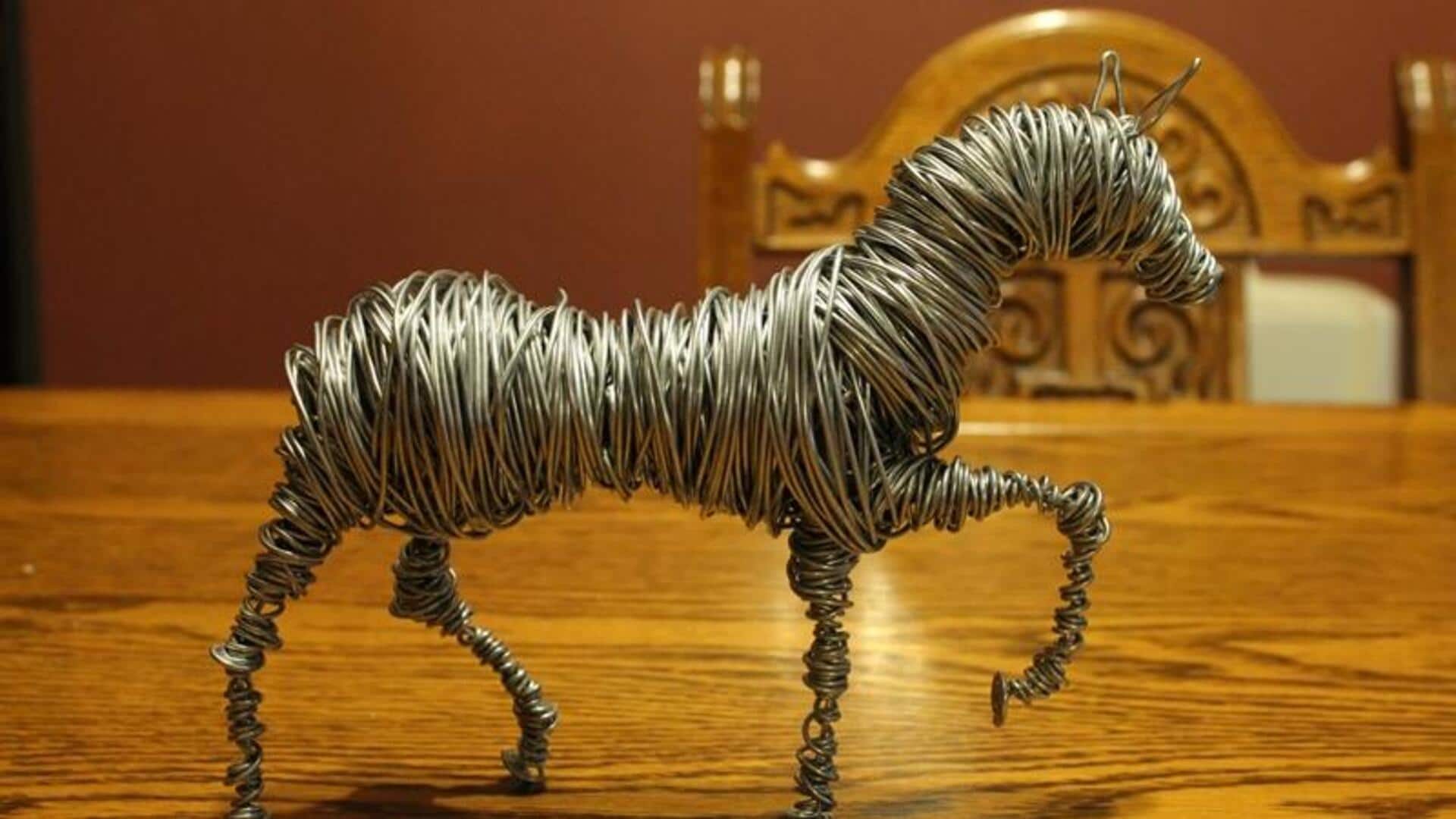
How to make wire art sculptures
What's the story
African wire art sculptures are a unique craft that combines creativity with sustainability. By using recycled materials, artisans create intricate designs that reflect cultural heritage. This practice not only preserves traditional art forms but also promotes environmental consciousness. By learning how to make these sculptures, you can appreciate the artistry involved and contribute to sustainable living. Here are some insights into crafting these beautiful pieces.
Tip 1
Selecting the right materials
Choosing the right materials is critical for making African wire art sculptures.
Recycled wires, often sourced from old electronics or appliances, make for a great base due to their flexibility and strength.
Other recycled items, such as plastic bottles or cans, can be incorporated for added texture and color.
Ensuring these materials are clean and free from rust or corrosion is important for durability.
Tip 2
Understanding traditional designs
Traditional African designs are characterized by geometric patterns and symbolic motifs.
These designs often have cultural significance, representing things like community values or natural elements.
Studying these patterns can give you an idea of how to create your sculptures while respecting their cultural importance.
Books, online resources, or even local artisans can provide valuable insights into traditional design techniques.
Tip 3
Mastering basic techniques
Mastering basic techniques is the key to creating intricate wire sculptures.
Start by learning how to bend and twist wire into simple shapes before moving on to more complex forms.
Practice making loops, spirals, and knots to add detail to your sculptures.
Consistent practice will improve your skills over time, allowing you to create more elaborate designs.
Tip 4
Incorporating mixed media elements
Incorporating mixed media elements can take your wire sculptures to the next level.
Adding beads, fabric scraps, or natural materials like wood can add depth and interest to your pieces.
These elements not only enhance the visual appeal but also make your sculptures more meaningful by adding layers of texture and color.
Tip 5
Selling your creations ethically
If you are thinking of selling your creations, it is important to do so ethically.
Make sure that your work supports fair trade practices by paying artisans fairly for their contributions if you are collaborating with them.
Also, consider donating a part of your proceeds toward environmental conservation efforts, or community development projects related to sustainable art practices.