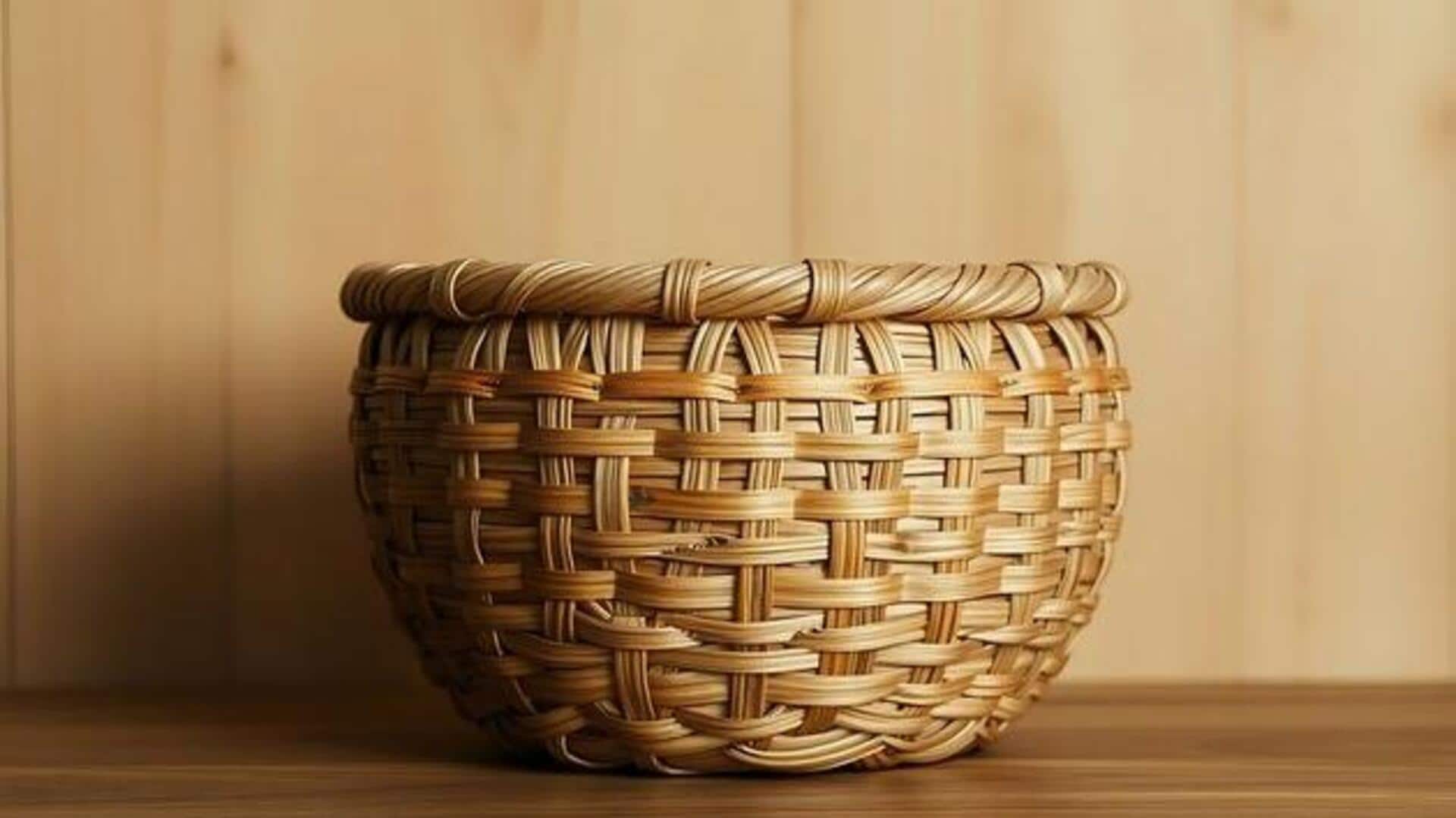
How to make colorful baskets at home
What's the story
African sisal baskets are famous for their vibrant colors and intricate designs. These baskets, made from the fibers of the sisal plant, are not only functional but also a work of art. The process of making these baskets involves traditional techniques that have been passed down through generations. The artisans use natural dyes to add color, creating unique patterns that reflect their cultural heritage.
#1
Gathering materials for basket weaving
To make a sisal basket, you need to gather all the necessary materials.
The main ingredient is sisal fiber, which is obtained from the leaves of the sisal plant.
You will also need water to soften the fibers and natural dyes for coloring.
Other tools include a sharp knife for cutting fibers, and a sturdy base to shape the basket.
Collecting these materials is the first step toward creating an authentic African sisal basket.
#2
Preparing sisal fibers for weaving
Once you have gathered all the materials, it's time to prepare the sisal fibers.
Start by soaking them in water for a few hours until they become pliable. This step makes it easier to weave them into shape.
After soaking, remove excess water by squeezing out moisture gently. The prepared fibers are now ready for weaving into intricate designs.
#3
Weaving techniques used in basket making
Weaving techniques vary across different regions in Africa, but generally involve coiling or plaiting methods.
In coiling, a single strand is wrapped around itself repeatedly until the desired shape is achieved, while plaiting involves interlacing multiple strands together tightly, without gaps between them.
Mastering these techniques takes practice, but results in beautifully crafted baskets.
#4
Adding color with natural dyes
Natural dyes play an important role in giving African sisal baskets their signature vibrancy.
Artisans use plant-based substances like indigo or turmeric mixed with water as dyes.
They apply them carefully onto dried fibers before weaving begins. This ensures even distribution throughout each section.
It adds depth and character to every piece produced by skilled hands across Africa today.