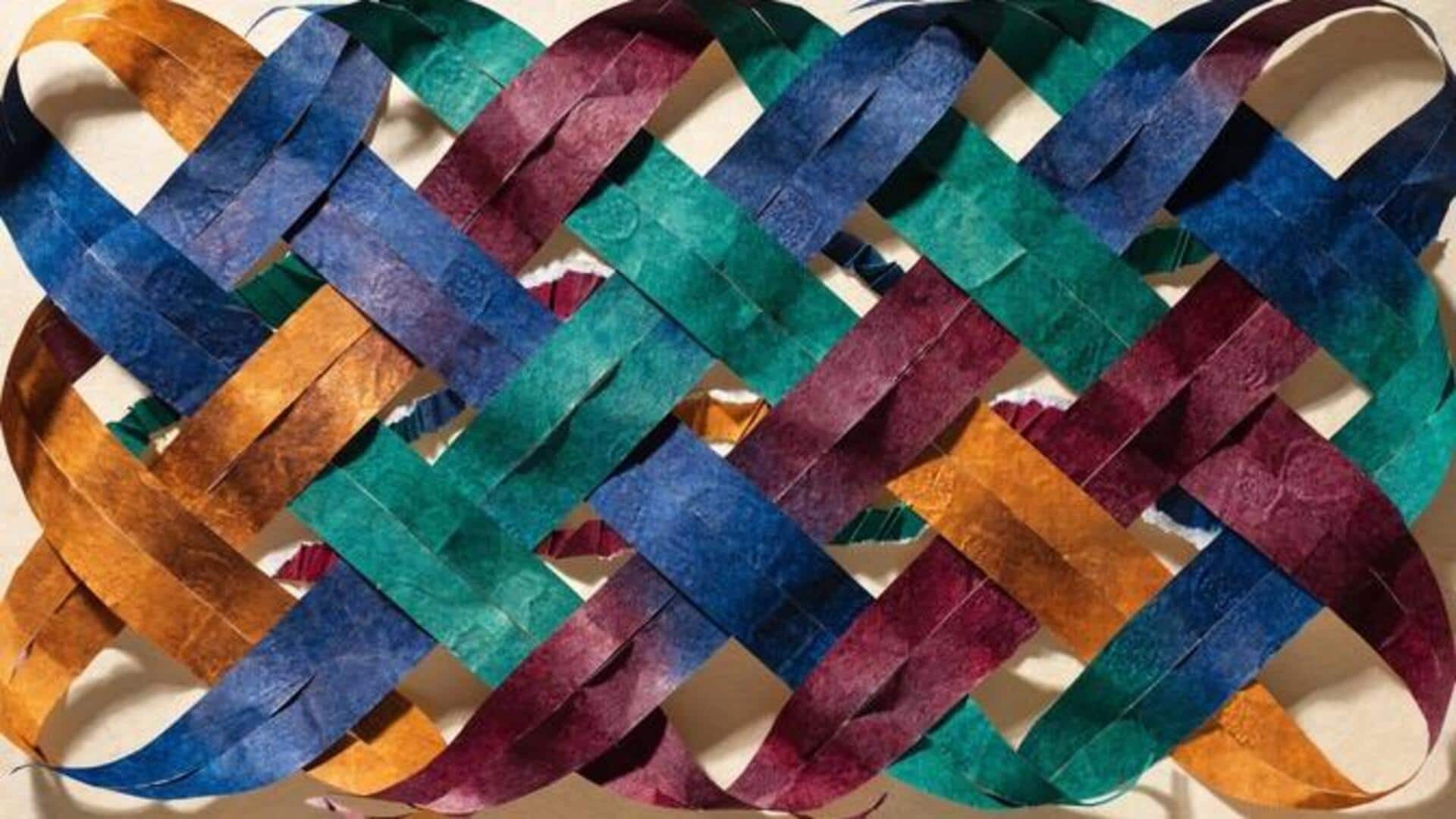
How to make beautiful art with paper weaving
What's the story
Creating African-inspired kente-style art with paper weaving is a fun and creative way to explore cultural traditions. Kente cloth, which originates from Ghana, is known for its vibrant colors and intricate patterns. By using simple materials like colored paper, anyone can replicate the essence of this traditional art form. This activity not only enhances artistic skills but also provides insight into the rich heritage of African textiles.
Materials needed
Gather your materials
To start your kente-style art project, gather some colored papers in various shades.
You will also need scissors, glue or adhesive tape, and a ruler.
These basic materials will help you create the vibrant patterns characteristic of kente cloth.
Choose papers that reflect the bold colors typically seen in traditional kente designs.
Preparing strips
Create your paper strips
Once you have your materials ready, cut the colored papers into strips of equal width.
Ideally, each strip should be about one inch wide. Make sure to have enough strips in different colors to create contrast in your design.
This step is crucial, as it lays the foundation for your weaving pattern.
Weaving process
Weave your design
Start by laying down horizontal strips on a flat surface, and secure them with glue or tape at intervals.
Then, take vertical strips and weave them over and under the horizontal ones to create a checkerboard pattern.
This mimics the traditional weaving technique used in making real kente cloth.
Designing patterns
Add patterns and symbols
To make your artwork more authentic, add symbols or patterns commonly found in kente cloth designs.
These can be simple shapes like triangles or diamonds made using additional paper cutouts glued onto your woven base.
Each symbol often carries its own meaning within African culture.
Final touches
Display your artwork proudly
Once you are done weaving and adding patterns to your kente-style art piece, display it prominently at home, or share it with friends as part of an educational project about African heritage.
You can frame it for added effect, or use it as part of a larger collage on a wall dedicated to cultural art forms.