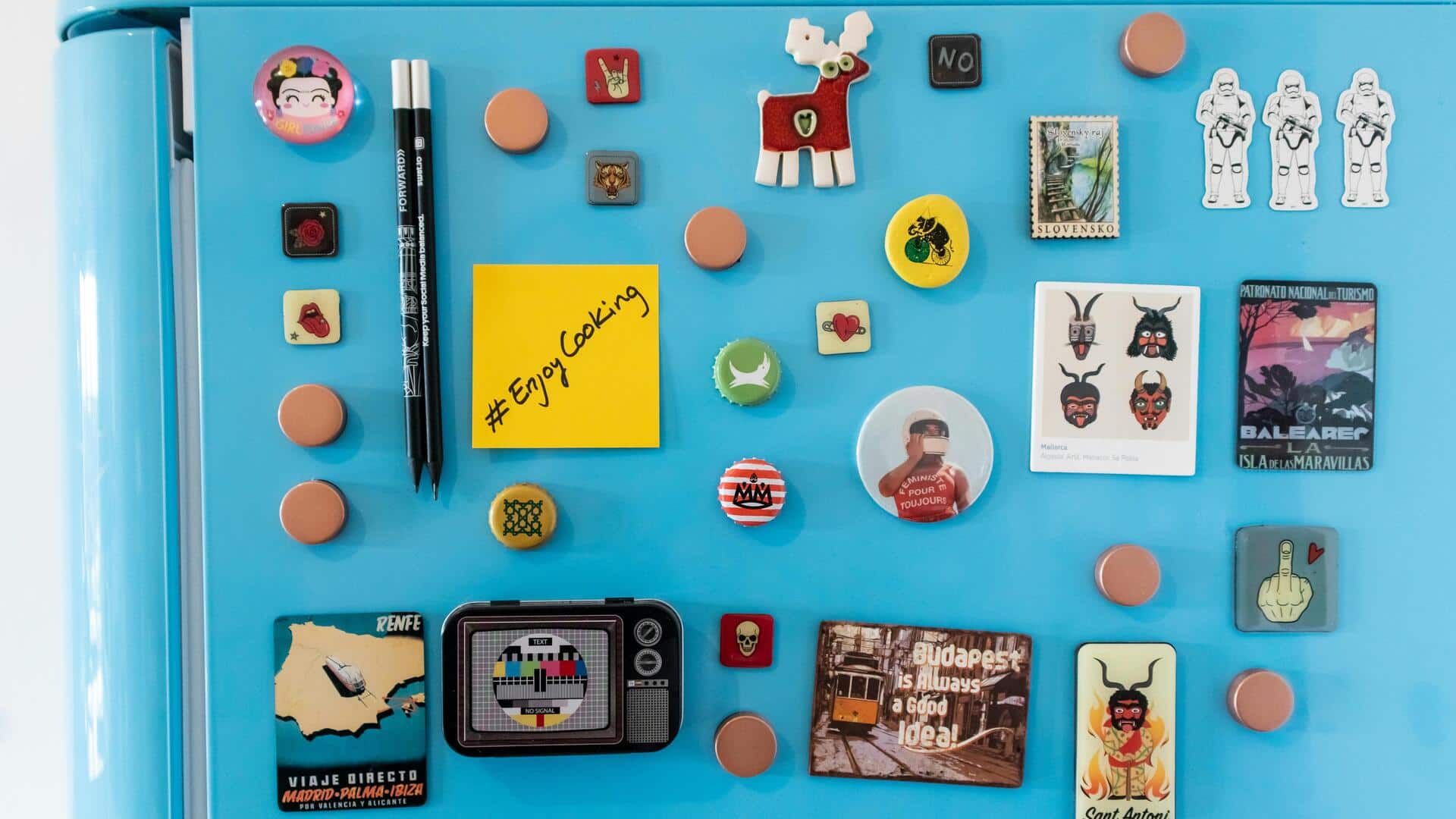
DIY enthusiasts, try this fun fridge magnet craft
What's the story
Tinga tinga painting is a vibrant art form that originated in Tanzania. It is characterized by its bright colors and bold patterns. By making fridge magnets with this style, you can bring a piece of African culture into your home. The process is simple and requires only a few materials, making it accessible to anyone interested in art and culture. Here are five ways to create unique tinga tinga painting fridge magnets.
Tip 1
Choose vibrant colors
Selecting vibrant colors is key to capturing the essence of tinga tinga painting.
Use bright hues like red, yellow, blue, and green to mimic the traditional palette.
These colors not only make the magnets eye-catching but also reflect the lively spirit of African art.
Using acrylic paints or colored markers can help achieve the desired brightness and clarity.
Tip 2
Use bold patterns
Tinga tinga paintings are known for their bold patterns, often inspired by nature and everyday life.
Incorporate geometric shapes, spirals, and animal motifs into your designs.
These patterns add depth and interest to your magnets while staying true to the style's roots.
Stencils or templates can be used for precision if needed.
Tip 3
Incorporate texture
Adding texture can elevate your fridge magnets from simple designs to works of art.
Consider using materials like sandpaper or fabric scraps to create a tactile element on your magnet base before applying paint.
This not only adds visual interest but also engages multiple senses when interacting with the finished piece.
Tip 4
Seal with clear varnish
To protect your artwork and ensure its longevity, apply a clear varnish over each magnet once it has dried completely.
This step seals in the vibrancy of the colors while providing a protective layer against wear and tear from daily use on refrigerators or other magnetic surfaces at home.
Tip 5
Experiment with sizes
Experimenting with different sizes can add variety to your collection of tinga tinga painting fridge magnets.
Create small ones as accents or larger ones as statement pieces on larger surfaces like magnetic boards or filing cabinets at home or workspaces alike.