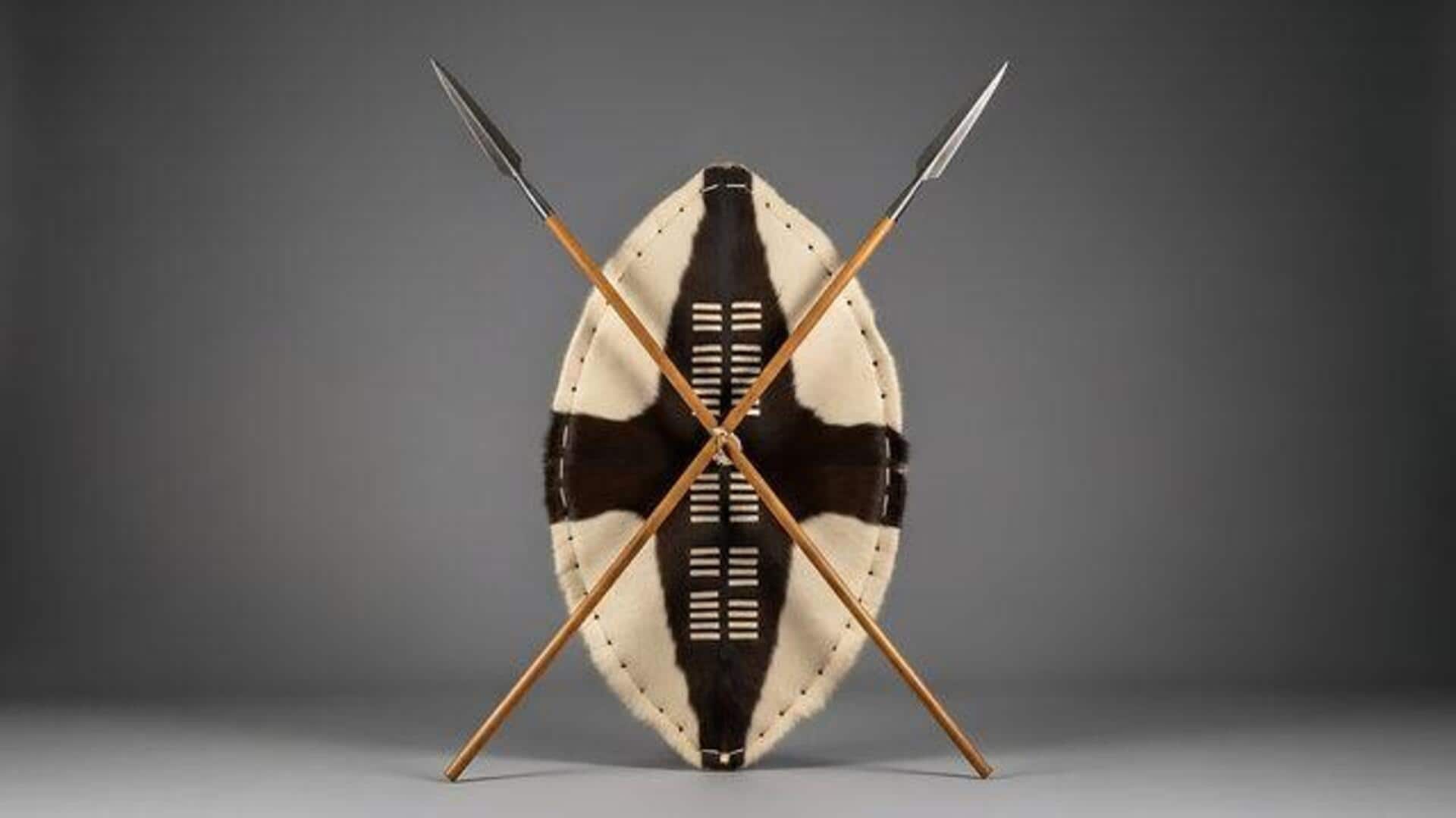
How to make Zulu shields at home
What's the story
Creating Zulu shields at home can be an exciting way to connect with African culture and history. These shields, traditionally used by the Zulu warriors, are not just functional but also artistic. By following some simple steps, you can craft a shield that reflects this rich heritage. Whether for decoration or as a craft project, making a Zulu shield involves understanding its design and materials.
Materials needed
Gather necessary materials
To make a Zulu shield, you will require some basic materials like wood or cardboard for the base, paint or natural dyes for coloring, and ropes or leather strips for handles.
Wood is the most authentic choice, but cardboard serves as a lightweight alternative.
Natural dyes give an authentic touch, while ropes, leather strips make it easier to hold.
Design patterns
Understand traditional designs
Zulu shields are famous for their unique patterns and symbols, each of which has its own significance.
Before you start crafting, it's important to research these traditional designs.
This will not only give you an idea of what the patterns look like, but also what they mean.
This way, you can make sure your shield is not only beautiful, but also culturally significant.
Shield creation
Construct the shield base
Start by cutting your chosen material into the desired shape. Zulu shields are usually oval or teardrop-shaped.
If using wood, ensure it is smooth by sanding edges. For cardboard, reinforce it with layers, if needed, to ensure durability.
Attach handles securely so that the shield can be held comfortably.
Adding details
Paint and decorate your shield
Once your base is ready, it is time to paint it with traditional colors like black, white, and red.
Use brushes or sponges to apply paint evenly across the surface.
After painting, let each layer dry completely before adding more details, like symbols or additional patterns, using contrasting colors.
Completion steps
Final touches and display tips
After painting, let everything dry completely before handling too much.
If desired, apply a clear sealant over painted areas to protect them from wear and tear.
Display your finished product proudly on walls, or use them as part of cultural events, ensuring they are treated with respect at all times.