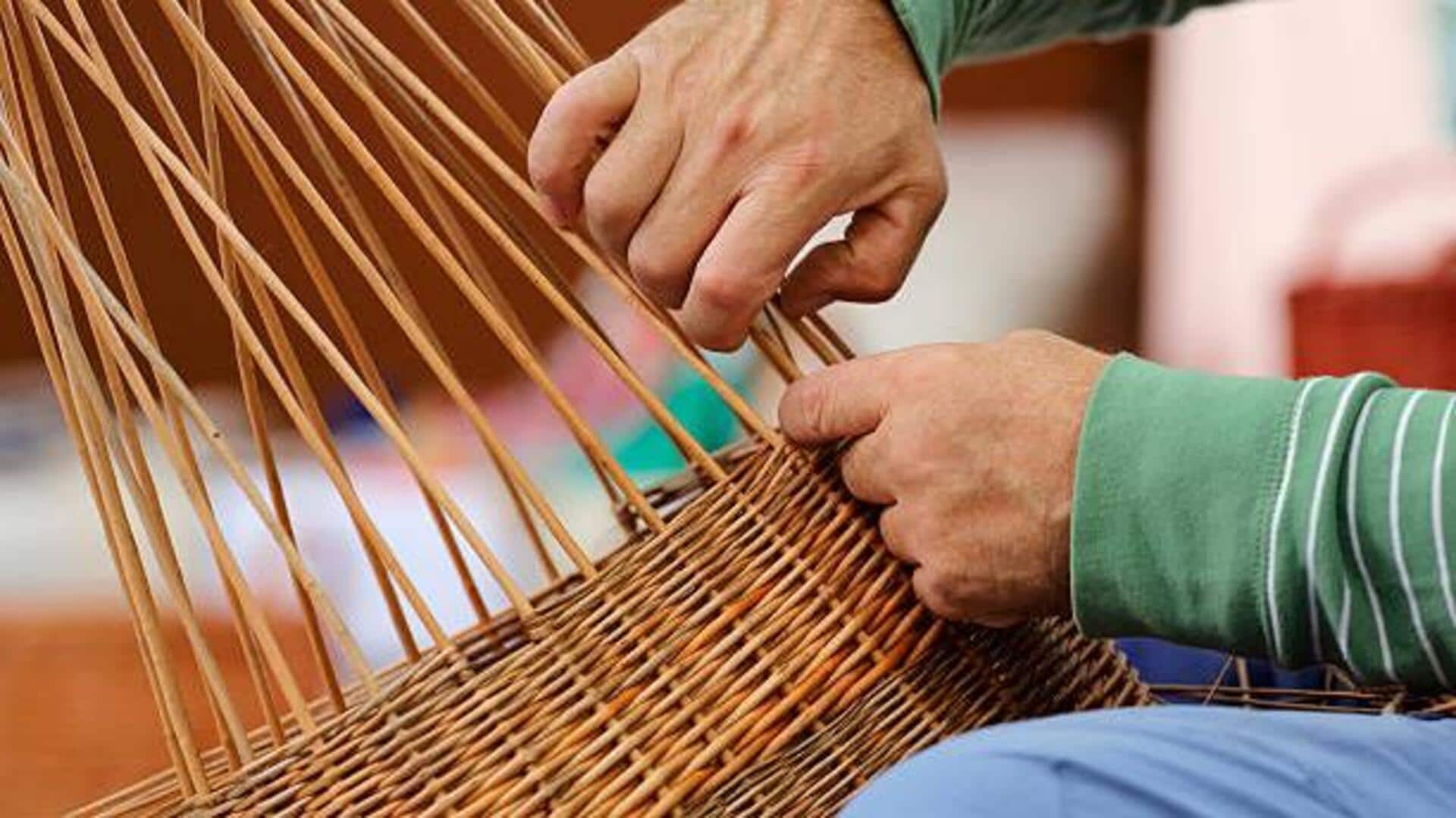
How to master reed weaving
What's the story
African reed weaving is an age-old art that brings together creativity and sustainability. This craft, which is passed down generations, uses natural reeds to create intricate designs. Not only does it showcase the rich cultural heritage of Africa, but it also promotes eco-friendly practices by using renewable resources. By mastering this art, one can contribute to environmental conservation while preserving traditional techniques.
Basics
Understanding the basics of reed weaving
Reed weaving involves using flexible reeds to create patterns and structures.
The reeds are harvested from wetlands and are chosen for their durability and flexibility.
The process begins with soaking the reeds to make them pliable before weaving them into desired shapes.
Understanding the properties of different types of reeds is essential for achieving desired results in your projects.
Tools
Tools required for effective weaving
To start with African reed weaving, you need a few basic tools.
These include sharp scissors for cutting reeds, a ruler or measuring tape for precise dimensions, and a sturdy work surface to hold materials in place while working.
Having these tools handy makes the weaving process smoother and helps you achieve better results.
Techniques
Techniques to master intricate designs
Mastering African reed weaving requires practice and patience.
Start with simple patterns before moving on to more complex designs, like baskets or mats.
Pay attention to tension while weaving; it ensures that your final product maintains its shape over time.
Experimenting with different patterns will help you develop your unique style.
Sustainability
Sustainable practices in reed harvesting
Sustainable harvesting is key to preserving the environment while practicing this craft.
Harvesting reeds should be done responsibly by ensuring that only mature plants are cut, allowing younger ones to grow unharmed.
This way, ecosystems remain balanced, and future generations can enjoy this beautiful art form without depleting natural resources.