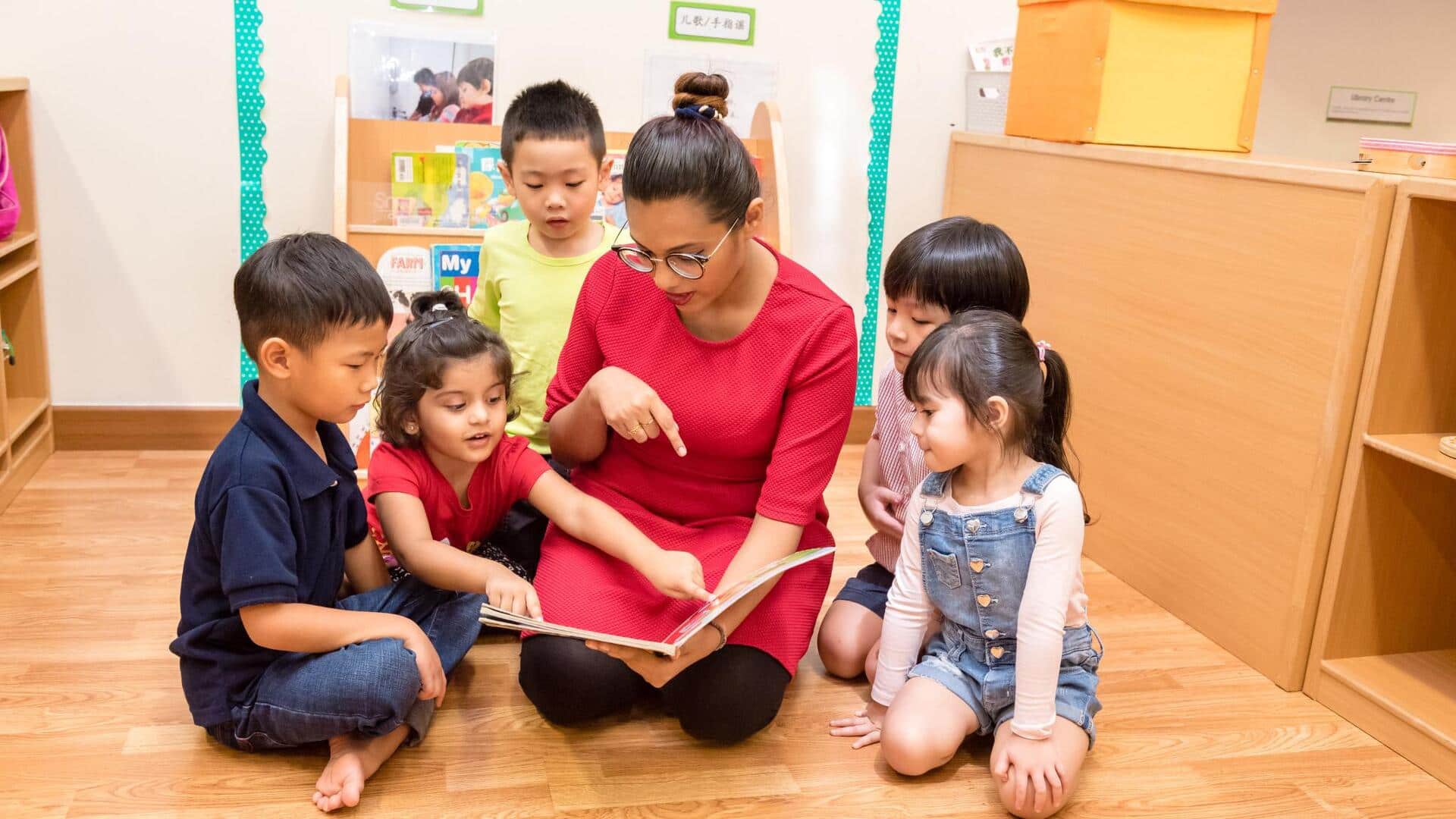
How storytelling sparks imagination in children
What's the story
Storytelling is a powerful tool that can ignite the imagination of children. By weaving tales, parents and educators can foster creativity, critical thinking, and emotional understanding in young minds. This article explores various techniques to effectively use storytelling as a means to nurture children's imaginative capabilities. From interactive storytelling sessions to incorporating diverse characters, these methods aim to create engaging experiences that stimulate a child's creative potential.
Tip 1
Interactive storytelling sessions
Interactive storytelling sessions involve engaging children by asking questions and encouraging them to participate in the story.
This technique helps them visualize scenes and think critically about plot developments.
By allowing children to contribute ideas or suggest endings, they become active participants rather than passive listeners.
This method not only enhances their imaginative skills but also boosts their confidence in expressing thoughts.
Tip 2
Incorporating diverse characters
Introducing diverse characters in stories exposes children to different perspectives and cultures.
It encourages empathy by allowing them to see the world through someone else's eyes.
Diverse characters can also spark discussions about differences and similarities between people, broadening a child's understanding of society.
This exposure is vital for developing open-mindedness and creativity in problem-solving.
Tip 3
Using visual aids and props
Visual aids and props can make storytelling more engaging for children by adding an element of fun.
These tools help bring stories to life, making it easier for kids to visualize settings and characters.
Using props also encourages children to participate actively by letting them handle items related to the story, further stimulating their imagination.
Tip 4
Encouraging creative endings
Encouraging children to come up with alternate endings for stories promotes creativity by challenging them to think beyond conventional outcomes.
This practice not only enhances problem-solving skills but also boosts self-confidence as kids realize there are multiple ways to resolve conflicts within narratives.
It teaches flexibility in thinking while nurturing an imaginative mindset.
Tip 5
Storytelling through art
Storytelling through art allows children to express their imagination visually, complementing verbal narratives with drawings or crafts based on stories they've heard or created themselves.
This approach reinforces comprehension while giving kids the freedom to interpret tales creatively through artistic expression—a powerful medium that resonates deeply with many young learners.