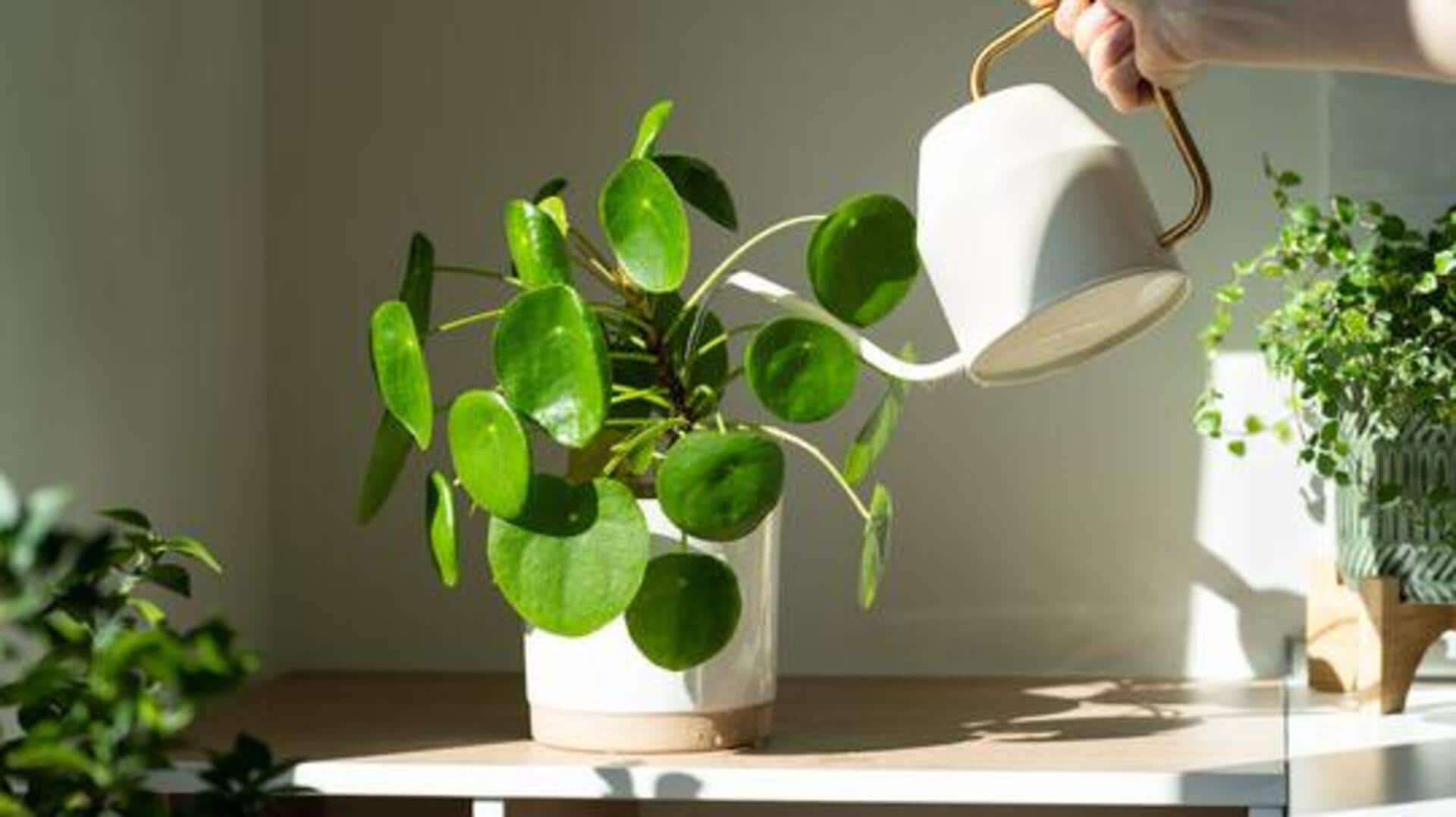
How to protect your plants from root rot
What's the story
Root rot is a common problem that can kill your plants if you do not keep an eye on them. It happens when the roots of the plant sit in waterlogged soil, depriving them of oxygen and causing decay. But, you can avoid this by choosing the right potting techniques. Here are some practical tips to keep your plants healthy and avoid root rot.
Tip 1
Choose pots with drainage holes
Selecting pots with drainage holes is essential to avoid root rot.
These holes allow excess water to escape, preventing soil from becoming waterlogged.
Without proper drainage, moisture can build up at the bottom of the pot, suffocating roots, and leading to decay.
Make sure your chosen container has adequate drainage before planting.
Tip 2
Use well-draining soil mix
A well-draining soil mix is critical for healthy roots.
Regular garden soil may retain too much moisture, increasing the risk of root rot.
Instead, use a potting mix designed for good drainage.
You can also add perlite or sand to regular soil to improve its drainage properties, ensuring that water passes through easily, without pooling around the roots.
Tip 3
Water plants appropriately
Overwatering is one of the most common causes of root rot.
It is important to water your plants according to their specific needs and environmental conditions.
Check the top inch of soil before watering; if it is dry, then it is time to water again.
This practice helps maintain an appropriate moisture level without drowning the roots.
Tip 4
Ensure proper light conditions
Providing adequate light conditions is key to keeping your plants healthy and preventing root rot.
Plants that do not get enough light may not be able to absorb water efficiently, leading to excess moisture in the soil. This can lead to root rot.
Make sure your plants get enough light, either through natural sunlight or grow lights, depending on their needs. This will help keep the soil's moisture levels in check and promote healthy growth.
Tip 5
Monitor plant health regularly
Regularly monitoring your plant's health is key to catching potential root rot problems early.
Look for signs like yellowing leaves or wilting, which could indicate underlying issues with root health or watering practices.
Addressing these symptoms promptly can help prevent further damage and keep your plants thriving, without falling victim to root rot.