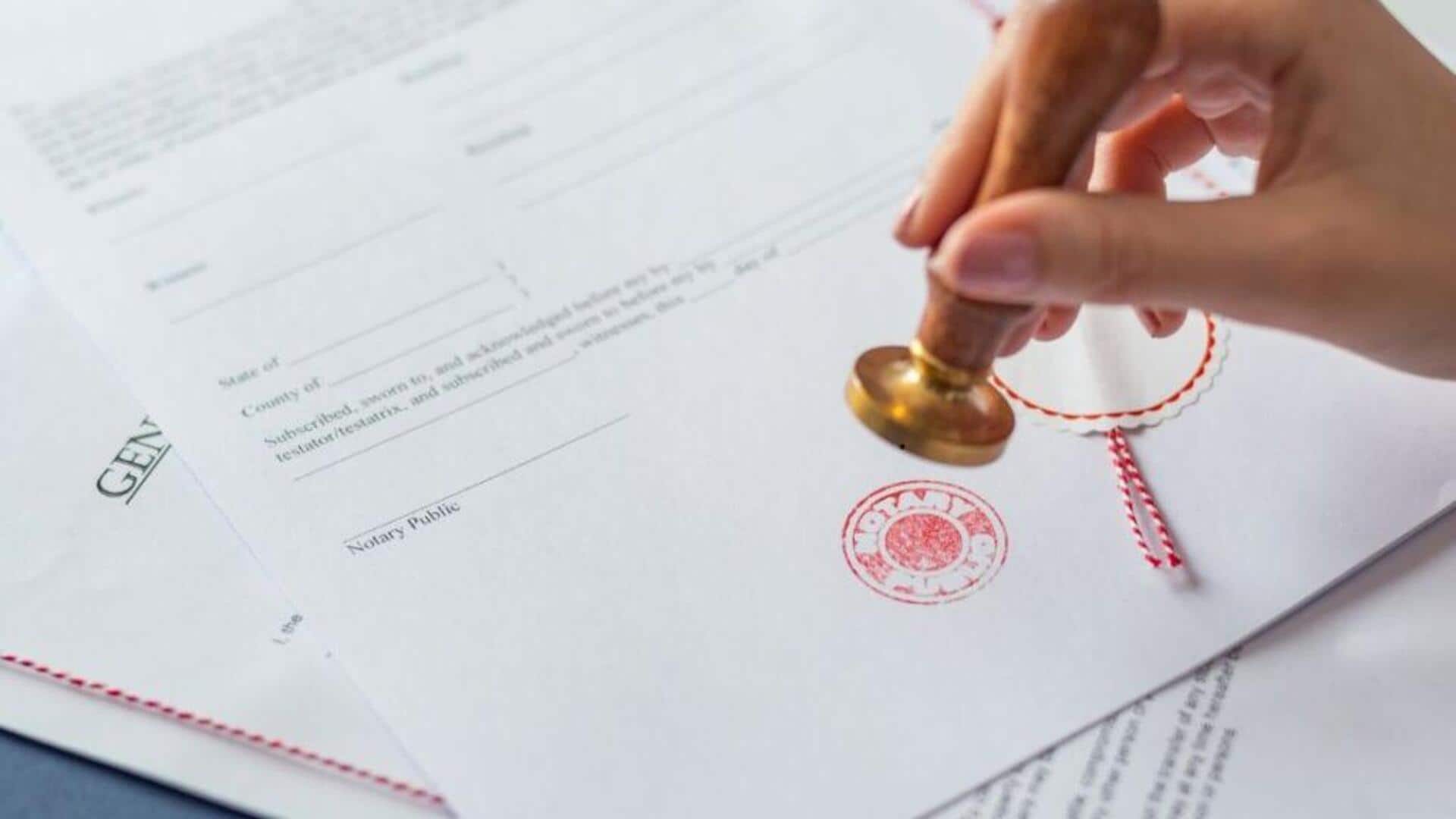
Want to get your documents notarized? Keep reading
What's the story
Navigating the world of notary services in India can be a bit tricky, particularly for first-timers. Notaries are important for certifying documents, making them legally valid. Knowing how to prepare your documents properly can save you time and hassle. Here is a practical guide to help you get your documents ready for the Indian notary, covering all the important aspects you need to know.
Document list
Understand required documents
Before visiting a notary, it is important to have all the required documents ready.
Usually, these include identification proof, such as an Aadhar card or passport, address proof, and any specific documents that need notarization.
Make sure all papers are original, up-to-date, and in place. Having everything ready will make the process smooth and quick.
Accuracy check
Verify document accuracy
Ensuring that your documents are accurate is crucial before you approach a notary.
Check that all the information is correct, including names, addresses, and dates.
Any error could delay the notarization process or even render the document invalid.
It's advisable to double-check each detail carefully to avoid any complications later on.
Fee structure
Understand notary fees
Notary fees in India vary depending on the type of service and complexity of the document.
Generally, they are regulated by state governments and can range from ₹50 to ₹2,000 per signature or stamp.
Knowing these fees beforehand will help you budget accordingly and avoid surprises during your visit.
Appointment planning
Schedule an appointment
It is advisable to schedule an appointment with a notary in advance, particularly if you have a lot of documents to get notarized.
Many notaries offer online booking services, which can be convenient.
By planning ahead, you can ensure that your visit is efficient, and that you get all the necessary notarizations done without any delays.
Extra preparations
Prepare for additional requirements
Some notaries may ask for extra documents or information, depending on the nature of the transaction or legal requirements involved.
Be prepared by asking about any additional requirements during your initial consultation with them.
This way, you can gather everything needed before your appointment day arrives.