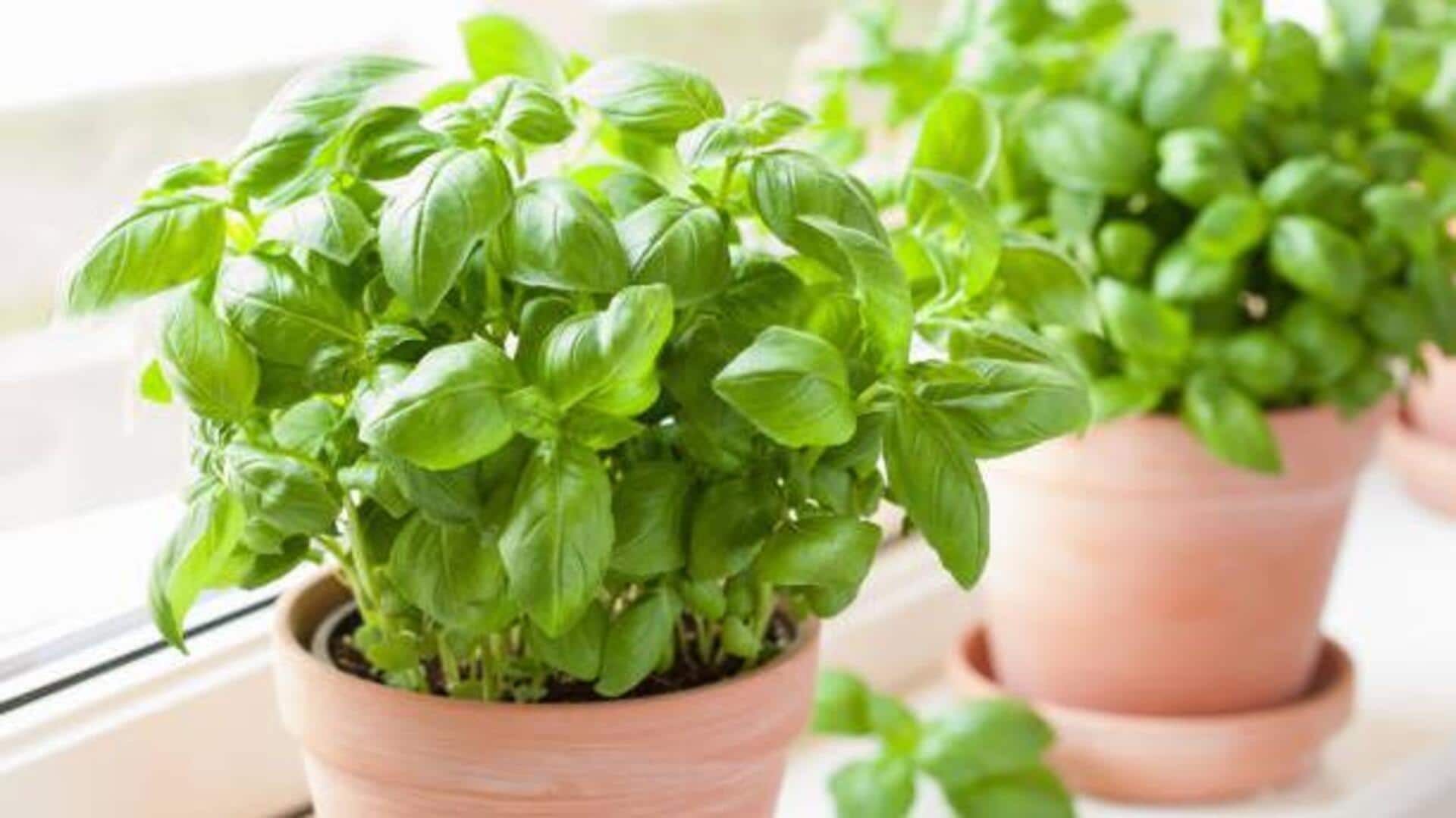
How to grow basil in small pots
What's the story
Basil is one of the most popular herbs, known for its aromatic leaves and culinary versatility. Propagating basil in kitchen pots is a simple and rewarding task that can ensure a steady supply of fresh leaves. It not only saves money but also allows you to enjoy the freshest basil possible. With just a few steps, you can easily propagate this herb at home, ensuring it thrives in your kitchen environment.
Variety Choice
Selecting the right basil variety
Choosing the right basil variety is important for successful propagation.
Sweet basil is the most commonly used variety for cooking, while Thai basil gives a unique flavor to dishes.
Genovese basil is famous for its large leaves and strong aroma.
Consider your culinary needs and the climate of your area when selecting a variety.
Each type has its own growth requirements and flavor profile that can enhance your cooking experience.
Pot preparation
Preparing kitchen pots for propagation
Preparing pots properly is key to successful basil propagation.
Choose small containers with drainage holes to prevent waterlogging.
Fill them with well-draining potting soil mixed with perlite or sand to enhance aeration.
Moisten the soil lightly before planting seeds or cuttings.
This preparation ensures optimal conditions for root development and plant health.
Planting process
Planting basil seeds or cuttings
Planting basil seeds or cuttings should be done at the right time of the year.
Spring is ideal, as the weather is warm and the days are long.
For seeds, sow them about one-fourth inch deep in moist soil, and keep them warm until germination.
If using cuttings, place them in water until roots form, before transferring them to soil.
Care tips
Maintaining optimal growing conditions
To keep your basil plants healthy, provide them with plenty of sunlight, around six hours a day, and keep the temperature between 70 degrees Fahrenheit and 85 degrees Fahrenheit.
Water them regularly, but do not overwater them; let the top inch of soil dry out between waterings.
Fertilize every four weeks with a balanced liquid fertilizer to promote growth and leaf production.