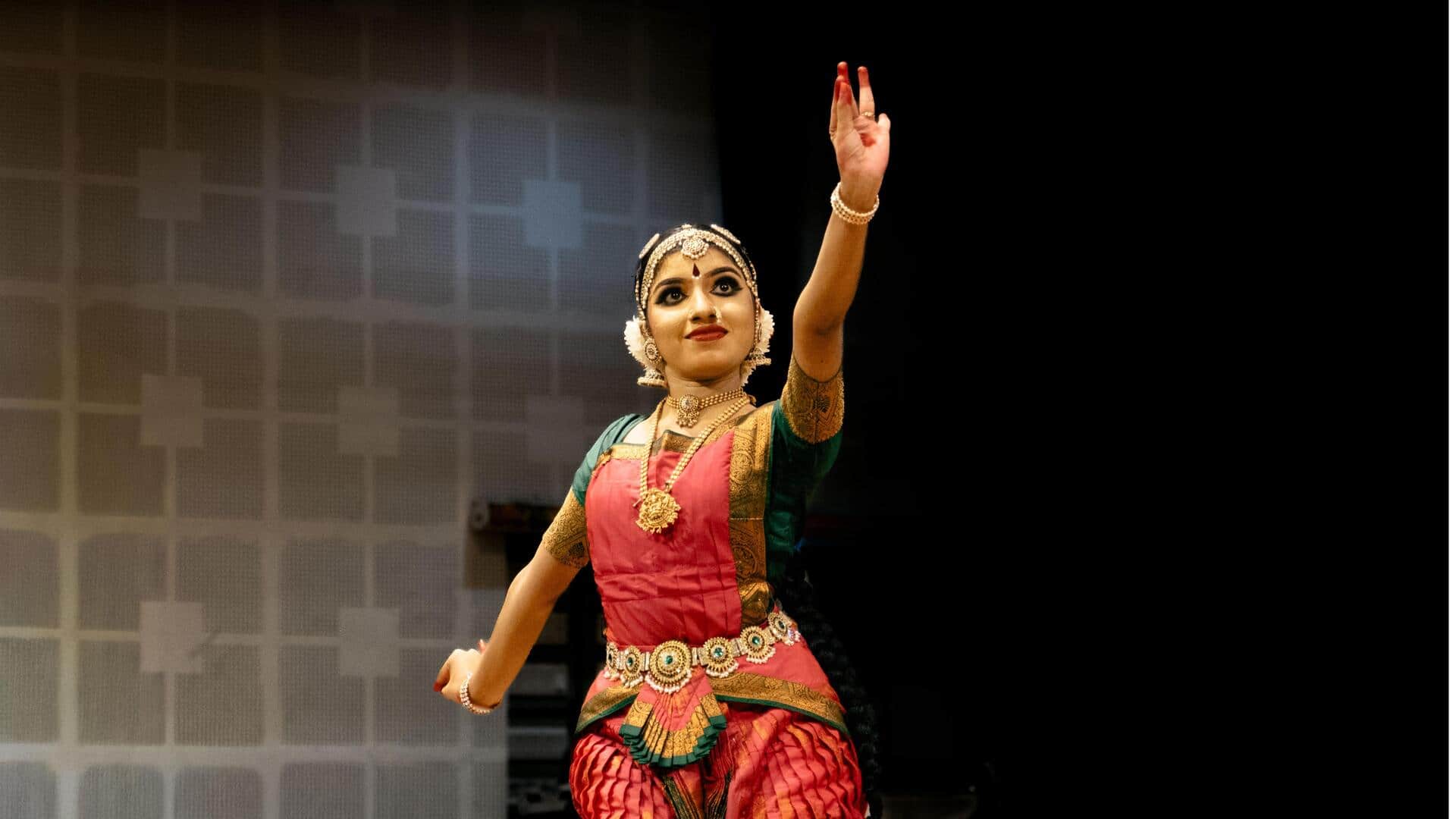
A simple guide to 5 Indian classical dance mudras
What's the story
Indian classical dance forms are rich in tradition and meaning, with mudras (hand gestures) being an integral part of their expression. These mudras are not just for decoration but carry deep symbolic meanings, enhancing the storytelling and emotional depth of the performance. Each gesture can represent different elements like nature, emotions, or spiritual concepts. Knowing these mudras gives insight into the cultural heritage and artistic complexity of Indian classical dance.
#1
The significance of mudras in Bharatanatyam
Bharatanatyam, one of India's oldest classical dance forms, uses mudras to convey intricate narratives.
Each gesture is meticulously choreographed to narrate stories from ancient texts.
For instance, the "Pataka" mudra symbolizes the act of creation or destruction, depending on its context within the dance sequence.
This precision allows dancers to communicate complex themes without words.
#2
Kathak's expressive hand gestures
Kathak is known for its expressive hand gestures that complement its fast-paced footwork and spins.
The "Chandra" mudra in Kathak represents the moon's calmness and serenity. Dancers use this gesture to portray peaceful emotions or tranquil scenes in their performances.
The versatility of mudras in Kathak adds layers of emotion and meaning to each performance.
#3
Odissi's spiritual symbolism
In Odissi, mudras are deeply rooted in spirituality and devotion.
The "Anjali" mudra, which is a gesture of offering or salutation, is commonly used to express respect or reverence towards deities or elders in the dance.
This gesture emphasizes humility and devotion, which are key themes in Odissi performances.
#4
Manipuri's subtle hand movements
Manipuri dance is characterized by its subtlety and grace, with mudras playing a crucial role in this delicacy.
The "Uttarabodhi" mudra signifies enlightenment or awakening and is used during moments of revelation within the choreography.
These subtle hand movements add to the overall ethereal quality of Manipuri dance.
#5
Mohiniyattam's feminine grace
Mohiniyattam is characterized by its feminine grace, with mudras accentuating this aspect beautifully.
The Kartarimudra symbolizes holding weapons or tools to protect against evil forces. This is a common theme in mythological stories depicted through this dance form.
This gesture showcases strength while maintaining elegance. It is a hallmark of Mohiniyattam's style.