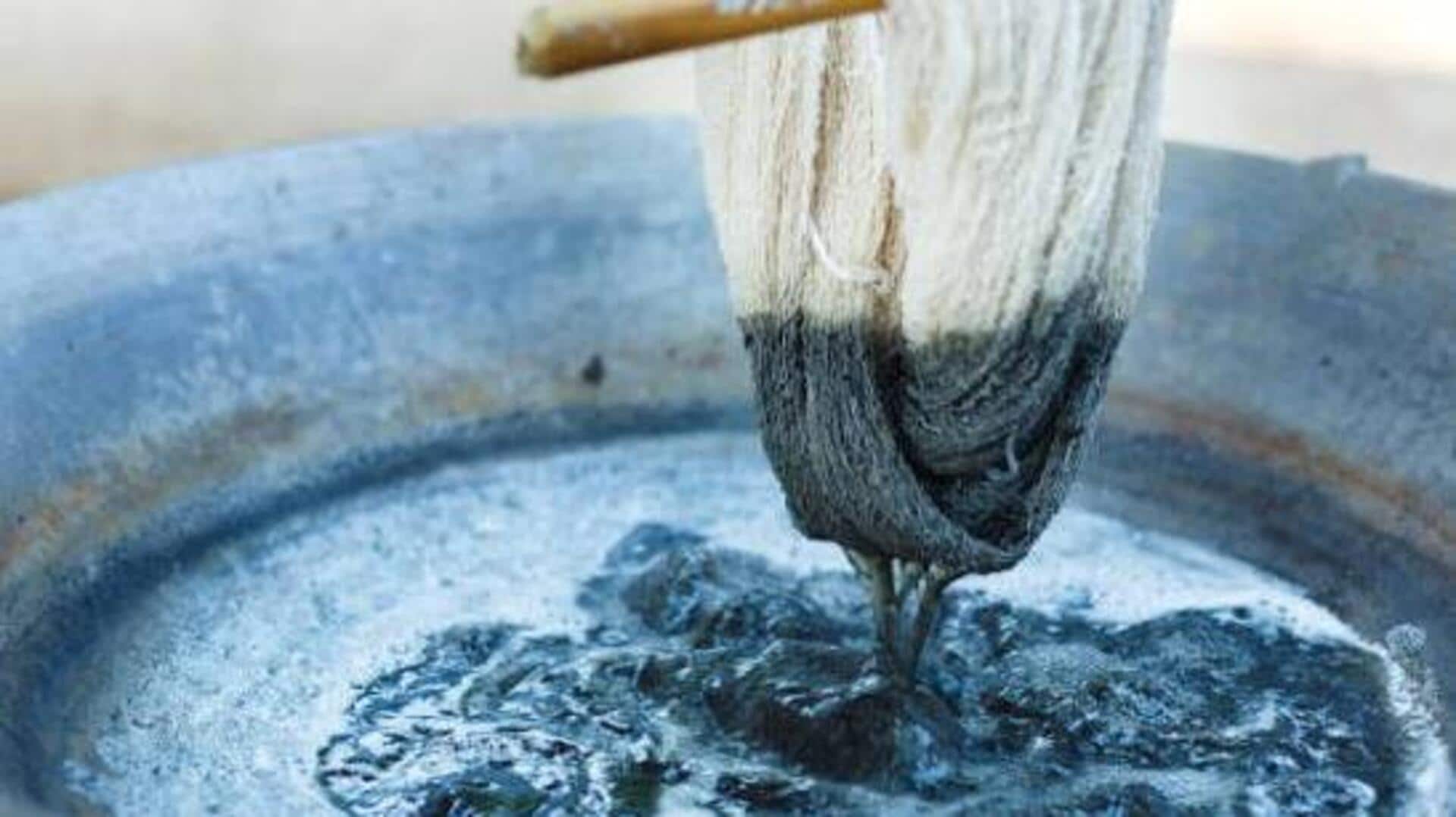
How artists are reinventing traditional indigo dyeing
What's the story
Indigo dyeing is an ancient craft that has been used for centuries to create vibrant blue hues on textiles. The process involves extracting dye from the indigo plant, which has been a staple in various cultures around the world. Today, artisans are reimagining this traditional technique by incorporating modern elements and innovative methods. This not only preserves the craft but also introduces it to new audiences.
#1
The art of indigo extraction
The extraction of indigo dye is a meticulous process. Artisans soak leaves of the indigo plant in water and ferment them to release the dye.
The liquid is then oxidized to form a paste, which can be used to dye fabrics.
This traditional method requires skill and patience, as the quality of the dye depends on precise fermentation and oxidation techniques.
#2
Modern techniques in indigo dyeing
Modern technology has introduced new techniques in indigo dyeing while preserving traditional practices.
Some artisans use digital printing techniques alongside natural dyes to create intricate patterns on textiles.
Others experiment with eco-friendly alternatives that reduce environmental impact without compromising on color vibrancy or quality.
#3
Cultural significance of indigo dyeing
Indigo dyeing holds cultural significance in many regions, where it is part of traditional clothing or ceremonial garments.
In Africa, for example, indigo textiles often carry symbolic meanings and are used in storytelling through patterns and designs.
In Asia, indigo-dyed fabrics have been worn by communities for generations as a symbol of identity and heritage.
#4
Economic impact on communities
The revival of indigo dyeing also has economic benefits for local communities dependent on textile production.
By promoting handmade indigo-dyed products through fairs or online platforms, artisans can reach global markets without losing the essence of their craft.
This not only helps sustain traditional techniques but also supports livelihoods across generations.