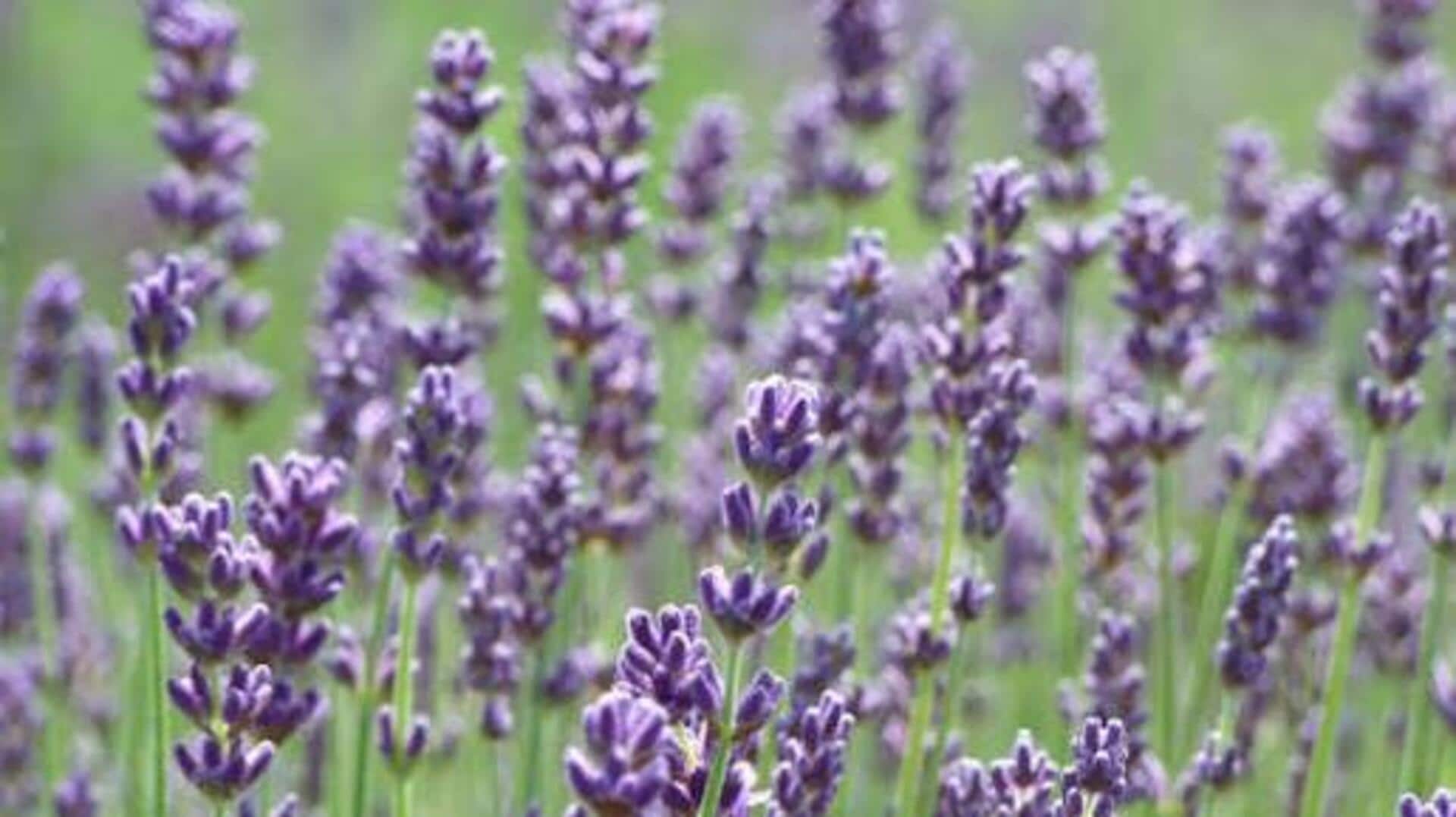
How to grow English lavender indoors
What's the story
English lavender is a fragrant, beautiful plant that can flourish indoors if taken care of properly. With the right conditions and care, you can grow this aromatic herb indoors and enjoy its beauty and scent all year round. Here are five practical tips to help you grow English lavender indoors, focusing on light, soil, watering, temperature, and pruning.
Tip 1
Provide ample sunlight
English lavender needs plenty of sunlight to flourish.
Place your plant near a south-facing window where it can get at least six hours of direct sunlight every day.
If natural light is insufficient, you can use grow lights to make up for it.
Proper lighting helps the plant produce essential oils and keeps its vibrant color intact.
Tip 2
Use well-draining soil
Lavender loves well-draining soil to keep its roots from rotting.
Use a potting mix that has sand or perlite to improve drainage.
You can also make your own mix by combining equal parts of potting soil, sand, and perlite.
Make sure the pot has drainage holes to allow excess water to escape easily.
Tip 3
Water sparingly
Overwatering is one of the most common mistakes when growing lavender indoors.
Let the top inch of soil dry out between waterings.
Water sparingly, and ensure that excess water does not sit at the bottom of the pot.
This practice encourages deep root growth and keeps the plant healthy.
Tip 4
Maintain optimal temperature
English lavender grows best at temperatures between 18 degrees Celsius and 24 degrees Celsius during the day and slightly cooler at night.
Avoid placing your plant near drafts or heating vents that could cause temperature fluctuations.
Maintaining a consistent temperature helps prevent stress on the plant.
Tip 5
Prune regularly for health
Regular pruning keeps English lavender bushy and healthy.
Trim back about one-third of the plant after flowering, but before new growth starts in spring.
Use clean, sharp scissors or pruning shears to avoid damaging stems or spreading disease.