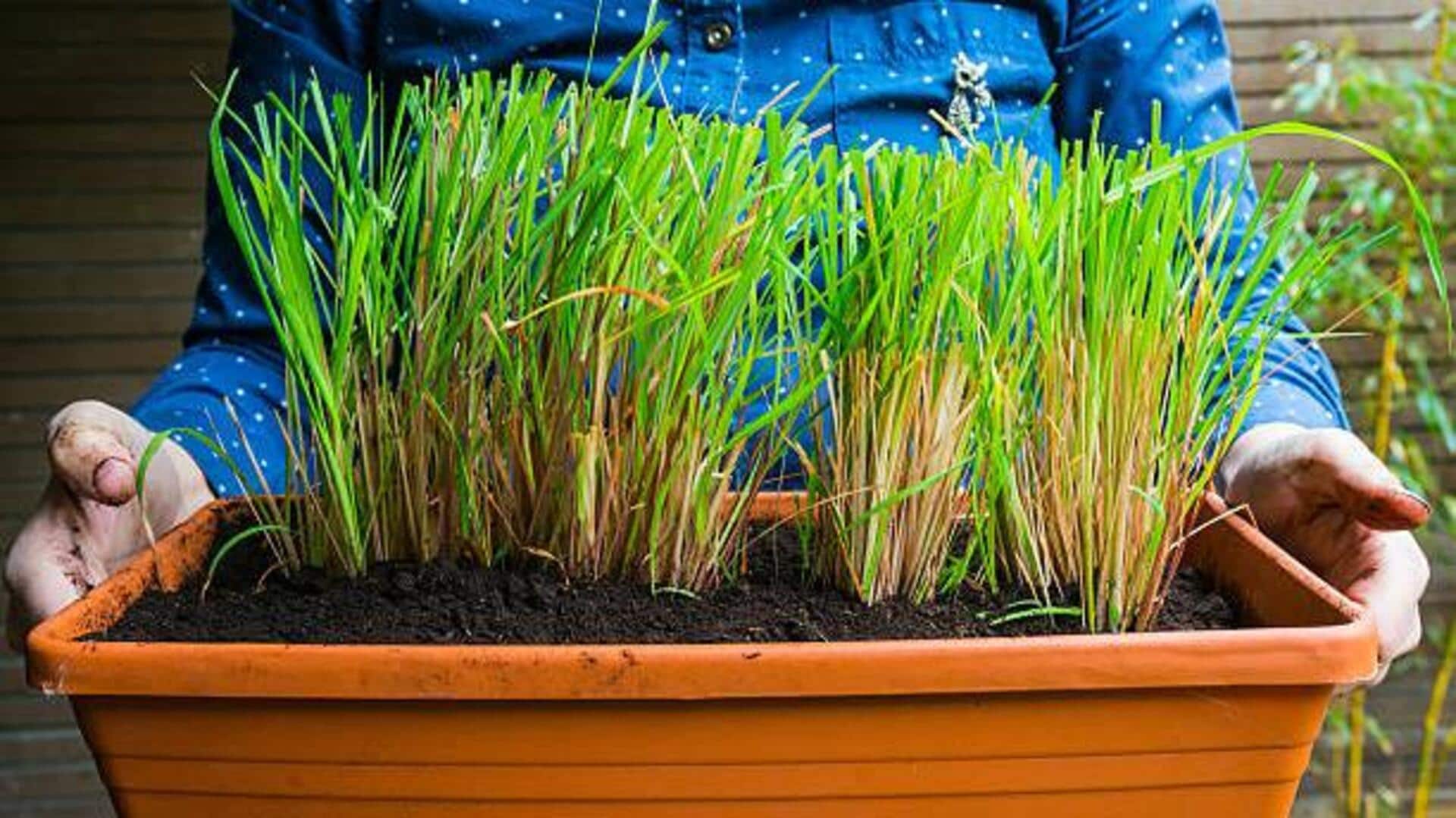
How to grow lemongrass at home
What's the story
Growing lemongrass indoors can be a rewarding experience, providing you with fresh herbs for culinary delights. With the right conditions and care, you can enjoy a continuous supply of this aromatic grass. Lemongrass thrives in warm environments with plenty of light, making it ideal for indoor gardening. By following some simple guidelines, you can create an optimal environment for your lemongrass to flourish year-round.
Tip 1
Choosing the right container
Selecting an appropriate container is key to growing lemongrass indoors.
Pick a pot that is at least 12 inches deep and wide to allow enough space for the roots to grow.
Ensure the container has drainage holes to prevent waterlogging, which can damage the plant's roots.
Using a well-draining potting mix will also help maintain the right moisture levels.
Tip 2
Providing adequate light
Lemongrass needs plenty of sunlight to thrive indoors.
Place your plant near a south-facing window where it can soak up six to eight hours of direct sunlight every day.
If natural light is insufficient, consider using grow lights as an alternative source of illumination.
Position them about 12 inches above the plant and keep them on for 12 hours a day.
Tip 3
Maintaining optimal temperature and humidity
Lemongrass thrives in warm temperatures between 65 and 85 degrees Fahrenheit (18 to 29 degrees Celsius).
Keep your indoor space within this temperature range by avoiding drafts from windows or doors.
The humidity level should also be kept high; you can achieve this by misting the leaves regularly or placing a humidifier nearby.
Tip 4
Watering and fertilizing properly
Proper watering is crucial for healthy lemongrass growth indoors.
Water when the top inch of soil feels dry but avoid overwatering as it may cause root rot.
Fertilize every four weeks with a balanced liquid fertilizer diluted to half strength, to provide essential nutrients without overwhelming the plant's system.