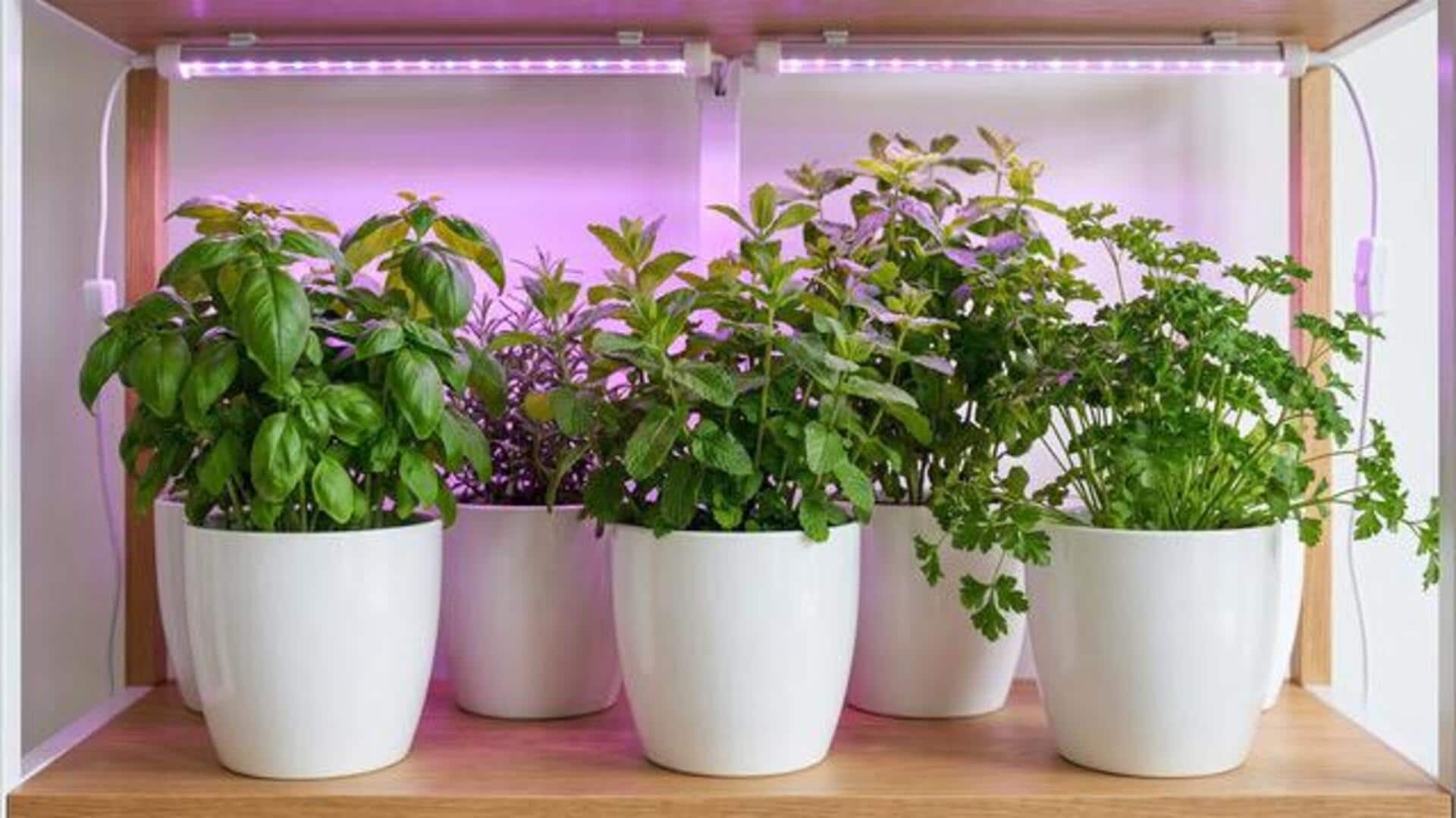
How to grow parsley with LED lights
What's the story
Growing parsley indoors with LED lights is an efficient way to have fresh herbs all year round. Parsley, a versatile herb, thrives in controlled environments, making it ideal for indoor gardening. LED lights provide the necessary spectrum of light to promote healthy growth without consuming too much energy. This method is perfect for those with limited space or wanting to grow plants indoors.
Light selection
Choosing the right LED lights
Selecting the right LED lights is critical for growing parsley indoors.
Look for full-spectrum LEDs that mimic natural sunlight, providing both blue and red wavelengths.
Blue light promotes vegetative growth, while red light supports flowering and fruiting.
Aim for lights with adjustable intensity and timers to simulate day-night cycles, ensuring optimal conditions for parsley growth.
Environment setup
Optimal growing conditions
Creating the right environment is key to growing parsley indoors.
Keep temperatures between 18 degrees Celsius and 24 degrees Celsius, with humidity levels around 50%.
Use well-draining soil mixed with organic compost to provide essential nutrients.
Regularly monitor moisture levels; parsley prefers consistently moist soil but not waterlogged conditions.
Care routine
Regular maintenance tips
Regular maintenance keeps your indoor parsley healthy.
Water your plants when the top inch of soil feels dry, but avoid overwatering.
Prune leaves regularly to encourage bushier growth and prevent overcrowding.
Fertilize every four weeks with a balanced liquid fertilizer diluted to half strength, ensuring your plants get the nutrients they need without overloading them.
Problem solving
Troubleshooting common issues
Indoor gardening can come with its own set of challenges, but knowing how to fix common issues can help you grow parsley successfully.
Yellowing leaves may indicate overwatering or nutrient deficiency; adjust watering schedules accordingly, and check soil pH levels (ideally between six and seven).
Pests like aphids or spider mites can be controlled using insecticidal soap or neem oil sprays as needed.